Home » 2014 (Page 3)
Yearly Archives: 2014
Wessex Gallery grand opening (12th July). Bringing the history of Stonehenge and Wessex to life.
ANTHROPOLOGIST and BBC TV Coast and Origins of Us presenter Dr Alice Robertswill open Salisbury Museum’s new £2.4m Wessex Gallery on Saturday (Salisbury Journal).
The new gallery will house one of Europe’s most extensive collections of Stonehenge and prehistoric artefacts including the 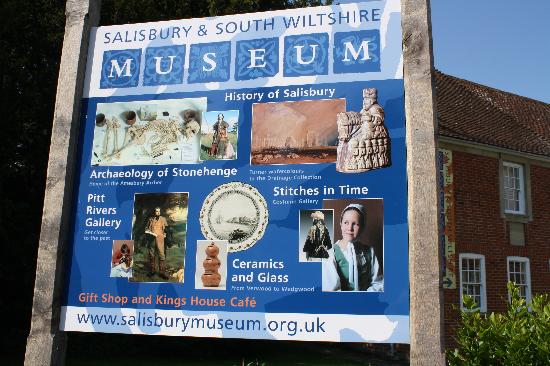 Amesbury Archer – popularly dubbed the King of Stonehenge and the Wardour Hoard.
To mark the event the museum will be hosting an admission-free day of action-packed celebrations, special events, living history displays and demonstrations of traditional skills and crafts.
There will also be other celebrity guests including Channel 4 Time Team presenter and field archaeologist Phil Harding, who will be demonstrating flint knapping – the ancient art of shaping tools and weapons from stones – which early the Britons used.
Along with a free view of the new Wessex Gallery, members of the public will have the opportunity to see Norman falconry displays, try on Norman dresses, or get suited and booted in a knight’s hefty chainmail armour complete with sword.
There will also be ancient coppicing, stone masonry, pottery-making and wool dyeing demonstrations as well as a chance for people to try their hand at reconstructing a prehistoric face, carve a Stone Age chalk animal and experience an Anglo Saxon burial ritual.
Museum director Adrian Green said: “The grand opening of our new Wessex Gallery is going to be a fantastic all-day event with lots of exciting activities to see and do for all age groups.
“It’s also a great opportunity for people to see our amazing new Wessex Gallery which brings the prehistory and history of Stonehenge and Wessex to life.”
The Wessex Gallery Grand Opening is on Saturday, 12 July from 10am to 4pm at Salisbury Museum, The Close.
For more information call 01722 332151 or visit: www.salisburymuseum.org.uk.
Read the full article in the Salisbury Journal: http://www.salisburyjournal.co.uk/news/11321466.New_gallery_set_to_open/?ref=var_0
Stonehenge Guided Tours
Mystical County, Magical Tours
www.StonehengeTravel.co.uk
Neolithic House Project: Stonehenge builders’ ‘bright and airy’ homes re-created
Five Neolithic houses have been recreated at Stonehenge to reveal how the ancient monument’s builders would have lived 4,500 years ago.

More than 20 tonnes of chalk, 5,000 rods of hazel and three tonnes of wheat straw were used
The single-room, 5m (16ft) wide homes made of chalk and straw daub and wheat-thatching, are based on archaeological remains at nearby Durrington Walls.
Susan Greaney, from English Heritage, said the houses are the result of “archaeological evidence, educated guess work, and lots of physical work.”
The houses open to the public, later.
The “bright and airy” Neolithic homes are closely based on archaeological remains of houses, discovered just over a mile away from Stonehenge.
Dated to about the same time as the large sarsen stones were being erected, English Heritage said experts believe they may have housed the people involved with constructing the monument.
Excavations at Durrington Walls, not only uncovered the floors of houses but stake holes where walls had once stood – providing “valuable evidence” to their size and layout.
“Far from being dark and primitive, the homes were incredibly bright and airy spaces” – Spokesman English Heritage

Sited by the new visitor centre, the houses are furnished with replica Neolithic axes, pottery and other artefacts
“We know for example, that each house contained a hearth and that puddled chalk was used to make the floor,” said a spokesman for English Heritage.
“And far from being dark and primitive, the homes were incredibly bright and airy spaces with white chalk walls and floors designed to reflect sunlight and capture the heat from the fire.”
‘Labour of love’
Using authentic local materials including 20 tonnes of chalk, 5,000 rods of hazel and three tonnes of wheat straw, it has taken a team of 60 volunteers five months to re-create the homes.
Susan Greaney, a historian at English Heritage, said it had been a “labour of love” and an “incredible learning experience” for the volunteers.
“One of the things we’re trying to do at Stonehenge is to re-connect the ancient stones with the people that lived and worked in the surrounding landscape,” she said.
“Now visitors can step through the door of these houses and get a real sense of what everyday life might have been like when Stonehenge was built. ”
They are furnished with replica Neolithic axes, pottery and other artefacts
Article source: BBC http://www.bbc.co.uk/news/uk-england-wiltshire-27656212
Link: http://www.theguardian.com/culture/2014/jun/02/neolithic-houses-recreated-at-Stonehenge
English Heritage: https://www.english-heritage.org.uk/daysout/properties/stonehenge/discover/neolithic-houses/
Stonehenge Neolithic Houses Blog
We operate guided tours of Stonehenge. Learn more about the Neolithic Houses and explore the Stonehenge Landscape with a local expert.
The Stonehenge Travel Company, Salisbury, Wiltshire
Mystical County, Magical Tours
The Crop Circle Information Centre is to move into the Wiltshire Museum in Devizes for the peak summer season.
Crop Circle Information Centre moves to Wiltshire Museum in Devizes
It was based at Woodborough Garden Centre in the Pewsey Vale last summer, when it was visited by at least 5,000 people, the majority of them from overseas, but it will be in the museum’s art gallery from mid-June to the end of August.

An intricate pattern in a field near Calne in August 2000
Museum director David Dawson said: “Having the CCIC here is a natural progression in our interest in the Wiltshire landscape.”
The crop circle pass scheme, introduced in Wiltshire last year, is to be repeated, but the charge has been simplified.
There were three types of passes at different prices – per day, week or month – and organiser Monique Klinkenbergh said it was confusing for visitors, so this year the pass will cost £10 for the entire crop circle season.
Ms Klinkenbergh, who has been studying crop circles since 2006 and spends her summers in Clench Common near Marlborough to investigate them, said the pass scheme had been received well generally.
Four farmers – David Hughes of Beckhampton, James and Jill Hussey of Hackpen, Jeremy Leonard of Netherstreet and John Hayward from Titcombe – signed up to the scheme to allow people who bought a pass access to their land which had crop circles. Each farmer received a payment to reimburse them.
She said: “People interested in visiting crop circles felt more comfortable with a pass. For 20 years it has been chaos. People didn’t know if they were welcome on farmers’ land.
“With the pass system people really valued the feeling they could explore knowing they were not doing an illegal thing.”
Last year 206 passes were sold and payments to farmers totalled £2,250 plus a donation of £500 to the Royal Agricultural Benevolent Institution.
Additional donations made by the public amounted to just under £5,000 and this has been carried over into the Wiltshire Farmers Crop Circle Fund.
The crop circle passes will be available to buy online from mid-May at www.cropcircleaccess.com and there is a free App at cropcircleaccess.
Passes can also be bought at Stick & Stones Cafe at Woodborough Garden Centre, and Faux Art in The Parade, Marlborough.
Normal admission charges to the museum will apply for those who wish to visit the CCIC.
Last year was one of the sparsest for the number of crop circle formations.
In Wiltshire, there were 33 circles and just three others elsewhere in the UK.
This was the lowest in Wiltshire since 2006’s 22 reports.
In 2012, there were 54 crop circles in Wiltshire and 19 in the rest of the UK. The year with the most recorded crop circles in Wiltshire was 2000, with 79 instances.
It is thought extreme cold and wet spring in the UK delaying crops was a factor last year, when the first formation was on June 2. The first this year was on April 16, near Wootton Rivers.
| PRIVATE CROP CIRCLE TOURS | MYSTERIOUS WILTSHIRE | |
| Wiltshire has the highest concentration of Crop Circles in the World | ||
 |
|
|
|
During the Summer crop circles in amazingly complex and intricate patterns appear overnight in the Wessex countryside. Debate rages as to whether they are hoaxes or created by aliens. Suggestions linking them to energy lines that circle the earth or to ancient pagan sites have been put forward. Or are they the creation of fakers who use planks and rope to create these geometric patterns; if so why has no-one ever seen them in spite of extensive surveillance! Wiltshire Crop Circle Season Each summer the greatest and most tangible unexplained phenomenon of our time is played out in fields of grain. Every year in Wiltshire scores of geometric symbols, mandalas and beautiful patterns appear in the crop fields, particularly in the county of Wiltshire. This magical landscape includes not only the majority of crop circles, but also some of England’s most remarkable ancient sacred sites. Although June, July and August is the height of the crop circle season we often see them as early as March as as late as September each year. Explore this amazing mystery for yourself. Our guides live in the heart of crop circle country (no coincidence) and have access to the information network that provides breaking news on the latest formations and so we set off in search of new crop circles within hours of them forming, when their energy is strongest. Join us on a private crop circle tour this year. The Stonehenge Travel Company |
Amesbury – including Stonehenge – is the UK’s longest continually-occupied settlement
We offer private guided tours from Salisbury that visit Amesbury and the Heritage Museum. Explore the area with a local expert!

A Wiltshire town has been confirmed as the longest continuous settlement in the United Kingdom.
 Amesbury – including Stonehenge – is the UK’s longest continually-occupied settlement
Amesbury, including Stonehenge, has been continually occupied since BC8820, experts have found.
The news was confirmed following an archaeological dig which also unearthed evidence of frogs’ legs being eaten in Britain 8,000 years before France.
Amesbury’s place in history has also now been recognised by the Guinness Book of Records.
David Jacques, from the University of Buckingham, said: “The site blows the lid off the Neolithic Revolution in a number of ways.
“It provides evidence for people staying put, clearing land, building, and presumably worshipping, monuments.
“The area was clearly a hub point for people to come to from many miles away, and in many ways was a forerunner for what later went on at Stonehenge…
View original post 418 more words
Harry Potter set, Gothic cathedral and an Iron Age village: 10 reasons to visit Wiltshire
THIS beautiful leafy county has more to offer than the historic site of Stonehenge
![Stonehenge is a prehistoric monument built from gigantic stone slabs around 5000 years ago [GETTY]](https://stonehengetransfer.tours/wp-content/uploads/2014/05/stonehenge-473383.jpg)
Stonehenge is a prehistoric monument built from gigantic stone slabs around 5000 years ago [GETTY]
2. Climb the 332 steps to the top of Salisbury Cathedral tower for a great view. Salisbury’s pointy gothic cathedral has the tallest tower in Britain.
3. Meet a real film star. Picturesque Lacock village is a firm favourite with film and TV producers. The village’s historic buildings have starred in the BBC’s Pride and Prejudice and Cranford and in screen in the Harry Potter film, The Half-Blood Prince and Wolfman.
4. Take the family on a day trip to the Iron Age settlement of Old Sarum. Just two miles from Salisbury, it marks the site of the original cathedral and the Romans, Normans and Saxons have all left their mark on the fort. The gift shop even sells wooden bows and arrow too to take you back in time. english-heritage.org.uk/daysout/properties/old-sarum
5. Shop in Kate Middleton’s former neighbourhood. Marlborough is where she went to school and the market centre boasts great tea shops and an interesting selection of independent and interesting upmarket shops.
6. Go back in time to see the oldest working steam engines in the world at Crofton Beam Engines where the 200-year-old engines pump water to the highest point of the Kennet and Avon Canal. Marvel at the historic architecture and picnic in the grounds. croftonbeamengines.org/index.html
7. Discover the walled garden or take the kids to learn to climb a tree and be amazed by the world-famous Stourhead gardens which have been stunning visitors since they first opened in the 1740s. nationaltrust.org.uk/stourhead
8. Enjoy a cruise along the canal at Bradford on Avon. Barge trips leave from the lock, just outside the town centre, all year round. visitwiltshire.co.uk/explore/towns-and-villages/bradford-on-avon-and-trowbridge
9. Tuck into pheasant, smoked salmon and traditional desserts of rhubarb or sticky toffee pudding at the recently revamped Methuen Arms in Corsham, just eight miles from Bath.
10. Walk the footpath up to Chernhill Down to come face to face with the giant white horse carved on the edge of the hill. The chalk horse was cut in 1780 and you’ll find it off the A4 just east of the village of Cherhill.
Full article By: Anne Gorringe: http://www.express.co.uk/travel/shortbreaks/473383/10-things-to-do-in-Wiltshire
Link: www.VisitWiltshire.co.uk
Join us on a guided tour from Salisbury and explore historic Wiltshire
The Stonehenge Travel Company
Mystical Landscape, magical Tours
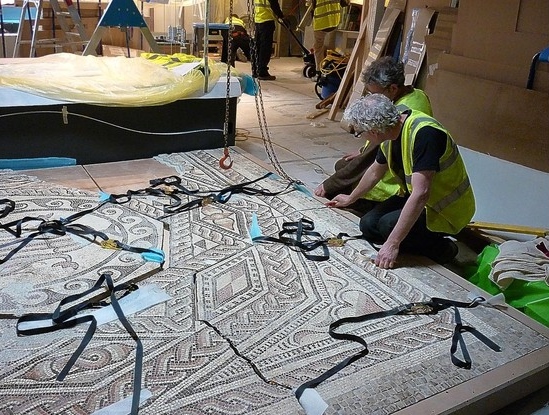
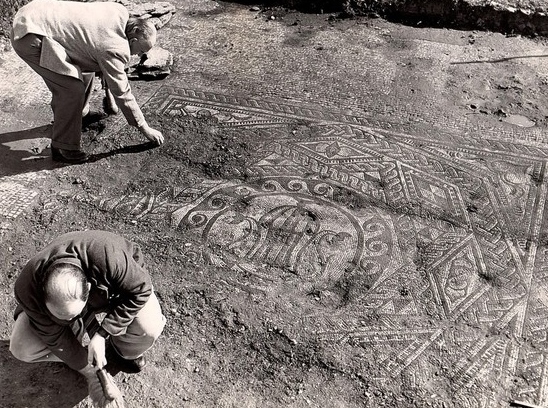
Downton Roman Mosaic to finally go on show

View original post 121 more words
Happy Ēostre to all our readers
Fall in love with Salisbury…
Visit Salisbury!
Stonehenge Community Open Days: 20th February and 20th March
There are still some spaces left for the 20th February and 20th March open days from 12pm -2pm at the new Stonehenge Visitor Centre. These are free events but you must pre book and call 0870 3331183 stating Stonehenge Community Open Days as the event you want to book onto. You can book up to 4 people and must be a Wiltshire resident.
The Stonehenge Learning and Outreach Group with ourselves, Salisbury and South Wiltshire Museum,  Wiltshire Museum Devizes, Wessex Archaeology and National Trust will meet this week and share their learning events that are happening too.
Join us for a series of open days for the local community at the new Stonehenge visitor centre, featuring a special tour with Susan Greaney, Senior Properties Historian and Lisa Holmes, Community Projects manager.
Come and find out about the making of the exhibition, the opportunities for local voices to contribute to future exhibitions and how you will be able to make use of the centre for learning events.
www.english-heritage.org.uk/stonehenge
Community Heritage Ambassador
Stonehenge and Salisbury Guided Tours
 Stonehenge and Salisbury Guided Tours