Home » 2014 (Page 4)
Yearly Archives: 2014
The Pillars of the Earth: Meet Ken Follett at Salisbury Cathedral on Sunday 2nd March
Salisbury Cathedral is delighted to announce that Ken Follett is visiting on Sunday 2 March at 6.00pm at the start of a tour of five Cathedrals to mark the 25th anniversary of the publication of his global bestselling book The Pillars of the Earth. The author was inspired to write what has become a classic masterpiece by a number of medieval cathedrals in England and Europe, but none more so than Salisbury. He will deliver a lecture ‘Why Cathedrals?’, sign books and meet fans at a reception immediately afterwards.~
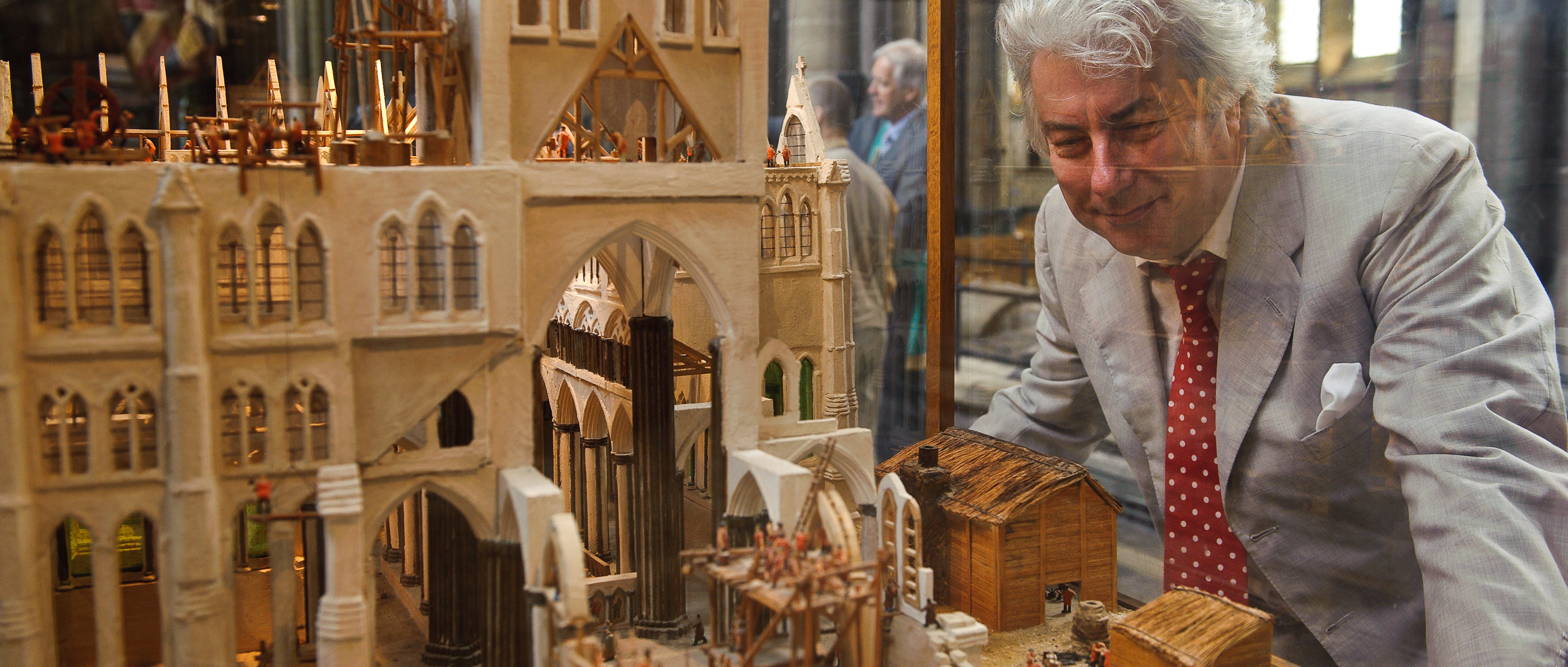 Sarah Mullally, Canon Treasurer at Salisbury Cathedral, said “This is truly a rare opportunity to hear Ken Follett talk about cathedrals, the inspiration behind his extraordinary book The Pillars of the Earth, and to meet him in person. He is passionate about these buildings and through his researches for the book, and its sequel World Without End, has considerable knowledge and understanding of them and the people who built them. He will be joined by the actor David Oakes – who played the dastardly William Hamleigh in the TV mini-series of the book – and by Gary Price – the Cathedral’s Clerk of Works and modern day Tom Builder – for a Q&A session after his talk.”
Ken Follett writes “Many times I have been asked why Pillars has such a big impact. There is no simple answer, because a novel is so complex. But I come back again and again to the people who built the cathedrals. Those men and women were by modern standards, poor and ignorant. They lived in wooden huts and slept on the floor. Yet they created the most beautiful and awesome buildings the world has ever known. Human beings have the capacity to rise above mundane circumstances and touch the eternal. That is what Pillars is about and, in the end, I think that may be why it has so profoundly touched the hearts of so many readers for so many years.”
Tickets, £10.00 for the lecture and £17.50 for the lecture and reception with Ken Follett, David Oakes and Gary Price, are available online from www.salisburycathedral.org.uk and at Waterstones Salisbury from 7 February.
The special anniversary edition of The Pillars of the Earth is published by Pan in paperback on 30 January 2014 at £9.99. It is available from Waterstones and all good bookshops.
Read more about The Pillars of the Earth and Salisbury Cathedral connection here.
Salisbury Cathedral event: http://www.salisburycathedral.org.uk/news/meet-ken-follett-salisbury-cathedral-sunday-2-march (Posted By : Sarah Flanaghan)
“Many of our customers visit Salisbury and Old Sarum after reading this wonderful book”
The Stonehenge Travel Company, Salisbury, England
Guided Tours of Stonehenge and Salisbury
Stonework


Here’s a lovely thing. It’s a poem about an ancient place, by Mark Edmonds and Rose Ferraby – or as Mark describes it, “words by me, images by the two of us” – in the form of an illustrated book. It’s mostly the story of the making of a stone axe 6,000 years ago. A quarry high in the Lake District draws the maker up to find the right stone, where the axe is roughed out, then carried back down and finished; the description attempts to convey that this means more to the maker than the mere winning of a useful implement. Interleaved with this is the briefer story of (one assumes) a knowledgeable archaeologist who finds up there an abandoned, unfinished axe; he thinks he can beat the problem that defeated the neolithic knapper, and at the end succeeds. He descends with the axe, “Six thousand years in the…
View original post 633 more words
Plains, Trains and Automobiles: Salisbury, Stonehenge and South Wiltshire is a truly unique destination
Take some time out and escape to Wiltshire this year. Find out more about this mysterious and beautiful part England.
The newly completed Stonehenge visitor centre deserves an extended visit. We recommend staying in Wiltshire and 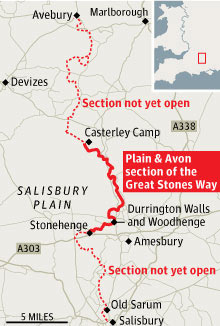 exploring the surrounding area, rich in history, myths and legends. Salisbury, Stonehenge and South Wiltshire is a truly unique destination. Set among some of the most beautiful countryside and with a 5,000 year old history the area is steeped in history but with its eye firmly fixed on the future.
Salisbury is a bit of a rail hub with main lines and frequent trains going east to London, south to Southampton and west to Bath and Bristol. Frequent trains run from London’s Waterloo station taking approximately 80 minutes to do the journey. There are normally two trains an hour operating up until very late evening. During the week, the cheap tickets are not available until after the morning commuter rush. Don’t worry if your accommodation is in London, its very easy to get to Salisbury or Bath from London by train and the trains run till late so there is still time to get back to London last thing.
Here are some examples of how accessible Wiltshire is using the Inter-City services from central London:
• London (Paddington) – Bath and Bristol via Swindon (55 mins),Chippenham (70 mins) and Great Bedwyn (90 mins).
• London (Waterloo) – Salisbury (90 mins) and Tisbury (103 mins).
 Salisbury is one of England’s most wonderful cities – a medieval masterpiece with something for everyone. From traditional English pubs to cosmopolitan street cafes and from hard-to-find specialist shops to major high street stores, you’ll find it in Salisbury. And at its heart there is the magnificent Salisbury Cathedral, towering over the city as it has for over 750 years. Step outside of the city and you are in another world. Green hills, crystal clear rivers and picturesque towns and villages just waiting to be discovered. And, of course, there’s Stonehenge. The world’s most famous stone circle stands just a few miles north of Salisbury – a must see destination.
Stonehenge Stone Circle is the most famous and enigmatic Megalithic site in the United Kingdom. Dominating the landscape of Salisbury Plain in the county of Wiltshire, the giant standing stones of Stonehenge – some weighing up to 50 tonnes – are a mysterious icon left by mysterious ancient peoples. You may have a special interest in burial chambers, the construction of Stonehenge, the purpose and culture of the people that built the henge.
English Heritage Stonehenge Visitor Centre. The fantastic new £27m visitor centre at Stonehenge is now open, offering tourists an interactive experience and the chance to examine prehistoric objects. Visitors are transported by shuttle bus more than a mile (2km) from the venue to see the stones.
Salisbury Plain
Discover prehistoric sites and rare species preserved on Salisbury Plain. An ocean of grassland and a sweep of big sky. Ancient 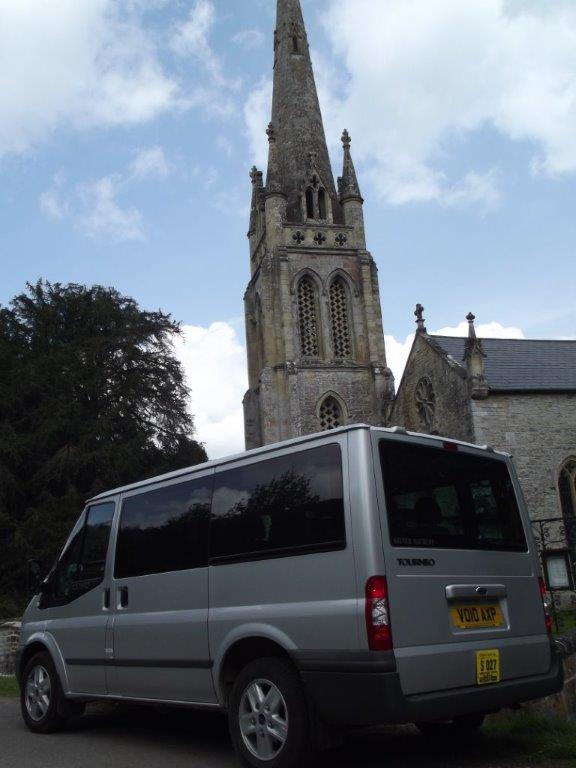 monuments loom out of the mist; camouflaged soldiers crouch in the undergrowth. Salisbury Plain is a landscape of extremes. It is the largest remaining area of chalk grassland in Northwest Europe and home to 2,300 prehistoric sites yet also the largest military training area on British soil.
Avebury Stone Circle Avebury rivals – some would say exceeds – Stonehenge as the largest, most impressive and complex pre-historic site in Britain. Avebury is part of a wider complex of Neolithic and Bronze Age monuments, with many other ritual sites in English Heritage care. West Kennet Avenue joined it to The Sanctuary, and another stone avenue connected it with Beckhampton. West Kennet Long Barrow and Windmill Hill are also nearby, as is the huge and mysterious Silbury Hill. This extraordinary assemblage of sites seemingly formed a huge ‘sacred landscape’, whose use and purpose can still only be guessed at. Avebury and its surroundings have, with Stonehenge, achieved international recognition as a World Heritage Site.
Mysterious Crop circles Salisbury Plain is well known for its crop circles and much mystery still remains as to why they occur and the meanings behind their complex formations. A tour of the ancient hills and vales of Wiltshire which are, inexplicably, the world capital of crop circles Crop circles in Wiltshire often occur around the heart of the county in and around Avebury, usually first appearing in April and continuing into the summer months. Crop circle guided tours can be arranged from Salisbury or Bath
Guided Tours from Salisbury can return to Salisbury or why not make the most of your sightseeing and be dropped off in Bath, Southampton or even London. Popular destinations can include: Salisbury Cathedral and the Magna Carta | Old Sarum Hillfort | Stonehenge Stone Circle and the new visitor centre | Woodhenge and Durrington Walls | Ancient Chalk Hill Figures | Pewsey valleys | Salisbury Plain and mysterious crop circles | Avebury Stone Circle | West Kennet Long Barrow | Silbury Hill | Lacock Village | Castle Combe Village | The Cotswolds | Glastonbury Tor and The Isle of Avalon
Needless to say private guided tours are bespoke and can be tailoured to suit your needs in the date(s) you wish to travel. Stonehenge private access tours allow you to enter the inner circle of Stonehenge before or after it is officially open to the public.
A once in a lifetime opportunity!
We would be delighted to arrange a private guide tour of Wiltshire and help you with your Salisbury Travel plans. Email us: tours@StonehengeTravel.co.uk or visit our website: http://www.StonehengeTravel.co.uk
Some Salisbury and Stonehenge links:
Visit Wiltshire: Discover things to do and places to visit across Wiltshire. Plan your visit, book hotels and accommodation and find out what’s on in the county. http://www.VisitWiltshire.co.uk
Download the Visit Wiltshire Apps here: http://www.visitwiltshire.co.uk/plan-your-visit/apps
Magnificent Salisbury Cathedral with the tallest church spire in the United Kingdom, home to the finest of the four surviving original Magna Carta 1215: http://www.salisburycathedral.org.uk/
Old Sarum Hillfort: http://www.english-heritage.org.uk/daysout/properties/old-sarum/
Longleat Safari and Adventure Park, in Wiltshire, England was opened in 1966 and was the first drive-through safari park outside Africa: http://www.Longleat.co.uk
Wilton House is an English country house situated at Wilton near Salisbury in Wiltshire. It has been the country seat of the Earls of Pembroke for over 400 years: http://www.WiltonHouse.co.uk
Amesbury Museum & Heritage Centre: http://www.visitwiltshire.co.uk/ideas-and-inspiration/amesbury-museum-and-heritage-centre-p1536253
Salisbury & South Wiltshire Museum: Showcasing the medieval Cathedral town of Salisbury and the ancient wonders of Stonehenge. http://www.salisburymuseum.org.uk/
The Cathedral Express. Wonderful days out by steam train: http://www.steamdreams.com/
English Heritage: http://www.english-heritage.org.uk/daysout/properties/stonehenge/
The Stonehenge Tourism Website: http://www.Stonehenge-Tourism.com
London to Salisbury Trains: http://www.thetrainline.com/
Discover Britain: http://www.discoveringbritain.org/walks/region/south-west-england/salisbury-plain.html
Guided Tours of Stonehenge and Salisbury http://www.StonehengeTravel.co.uk
For Stonehenge and Salisbury News follow us on Twitter: @SalisburyTours
Local Wiltshire Tour Guide
The Stonehenge Travel Company
Stones of distinction


View original post 135 more words
Educational Guide for Archaeologists
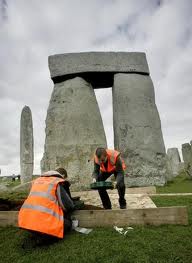 Studying humanity’s past is a way to better understand the events that took place as far back as ancient times or as recent as a few hundred years. These events play an important part in today’s world. Historical occurrences and discoveries help humanity better understand events that shaped the world into what it is today. They also teach important lessons that modern society can learn from, and in some cases avoid. For this reason the study of past cultures is critical.
What is Archaeology?
Archaeology is the scientific study of the past via the remains of discovered materials, or artifacts. These materials are objects that humans in the past made and/or used as a part of their daily lives. It may include objects such as coins, pottery, and even buildings. Environmental discoveries are also studied during archaeological investigation. The people who discover and study these historical items are called archeologists. They use their discoveries to learn about how past cultures lived.
Methods
An archaeologist must follow certain steps or methods during his or her investigations. These methods aid archaeologists in following the basic rules associated with archaeology in addition to helping them maintain the integrity of their studies. These methods include research in the form of field surveys and remote sensing, excavation, and analysis. Research occurs before the archaeologist begins digging due to its potentially destructive nature. One of the first steps in archaeology is to locate the archaeological site and to survey it for potential areas of interest. Locating the site involves the use of satellite imagery and is known as remote sensing. The process of locating an area of interest is called field survey. This is a non-destructive form of research that does not involve digging, which can be destructive. Field survey includes surface, aerial, and geophysical survey. Geophysical surveys allow archaeologists to map beneath the ground using instruments such as magnetometers, ground penetrating radars, and even metal detectors. Aerial surveys allow archaeologists to survey large areas from the air using airplanes, balloons and unmanned flying crafts. Another method is virtual archaeology. Combing the surface of an area also may provide useful information or unearth artifacts. This is known as surface surveying.
Excavation is the unearthing of artifacts and it is the most common method associated with archaeology. It is the next step after research and surveying techniques, particularly if non-invasive techniques failed to turn up anything of significance. Most often it involves digging for artifacts that are buried; however, surface surveying may also be considered a form of excavation. Excavation occurs at a viable site where the exact location of artifacts is known and recorded. Because it involves digging, it is a highly destructive method, and it is also one of the most expensive aspects of an archaeological investigation. Laboratory analysis follows excavation. This occurs in stages, starting with the careful cleaning and labeling of the excavated items. Artifacts from the site are then cataloged, dated, and examined.
Historical Archaeology
When archaeology involves the study of cultures that have written records, it is called historical archaeology. Like traditional archaeology, artifacts, the environment, and even folklore are studied. Due to the presence of written records, this branch of archaeology studies more recent times in history. In the U.S., for example, historical archaeologists may study the history of slavery in a certain location, or a battle during the Civil War.
Ethnoarchaeology
When scientists study a living culture to better understand cultures in the past, it is called ethnoarchaeology. It is a subcategory of archaeology that increased in popularity during the 1960s. Ethnoarchaeologists observe the use of artifacts and the behavior of a group of people. These observations are used to perform a comparison between the present people and the people who lived in the past.
Experimental Archaeology
Experimental archaeology is yet another subcategory of archaeology. Archaeologists who practice this form of the science attempt to recreate or replicate their findings using technologies and tools that are accurate for the time in history. This provides them with important information and allows them to understand not only how it was made, but also how it may have been used. Replication may be of an object that is as small as a tool or as large as a home or some other type of structure.
Archaeometry
Archaeometry involves the dating of artifacts using scientific techniques, such as radiocarbon dating. In addition, archaeometry also involves the application of other scientific methods such as engineering and physical science to common problems found in archaeology.
Archaeology links:
- About Archaeology
- What is Archaeology?
- Overview of Archaeological Methods
- What is Historical Archaeology
- Historical Archeology
- Ethnoarchaeology
- Experimental Archaeology: The Oxford Companion to Archaeology
- What is Archaeometry/Archaeological Science?
- Archaeometry
- What is Experimental Archaeology?
-
The Stonehenge Travel Company
Salisbury, Wiltshire, EnglandMysterious Landscape, Magical Tours
New Stonehenge centre could bring boost to Devizes museum
Wiltshire Museum boss David Dawson believes the new Stonehenge Visitor Centre will benefit the museum and vice-versa.
The museum, based in Devizes, recently opened new Prehistoric Wiltshire galleries which have helped to draw more visitors, but is also making sure Devizes has a high profile at the new Stonehenge Visitor Centre.
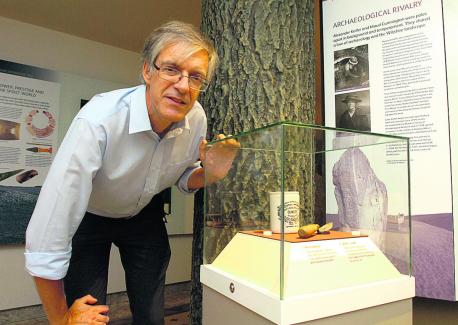
David Dawson, Devizes Museum
The museum is lending some 50 objects, including gold treasures, to the centre and they will be seen by the million visitors that go to Stonehenge each year.
English Heritage is encouraging people to visit the rest of Wiltshire, and especially to see the Prehistoric galleries at Wiltshire Museum.
Museum director Mr Dawson said: “Since our new galleries opened we have more than tripled the number of visitors, and we look forward to welcoming more people who are visiting Stonehenge to come and see the gold treasures that we have just put on display from the time of Stonehenge.”
Wiltshire Museum, Telling Wiltshire’s Story
500,000 years of Wiltshire’s story told in a brand new £750,000 gallery featuring high quality graphics and leading-edge reconstructions: http://www.wiltshiremuseum.org.uk/
Reported in the Gazette and Herald:
http://www.gazetteandherald.co.uk/news/headlines/10912099.New_Stonehenge_centre_could_bring_boost_to_Devizes_museum/
Our guided tours from Salisbury can include a visit to the excellent Wiltshire Museum?
The Stonehenge Travel Company, Salisbury, England
www.StonehengeTravel.co.uk
 Stonehenge and Salisbury Guided Tours