Home » 2015 (Page 2)
Yearly Archives: 2015
Stonehenge researchers ‘may have found largest prehistoric site’

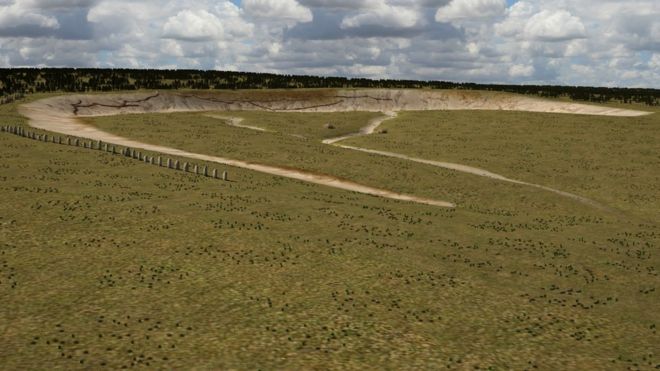
Using ground-penetrating radar, some 100 stones were found at the Durrington Walls “superhenge”, a later bank built close to Stonehenge.
The Stonehenge Living Landscapes team has been researching the ancient monument site in a five-year project.
Finding the stones was “fantastically lucky”, researchers said.
The stones may have originally measured up to 4.5m (14ft) in height and had been pushed over the edge of Durrington Walls.
The site, which is thought to have been built about 4,500 years ago, is about 1.8 miles (3km) from Stonehenge, Wiltshire.
The stones were found on the edge of the Durrington Walls “henge”, or bank, an area which had not yet been studied by researchers.
View original post 250 more words
Stonehenge Inner Circle Tours 2016
Be one of the few people to walk amongst the inner stone circle of Stonehenge in 2016
In the evening after Stonehenge is closed to the public, or at dawn before it is open, we can arrange for you to visit this awe-inspiring prehistoric monument and walk among the giant sarsen stones towering 6.4 m high and weighing up to 50 tonnes. Marvel at how stones of such monumental scale were quarried, transported and erected 5,000 years ago when the only tools available were made of wood, bone and stone.
Exclusive entry into the stone circle allows you to wander in and around the world heritage site and experience an up close and personal look at this iconic monument*

Stonehenge Inner Circle Tours. Voted Best Small Group Tour 2015
*For those of you who have not visited Stonehenge, we should mention that the complex is roped off. Visitors observe the stones from a distance and are not permitted within the Stone Circle which can be somewhat frustrating. Our private special access tours allow you to be amongst the stones.
Stonehenge Private Viewing Tours – Go beyond the fences in 2016……
What better way to experience the magic and mystery of Stonehenge than with a private viewing at sunrise or sunset on our ‘award winning’ tours. On our popular exclusive private guided tours from Salisbury or London, guests will be able to access the historic stone circle, and explore the surrounding area rich in history, myths and legends. Regular small group tours depart throughout 2016
“A truly magical experience!”
Salisbury and London tour departures throughout 2016: Perfect for individuals, couples, families and small groups
Experience an up close look at Stonehenge with a private viewing and exclusive entry into the inner circle in 2016.
“After traveling thousands of miles to England to experience Stonehenge, make the journey truly worth while with a professional Driver-Guide and local expert.”
Email us today and register your interest for advance 2016 availability and travel options: tours@stonehengetravel.co.uk
Stonehenge and Salisbury Guided Tours
The Stonehenge Experts
Proud members of Visit Wiltshire
Early Britons: Have we underestimated our ancestors?
Have we underestimated the first people to resettle Britain after the last Ice Age? Evidence from a variety of sources suggests that early Britons were more sophisticated than we could have imagined.
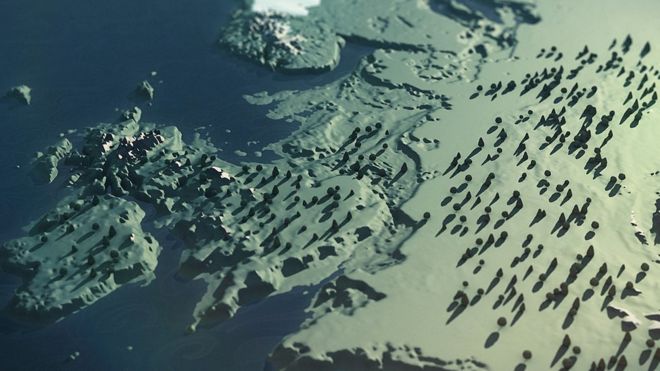
Archaeologists once thought that the story of the early hunter-gatherer Britons was lost to the mists of time.
The hunter-gatherers left almost no trace of their nomadic existence behind.
As a result, the stone-age settlers of ancient Britain were thought of as simple folk, living a brutal hand-to-mouth existence.
But now, evidence is emerging that turns those assumptions upside down. Archaeological sites all over the UK and northern Europe are producing evidence that paints these people in a very different light.
Thanks to this cutting-edge science, we now have an increasingly clear picture of prehistory, and the adaptable, culturally rich, and sophisticated people who inhabited these islands.
A BBC Horizon documentary, screened on Wednesday, tells the story of this quest to understand the first Britons.
Some of these Mesolithic, or Middle Stone Age, people lived at Blick Mead, Wiltshire – a few miles away from the future site of Stonehenge.
Here, groups seem to have managed and cleared rich forests, built structures and returned to the same place for over 3,000 years, according to a radio carbon date range that has yielded a uniquely long sequence for any Mesolithic site in Britain and Europe – 7,596-4,246 BC.
The springs at Blick Mead may have been the initial and practical reason why people lived there long before Stonehenge was built.

They have also preserved the remains of the animals they killed, tools they made and used, and possibly a structure they lived in.
The quantities of flint tools and animal bones, especially from extinct wild cattle known as aurochs, point to people living here for long periods of time and there being long-term special memories and associations with the place.
The types and variety of flint seem to reflect the movements of people who followed game with the seasons, and chose to stay in different areas according to the changing availability of plants for food and materials, and the needs for shelter.
Taken together, the flint and other stone tool evidence suggest that Blick Mead was a feasting and gathering place for thousands of years that people travelled large distances to reach. Far from it being a place nomads dropped into once in a while, time would have been spent there, ideas exchanged and new technologies discussed and adapted.
Hunter-gatherers prospered in Britain, but then, 6,000 years ago there was a dramatic and permanent change in the way our ancestors lived their lives. So dramatic in fact that it’s been given a different historical name. This was the start of the new Stone Age in Britain – the Neolithic.

It was during the Neolithic that pottery emerged, the time when people built monuments like Stonehenge – but above all else, it’s the point at which people became farmers.
Scientists and archaeologists have begun to uncover evidence that local hunter-gatherer ways survived the arrival of farming rather than being extinguished, as is often depicted.
And at Blick Mead, where rare evidence of hunter-gatherer life is so well preserved, finds include bones of mice, toads and fish – we can also discover more about the origins of Stonehenge.
Excavations at the site are showing that people were living in the area from the time of the first monuments to be built at Stonehenge.
We have always thought of Mesolithic people, the first Britons, as hunter-gatherers, living a nomadic life, primitive and precarious. But what has been recently revealed at Blick Mead, and elsewhere, is the existence of a much more complex, dynamic society.
The dramatic discoveries at Blick Mead are only partly important because they provide the back story to the Stonehenge story; they are also important because they reflect the growing importance of these peoples to British history generally.
And these earliest British stories are showing that the Mesolithic was a defining period in the history of these isles.
Burial of Bronze-Age Teen Discovered in Wiltshire, England
WILTSHIRE, ENGLAND—The 4,000-year-old skeleton of an adolescent has been uncovered by a team from the University of Reading at Wilsford Henge in the Vale of Pewsey, an area located between Stonehenge and Avebury. The child had been buried in the fetal position, and had been wearing an amber necklace.  “The skeleton is a wonderful discovery which will help tell us what life was like for those who lived under the shadow of Stonehenge at a time of frenzied activity. Scientific analysis will provide information on the gender of the child, diet, pathologies and date of burial. It may also shed light on where this young individual had lived,” Jim Leary of the University of Reading told BT News. The excavation has also recovered flint blades, decorated pottery, shale and copper bracelets, and a Roman brooch. To read more, go to “Under Stonehenge.”
Stonehenge and Avebury Guided Tours
The Stonehenge Travel Company, Salisbury
Wiltshire house rivalled Stonehenge as a hub for ancient Britons
Neolithic building on vast site at Marden Henge is welcoming public visitors again after thousands of years buried beneath farmland.

Pieces of flint tools dropped more than 4,300 years ago on the floor of a house as old as Stonehenge have been laid bare on the edge of Marden Henge, a giant ditch and bank enclosure so buried in rich Wiltshire farmland that it has almost vanished from view.
“We’ve over-fetishised Stonehenge for far too long, because those giant trilithons are just so damn impressive,” said Dr Jim Leary, director of this summer’s excavation with the Reading University archaeology summer school, in the lush Vale of Pewsey. “It could well be that this was really where it was at in the Neolithic.”
The rectangular building will welcome visitors next weekend for an open day which is part of the national festival of archaeology. The house, believed to be one of the best preserved from the period ever found in the UK, and made to look smarter with tonnes of white chalk brought from miles away and stamped into a kind of plaster, is as neatly levelled and regular as the nearby postwar bungalows built on top of part of the henge bank.
The house and other parts of the huge site have already produced finds including beautifully worked flint arrowheads and blades, decorated pottery including some pieces with the residue of the last meals cooked in them, shale and copper bracelets and a beautiful little Roman brooch – and the tiny jawbone of a vole. Analysis of the mass of seeds and charred grains recovered will reveal what the people were growing and eating.
Pig bones – probably the remains of at least 13 animals, food for hundreds of people – and scorch marks from a charcoal firepit suggest the house was never a permanent residence but connected with great gatherings for feasts. When it was abandoned the entire site, pig bones and all, was cleaned and neatly covered with earth, so it would never be used again.
The structure originally stood on a terrace overlooking a mound, within a small earth-banked circle, in turn part of the enormous Marden Henge.
Leary, joined by archaeology students, professionals and amateurs from all over the world, who will continue working on the site for years to come, is peeling back the layers of a monument that was once one of the biggest and most impressive in Britain. Ramparts three metres high enclosed a vast space of 15 hectares, far larger than the Avebury or Stonehenge circles, and too large for any imaginable practical use.
Leary believes the purpose must have been status, showing off wealth and power in the ability to mobilise a massive workforce. “Avebury had the huge ditches, Stonehenge upped the ante with the massive trilothons, Marden had this enormous enclosure.”
The site is so vast that it takes Leary and fellow director Amanda Clarke 40 minutes to walk from the team working on the house to the diggers who have uncovered a previously unrecorded Roman complex including the foundations of an impressive barn.
Like the Durrington Walls henge a few miles downstream, and Stonehenge itself, Marden was linked to the river Avon by a navigable flow, now a sedge- and nettle-choked stream, which forms one side of the henge.
“Avebury in one direction and Stonehenge in the other have been excavated and studied for centuries because the preservation of the monuments on chalk is so much better. Not nearly enough attention has been paid to the archaeology of the fertile valleys because the land is so good the monuments have often been ploughed out above ground – but it is a key part of understanding the story.”
Marden’s banks, cut through by later roads or lying under modern farm buildings, grazing cows and ripening crops in many places, once stood three metres tall, towering over an equally deep ditch. The outer ring enclosed a complex of smaller monuments, including the Hatfield Barrow, which was once 15 metres tall, and now survives only as a 15cm ripple in the field. It was excavated in 1807 and, after a collapse caused by the shaft, later completely levelled by the farmer.
The site welcomes visitors every day, but the open day will have finds on display, tours and activities. It will be among more than 1,000 events across the country over the last fortnight of July, including lectures, site tours and visits to archaeology stores and structures normally closed to the public.
- The Reading University archaeology summer field school open day takes place at Marden Henge, Wiltshire, on 18 July. The Council for British Archaeology festival of archaeology runs nationwide from 11-26 July.
Stonehenge and Avebury Guided Tours
http://www.StonehengeTravel.co.uk
Avebury Stone Circle: Mystery and secrets all set in stone.
MARK THORNTON (Western Australian) finds ancient tales and spirits permeate at prehistoric Avebury.
What’s the connection between a prehistoric English monument older than Stonehenge, marmalade and a Victorian MP?
The English prehistoric site is the Neolithic stone circle at Avebury in Wiltshire. The MP is Sir John Lubbock, who bought it in 1871, and the marmalade connection comes from Alexander Keiller, who made his fortune from the confection and used it to buy the site 20 years after Sir John’s death.
Avebury, encompassing 11.5 hectares, is the largest prehistoric stone circle in the world. Construction was intermittent and spanned hundreds of years but was completed around 2600 BC. It’s 14 times larger and 500 years older than Stonehenge, 30kms to the south.
As with Stonehenge, many people have theories as to why it’s there. One is that it was the focal point of large-scale religious ceremonies and rituals during the Neolithic and Bronze ages. Another is that the shape and alignment of the stones, which have almost geometric precision, suggest it was an astronomical observatory.
Antiquarian Dr William Stukeley first visited the site in the 1720s and after 30 years research, claimed the original ground plan of Avebury represented the body of a snake passing through a circle to form a traditional symbol of alchemy. Other researchers have since said it was a centre of science, learning, pilgrimage, a cultural meeting place for regional tribes, and even a hub for extra-terrestrial activity—though this suggestion was made in the 1960s when hippies with vivid imaginations, and often heightened sensibilities, discovered the site. Sadly whoever built Avebury left no written or pictorial clues.
The site consists of a circular bank of chalk 425 metres in diameter and six metres high, enclosing a ditch that was nine metres deep when dug but after 4600 years of weathering, still has a depth of more than six metres. Archaeologists estimate the ditch would have taken nearly 300 people 25 years to complete and required 200,000 tons of rock to be chipped and scraped away with crude stone tools and antler picks. This suggests a sizeable, stable and well-organised local population lived at the site with a successful agrarian economy able to support the build. However, they had disappeared long before the Saxons built a settlement there 1500 years ago. The word Avebury probably comes from Ava, the Saxon leader at the time.
Inside the ditch there is a circle of 27 sandstone pillars, each weighing up to 50 tons. There used to be three times that many, but over the past 1000 years local villagers used the site as a quarry for building materials. Inside the circle of sandstone pillars are the remains of two smaller stone circles, each originally consisting of about 30 uprights and each about 105 metres in diameter. At the centre of the southern inner circle a tall obelisk once stood surrounded by smaller boulders.
It’s a big and impressive site, and due to the presence of Avebury village, built inside the ring of stones with its church and edged by some ancient large trees, it’s softer and less foreboding than Stonehenge. Nonetheless, it has a strong sense of mystery. Four huge beech trees stand out, each with a spectacular tangle of roots spread over the surface of the chalk bank. Locals call them the Tolkien Trees, claiming J R R Tolkien was inspired by them to create the Ents for Lord of the Rings. Meandering among the stones in the late afternoon under a lowering sky it’s easy to give your imagination free rein.

Avebury is more accessible than Stonehenge, which is now fenced off and requires you to buy your $30 admission tickets— that only give you two hours on site— in advance. Avebury has no admission fee, fences or closing times and you can walk among the ancient stones and mounds as long as you like, soaking in the mystery. Some people even camp among the stones. It’s this ambience that attracted Sir John Lubbock and later marmalade baron and amateur archaeologist Alexander Keiller.
Sir John, a close friend of Charles Darwin, was a visionary whose main political agendas in Parliament included promoting the study of science in primary and secondary schools and protecting ancient monuments. He invented the terms ‘palaeolithic’ and ‘neolithic’ to denote the old and new stone ages. He bought Avebury in 1871 when the locals seemed bent on destroying it by using the ancient stones as building material. Some cottages still have large pieces of the standing stones as massive cornerstones.
Sir John was responsible for the Ancient Monuments Act in 1882, the first piece of legislation that protected archaeological sites, paving the way for English Heritage.
Pious locals had begun destroying the site more than 1000 years earlier with the encouragement of the Christian church, which controversially urged the destruction of pagan symbols, yet was not averse to encouraging the villagers to build a church in the village from those same ‘pagan’ stones. During his tenure and oversight of repairs Sir John discouraged any more building within the site, describing the village and its church to be “like some beautiful parasite (that) has grown up at the expense and in the midst of the ancient temple”.
When he was raised to a peerage in 1900 Sir John chose Avebury for his title, becoming Lord Avebury thereafter.

Keiller bought the site, including the entire village with its then population of about 500, in 1934 with the intention of completing Lord Avebury’s work in restoring it. He knocked down cottages and farm buildings to remove human habitation from within the stone circle and re-erected fallen stones and set concrete markers in places where stones originally stood. In doing so he both upset and impressed villagers, who soon came to accept him as a well-meaning eccentric who brought work to what was a poor community. He spent the equivalent of $4 million in today’s money on the restoration, which includes a magnificent museum. He sold the site to the National Trust in 1943 and his widow donated the museum to the nation in 1966.
The museum is worth a visit on its own. Particularly fascinating is its collection of ancient jewellery made from rare metals and bronze, many featuring semi-precious stones. Although made thousands of years ago, the jewellery has in its perfect simplicity a timeless style and beauty.
Avebury is well worth a visit, not just for itself, but for a number of other prehistoric sites nearby, including Silbury Hill and the West Kennet Long Barrow (a burial mound), both of which are several hundred years older than Avebury. Together they lie at the centre of a collection of Neolithic and early Bronze Age monuments and all are part of a World Heritage Site in a co-listing with Stonehenge.
Stonehenge and Avebury Guided Tours
The Stonehenge Travel Company
Salisbury
Exploring ancient life in the Vale of Pewsey
Our knowledge of the people who worshipped at Stonehenge and worked on its construction is set to be transformed through a new project led by the University of Reading.
This summer, in collaboration with Historic England, the Arts and Humanities Research Council and Wiltshire Museum, archaeologists are embarking on an exciting three-year excavation in the Vale of Pewsey, Wiltshire.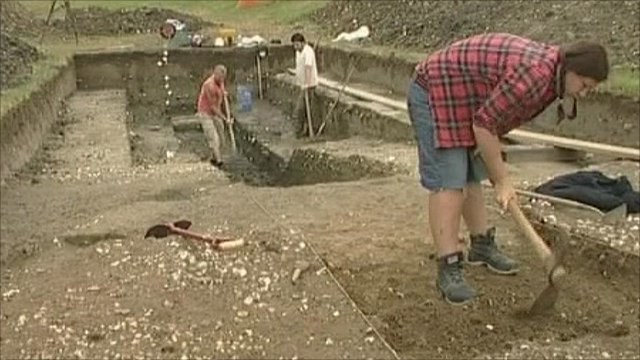
Situated between the iconic prehistoric monuments of Stonehenge and Avebury, the Vale of Pewsey is a barely explored archaeological region of huge international importance. The project will investigate Marden Henge. Built around 2400 BC ‘Marden’ is the largest henge in the country and one of Britain’s most important but least understood prehistoric monuments.
Excavation within the Henge will focus on the surface of a Neolithic building revealed during earlier excavations. The people who used this building will have seen Stonehenge in full swing, perhaps even helped to haul the huge stones upright.
Dr Jim Leary, from the University of Reading’s Department of Archaeology and Director of the Archaeology Field School, said: “This excavation is the beginning of a new chapter in the story of Stonehenge and its surrounds. The Vale of Pewsey is a relatively untouched archaeological treasure-chest under the shadow of one of the wonders of the world.
“Why Stonehenge was built remains a mystery. How the giant stones were transported almost defy belief. It must have been an astonishing, perhaps frightening, sight. Using the latest survey, excavation and scientific techniques, the project will reveal priceless insight into the lives of those who witnessed its construction.
“Marden Henge is located on a line which connects Stonehenge and Avebury. This poses some fascinating questions. Were the three monuments competing against each other? Or were they used by the same communities but for different occasions and ceremonies? We hope to find out.”
The Vale of Pewsey is not only rich in Neolithic archaeology. It is home to a variety of other fascinating historical monuments from various periods in history, including Roman settlements, a deserted medieval village and post-medieval water meadows. A suite of other investigations along the River Avon will explore the vital role of the Vale’s environment throughout history.
Dr Leary continued: “One of the many wonderful opportunities this excavation presents is to reveal the secret of the Vale itself. Communities throughout time settled and thrived there – a key aim of the dig is to further our understanding of how the use of the landscape evolved – from prehistory to history.”
Duncan Wilson, Historic England Chief Executive, added: “Bigger than Avebury, ten times the size of Stonehenge and half way between the Stonehenge and Avebury World Heritage Sites, comparatively little is known about this fascinating and ancient landscape. The work will help Historic England focus on identifying sites for protection and improved management, as well as adding a new dimension to our understanding of this important archaeological environment.”
The Vale of Pewsey excavation also marks the start of the new University of Reading Archaeology Field School. Previously run at the world-famous Roman town site of Silchester, the Field School will see archaeology students and enthusiasts from Reading and across the globe join the excavation.
The six week dig runs from 15th June to 25th July. Visitors are welcome to see the excavation in progress every day, except Fridays, between 10:00am and 5pm. Groups must book in advance.
Read more at: http://phys.org/news/2015-06-exploring-ancient-life-vale-pewsey.html#jCp
Provided by University of Reading
We offer guided tours of Stonehenge and Avebury with local experts.
Stonehenge and Salisbury Guided Tours
The Stonehenge Travel Company
Magna Carta Walking Tours: Liberty, Justice and Power in Salisbury.
During 2015 we are celebrating the 800th anniversary of the Magna Carta. Here in Salisbury we are particularly proud that our own Magna Carta is considered to be the best of the originals. Salisbury Cathedral also has the tomb of William  Longespée, Earl of Salisbury, half brother of King John. Longespée is specifically mentioned in Magna Carta as an advisor to King John. Richard Poore, Bishop of Salisbury is described as a witness in the 1225 re-issue of Magna Carta on display in Washington & Canberra. In addition Salisbury has been the scene of many historic visits by the Kings and Queens of England over the last thousand years. This walk will look at the changes to liberty, justice and power, both in Salisbury and throughout the kingdom, over many centuries.
We shall see how the liberty of the people of Salisbury has been influenced by harsh Norman Kings, Magna Carta, powerful Bishops, cruel civil wars, severe punishments, a Rotten Borough and unjust laws. This walk is a journey from absolute medieval monarchy to the constitutional monarchy of today. From feudal law to parliamentary law. From royal power to people power.
Please see Magna Carta Walk Flyer 2014 (2).pdf for more details
6th, 13th, 20th, 27th June 2015
Walks start at 2.00pm and last for about 90 minutes.
Tickets £6.00 each and can be bought in advance from Salisbury Information Centre Telephone: 01722 342860
The Walks do NOT include entry to Salisbury Cathedral Magna Carta Exhibition.
For more information about these walks visit Salisbury’s Blue Badge Guides website
The Stonehenge Travel Company
Stonehenge and Salisbury Guided Tours
http://www.StonehengeTravel.co.uk
On the Magna Carta trail. Celebrating the 800th anniversary.
Legend has it that in 1220 the Bishop of Salisbury shot an arrow high into the air from the ramparts of Old Sarum castle vowing that he would build a new cathedral wherever the arrow landed. He must have had arms like an ox or some seriously impressive divine intervention for Salisbury Cathedral is actually several miles from the castle.

Cathedral. Picture: Getty
Little matter. The reality is that the Cathedral he had built is probably the finest example of Early English gothic architecture in the country. It is perfectly positioned on the beautiful water meadows beside the slow-moving River Avon and topped by the tallest spire in the country (which you can climb if you have the knees and lungs for it).

The cathedral’s elegant vaulted ceiling. Picture: Getty Source: Getty Images
It is also home to the best-preserved of the four remaining original Magna Cartas which guarantees the city a starring role in the document’s 800th birthday celebrations throughout 2015.
Salisbury and surrounding areas of Wiltshire, including Stonehenge and the market town of Trowbridge, make up one of six designated Magna Carta trails. These guide visitors through some of the most historic and picturesque parts of England from Durham and York in the north to Worcester and Hereford in the centre, Norwich in the east and Dover, Canterbury and Pevensey in the south west.
Events kicked off in February when the four surviving original Magna Cartas — from Salisbury, from Lincoln Cathedral and two kept at the British Library — were brought together, the first time this has ever occurred, for three days in London.
For the rest of the year the Magna Carta is at the heart of a myriad of festivals, fetes, exhibitions and displays, literary and academic gatherings in every city, town and village with even the flimsiest link. And a few without any connection at all.
The Magna Carta, literally the Great Charter, was essentially a political device, drawn up to settle an increasingly violent dispute between King John and 25 rebel barons. Much of it referred to specific grievances. Its enduring legacy was that it outlined basic human rights, setting the principle that no-one was above the law and everyone had the right to a fair trial.
It not only became the cornerstone of the British constitution, it influenced subsequent documents like the US Bill of Rights and the Universal Declaration of Human Rights.
In March the Salisbury Magna Carta was returned to a redesigned interactive display in the Cathedral Chapter House along with other historical treasures from the extensive archives.
And the Cathedral itself is well worth a detailed exploration: from medieval tombs and effigies to the arched supporting pillars bent inward under the weight of the tower. There’s a beautiful modern baptismal font which spectacularly reflects the ceiling and the brilliantly coloured stained glass windows and the bumping stone, worn away from the centuries of traditionally “bumping” the heads of new choirboys to welcome them.
It has wide vaulted cloisters and boasts the oldest working clock in Europe. Built in 1386 it’s an ingenious series of weights and pulleys that has no traditional face but sounds the hour.
Running parallel to the building is the eye-catching Cathedral Close where the clergy lived. It still has a number of the original medieval buildings as well as some elegant Georgian town houses such as the impressive Mompesson House and featured in a film adaptation of Jane Austen’s Sense and Sensibility.

More than a million visitors each year visit Stonehenge to ponder its mysteries. Picture: Getty Source: Supplied
Stonehenge, just 13 kilometres from Salisbury, remains one of the world’s great mysteries. Religious temple? Astronomical clock? Ancient burial chamber? Alien landing zone (that’s my favourite)? Truth is, nobody knows for sure. The mesmerising prehistoric circle of monolithic stones, dating back to between 3000-2000 BC and one of the most distinctive monuments in the world, still baffles experts and attracts more than a million tourists each year.
The new visitor centre, designed by an Australian firm of architects, is modern and eye catching yet sits surprisingly sympathetically in the rolling Wiltshire countryside.
Consisting of two main “pods” one of glass and one of wood, under a soft wave metal roof balanced on slender, unevenly angled metal poles. Inside, it contains an engaging interactive education centre, a cafe, shop and toilets.
The original “facilities” have been removed from their position much closer to the stones, and an access road grassed over which means Stonehenge can now be viewed not as an isolated structure but as part of a broader sweep of ancient mounds and barrows.
Visitors must walk through the gently undulating fields the approximately 2kms from the centre to the stones or take the official land-train. It always was an awesome site but now, with less clutter, it seems even more impressive.
There is more mystery at nearby Avebury which has the largest stone circle in the world, more than 100 stones believed to have been erected about 4,500 years ago. Or Woodhenge, with the remains of six concentric rings possibly part of a structure used by an early community.
From Avebury you can also see Spilbury Hill, the largest man made mound. What the circle and the mound were for, and who created them, is still unknown. Another mystery.
Trowbridge is impressively credentialed for inclusion on the Magna Carta trail. Mentioned in the Domesday Book in 1200 the town was granted one of the earliest market charters from King John.
But by 1215, Baron Henry de Bohun, tiring of the King’s constant demands for increased taxes, joined with 24 other barons to force him to seal the Magna Carta at Runnymede near Windsor. Henry, clutching the charter, is immortalised in a stained-glass window in the parish church.
Through the centuries, Trowbridge forged itself a position as a centre of weaving, first fine woollen cloth, largely for export to Europe then, when that dwindled, into coloured cloth made from the wool of Spanish merino sheep. Quick to adapt to new technology, first the spinning jenny and then the power looms, at one stage the town’s industry was so dominant it was dubbed the “Manchester of the West.”
Although not as cutesy as many of the villages and towns in Wiltshire, Trowbridge has numerous important historic buildings across a wide range of eras. Its museum, which focuses heavily on the town’s nationally important textile heritage, is a kids’ paradise. Established in one of the old cloth mills it has that real feel of living history which many of the newer and more high tech museums have lost. Here you are transported back in time in a series of historic tableaux.

Wadworth Brewery in Devizes still uses a dray pulled by Shire horses to deliver beer barrels to local pubs. Picture: Getty Source: Getty Images
No visit to any part of England is officially complete without a pint of the best local brew. Wadworth Brewery is based in the pretty town of Devizes, roughly 40 kilometres north of Salisbury and has been serving up specialist regional beers for more than 125 years.
It runs regular tours that include the opportunity to meet two of the brewery’s most popular workers, the gentle giants Max and Monty, two magnificent Shire horses who still deliver the beer to local pubs pulling the distinctive drays.
But the highlight has to be dropping in to the brewery’s own private “pub”. Here, visitors can compare the various brews like the popular 6X and the Bishop’s Tipple. Or go for something a little different like the Swordfish, created for the 100th anniversary of the Fleet Air Arm, where beer blended with Pusser’s Navy Rum. Cheers.
The writer was a guest of Visit England and travelled with British Airways.
Source: Herald Sun
Stonehenge and Salisbury Guided Tours
http://www.StonehengeTravel.co.uk
May Day History and Folklore. #Wiltshire Bank Holiday Events.
In medieval times, May Day was often celebrated by young men and women dancing on the village green around a specially-decorated tree called a maypole.
The branches of a slender tree were cut off, coloured ribbons tied to the top and the revellers held on to the ends of the ribbons and danced. Some villages still carry on the tradition today. 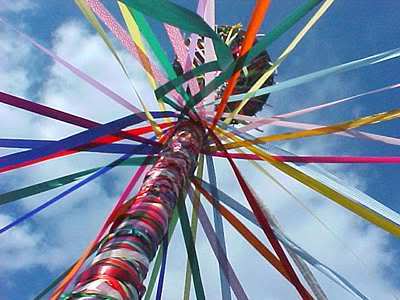
Before the dancing began there was also a procession led by a woman appointed May Queen for the day. Sometimes she was accompanied by a May King, who dressed in green to symbolise springtime and fertility.
In Germany, it was the tradition that a fir tree was cut down on May Eve by young unmarried men. The branches were removed and it was decorated and set up in village square. The tree was guarded all night to prevent it being stolen by the men of a neighbouring village. If the guard was foolish enough to fall asleep the going ransom rate for a maypole was a good meal and a barrel of beer.
A similar festival existed in ancient Rome called Floralia, which took place at around the end of April and was dedicated to the Flower Goddess Flora. On May 1, offerings were made the goddess Maia, after which the month of May is named.
Pagan groups call the fertility festival by its Celtic name of Beltane.
The church in the middle ages tolerated the May Day celebrations but the Protestant Reformation of the 17th century soon put a stop to them. The Puritans were outraged at the immorality that often accompanied the drinking and dancing – and Parliament banned maypoles altogether in 1644.
But when Charles II was restored to the throne a few years later, people all over the country put up maypoles as a celebration and a sign of loyalty to the crown.
May Day had a boost in popularity again in the 19th century when the Victorians seized on it as a “rustic delight”. But many of the significant pagan aspects of the day were ignored by our strait-laced ancestors and instead of a fertility rite, dancing around the maypole became a children’s game.
For traditionalists other things to do on May Day include getting up before dawn and going outside to wash your face in dew – according to folklore this keeps the complexion beautiful.
“Bringing in the May” also involves getting up very early, gathering flowers, making them into garlands and then giving them to your friends to wear. If you are feeling particularly charitable, folklore advises that it is good time to make up a “May basket” of flowers to take to someone who needs cheering up.
May Day Bank Holiday Events in Wiltshire.
May Day celebrations in Ansty (1st May)
MAY Day celebrations in Ansty will feature dancing round the maypole, a whole range of stalls, the White Horse Morris and a bar run by the villagers. The Morris Men will then be at the excellent nearby 14th Century Compasses’s Inn from 7.30pm (Great food and Ale)
May Day Fun at Old Wardour Castle. Join English Heritage for some May Day fun this Bank Holiday weekend. Watch Morris dancing, take part in hands-on activities and games and relax in the beautiful surrounds of Old Wardour Castle.
Please visit http://www.english-heritage.org.uk for details
Siege at Old Sarum Castle: Sun 03 & Mon 04 May
Old Sarum is under siege! Experience a 12th century siege as it springs to life in the castle grounds and witness the forces prepare for battle.
With living history encampments, tales of clashes from days gone by, fun and games activities for young time travellers and an awe-inspiring showdown – this will be a great way for the whole family to discover Old Sarum’s bloodthirsty past.
Please visit http://www.english-heritage.org.uk/visit/whats-on/siege-OldSa-03-05-2015/ for details
Visit the excellent Visit Wiltshire website for full details
Stonehenge and Salisbury Guided Tours
http://www.StonehengeTravel.co.uk
 Stonehenge and Salisbury Guided Tours