The leaflet will be distributed at key community sites and available when the Coordination Unit attends meetings and events.
If you require copies of the leaflet please contact the World…
Private Driver Guided Sightseeing Tours with local experts
Home » 2016 (Page 5)
A RARE Saxon coin found in a field near Pewsey has just gone on show at Wiltshire Museum in Devizes after a public appeal raised the cash to buy it.
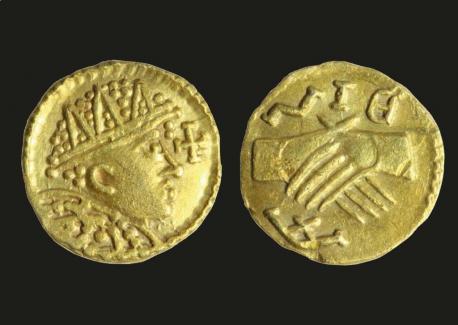
Saxon coin now back in Wiltshire (58503866)
The tiny gold coin which was bought for £18,000 at an auction in London in December is now displayed under a magnifying glass so visitors can see its full splendour.
Members of the museum celebrated the return of the coin to Wiltshire with a reception last Thursday complete with Mark Routledge dressed as a Saxon warrior.
Museum director David Dawson this week spoke of the anxious moment he spent on the phone bidding for the coin that was found in a field at East Grafton.
He said: “It was incredibly nerve wracking. I was very pleased to get it for £18,000. To be honest we would have paid a bit more. But you never know if there is going to be a private collector who is willing to pay whatever they have to get something they really want.
“I was shut away in my office during the bidding but the whole museum must have heard my whoops after I made the final bid and secured it. We are delighted to now have the coin on show.”
The coin which dates from AD 675 was originally thought to have been French but it has now been confirmed that it was minted in Kent.
At the time of the auction at Spinks in London Mr Dawson said: “We are delighted to have secured this important coin to be displayed at the Wiltshire Museum. It is a powerful demonstration of the importance of the Vale of Pewsey and the Kingdom of Wessex.
“We are very grateful to the almost 50 people from Wiltshire and across the world who have supported the purchase of this important coin, along with the help of our grant funders.”
The museum was awarded grants towards the purchase by the Arts Council England, the Victoria and Albert Purchase Grant Fund and the Art Fund.
In addition, donations and pledges were given through a fundraising appeal launched by the museum.
The coin dates to the time of the beginnings of Christianity in Wiltshire and just after the burial of King Raedwald at Sutton Hoo.
Mr Dawson said the remarkable find shed new light on the Vale of Pewsey in the Saxon period. East Grafton was part of the parish of Bedwyn until medieval times.
There are a number of pagan Saxon cemeteries nearby and there was an early Saxon Royal manor at the Iron Age hill fort at Chisbury, just to the north of Great Bedwyn.
Later in the Saxon period, the focus moved to Great Bedwyn where there was a Royal Manor and an important Minster church. Bedwyn was held by King Alfred and it also had a Saxon mint in the time of King Edward the Confessor soon after 1,000 AD.
Bedwyn was very important and it was only with the building of its Norman castle that the focus moved to Marlborough.
Stephen Deuchar, director of the Art Fund, said: “We are delighted that Wiltshire Museum was successful in acquiring at auction such an important coin.
He said: “Very few coins of such quality exist, and we are pleased to have played a role in ensuring that this beautiful example can remain forever in the very locality in which it was found.
“It’s a wonderful addition to the museum’s collection.”
Article source: Joanne Moore / / Gazette and Herald News
The Stonehenge Travel Company
Stonehenge and Salisbury Guided Tours

While Stonehenge is by far and away the superstar of southern England, and no visit to Wiltshire is complete without touring it, Stonehenge is in fact just one of many ancient sites in the area. Indeed, the surrounds of Stonehenge contain the most densely-grouped collection of neolithic sites and monuments within England – and more are being discovered all the time. It’s thought that the nearby settlement of Amesbury (believed to be the oldest in Britain) was a major cultural centre during the island’s ancient days. If you’ve got some time to spare during your Stonehenge trip, and want to take in some of the area’s other sights, here are a few suggestions:
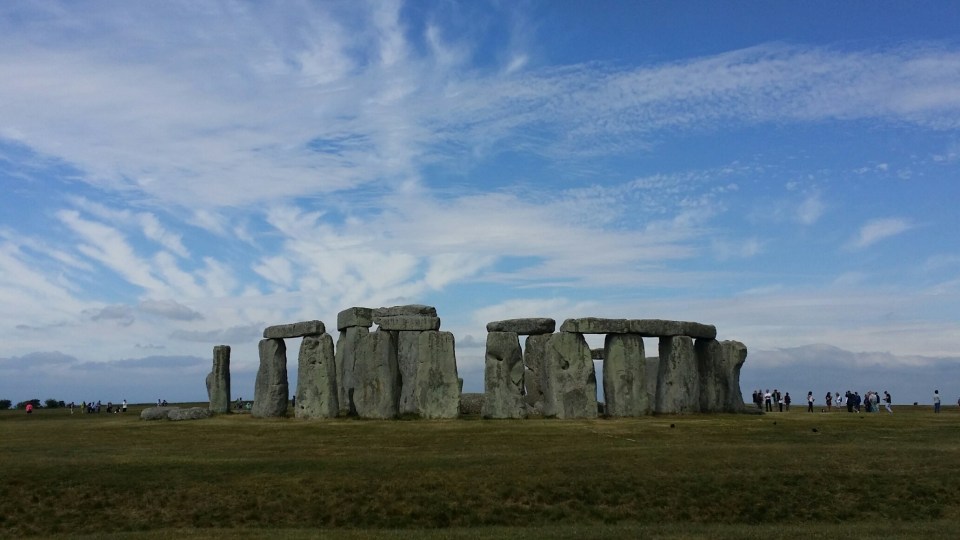 Within Walking/Cycling Distance Of Stonehenge – Woodhenge, Durrington Walls, The Cuckoo Stone
In all fairness, you can strike out in pretty much any direction from Stonehenge and hit archeological gold – although you may not…
View original post 597 more words
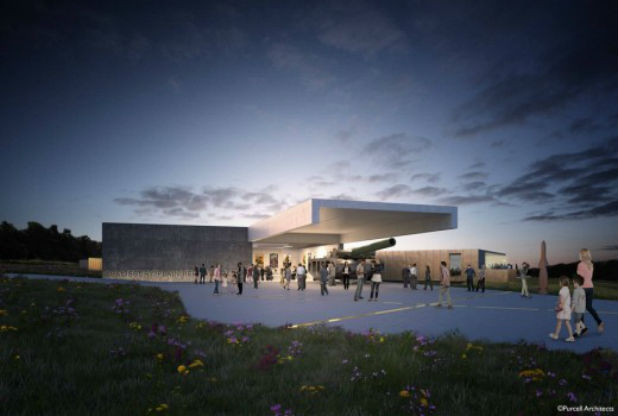
Architects’ plan for the Salisbury Plain Heritage Centre
With a tank under a huge free-standing roof, and rigid military-like blocks, this is the first view of what a new museum for the Royal Artillery could look like in Wiltshire.
Museum bosses say that the new museum will expand to tell the story of Salisbury Plain’s military history, natural heritage and archaeology, as well as the 300-year history of the Royal Artillery, and will hope for a boost from being just six minutes away from Stonehenge and its million visitors a year.
It was announced two years ago that the present museum, currently called Firepower, would have to move from its home in Woolwich after failing to hit of getting 200,000 visitors a year. A year ago, it was announced that the museum would move to Larkhill, as part of a major movement of troops to the new super-garrison around Larkhill, Bulford and Tidworth, near Amesbury.
Council chiefs here welcomed the move, and the 50 jobs it could create, and now the museum’s bosses have announced the museum will be called the ‘Salisbury Plain Heritage Centre‘, and that they have appointed contractors Arup to build the museum to this futuristic design from architects Purcell.
“The building is designed to capture dramatic views over the gallery spaces,” said a spokesman. “It will look out over 22km of open countryside, just six minutes from the World Heritage Site of Stonehenge. The new museum will complement the unique environment of the Salisbury Plain. The new attraction will secure the future of the collection and contribute to the economic vitality of Wiltshire.
“The next stage of the project is to develop the design for a planning submission in early 2017. Once complete, SPHC will showcase a nationally important collection which tells the 300 year old story of the Gunners – and of the 2.5 million men and women of the regiment– in an interactive manner. This collection will feature alongside exhibits that detail the ecology, archaeology and history of Salisbury Plain.
“Visitors of all ages and backgrounds will be engaged by live interpretation and re-enactments, firing demonstrations, interactive displays and temporary exhibitions. Learning programmes and resources will cater for school groups, academic organisations, families and lifelong learning,” he added.
Arup’s project manager Daniel Birch added: “This really is a team effort. We are working closely with RAML and Purcell to produce a design for the museum that will allow it to sit sympathetically in this unique site of ecological and archaeological importance. We are excited to be part of such a unique project and to help realise this vision.”
Article source: B Western Daily Press
Stonehenge and Salisbury Guided Tours
http://www.StonehengeTravel.co.uk
A guided tour of the amazing collections of the Wiltshire Museum, followed by a guided walk from Durrington Walls to Stonehenge. This full day tour will be led by Museum Director, David Dawson.
10:30 am, Saturday, 21st May, 2016
 The morning visit to the Museum starts at 10.30am and the walk begins at 2pm. We should reach the Stonehenge Visitor Centre at about 5.30pm.
The day begins with coffee and a guided tour of the Wiltshire Museum. The early story of Wiltshire is told in new galleries featuring high quality graphics and leading-edge reconstructions. On display are dozens of spectacular treasures dating to the time of Stonehenge and worn by people who worshiped inside the stone circle.
The tour is followed by a light lunch,
The walk will take approximately 3.5 hours, and starts at Durrington Walls and Woodhenge, close to the River Avon. The route passes the Cuckoo…
View original post 221 more words
Join us on a guided tour of Stonehenge and Avebury World Heritage Sites and learn all about these important ancient sites.
A new information leaflet has been produced by the World Heritage Site Coordination Unit to help to explain what a World Heritage Site is, why Stonehenge and Avebury is designated as a World Heritage Site and how it is managed. The leaflet also outlines the priorities of the World Heritage Site Management Plan.
Many people know about the important role that English Heritage Trust at Stonehenge and 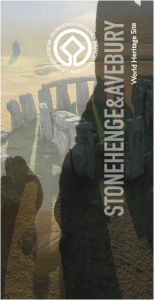 the National Trust at Avebury and in the Stonehenge Landscape play in managing the key monuments within the WHS but how the UK Government carries out the obligations of the World Heritage Convention 1972 are less well known. This leaflet is a brief explanation of how the two landscapes of the WHS are managed.
The leaflet will be distributed at key community sites and available when the Coordination Unit attends meetings and events.
If you require copies of the leaflet please contact the World…
View original post 216 more words
The Stonehenge site has been scoured by archaeologists for decades as they attempt to learn more about the history of the land around Britain’s famous ancient monument.
But the latest discovery at the site has been excavated by a rather unlikely source – a badger.
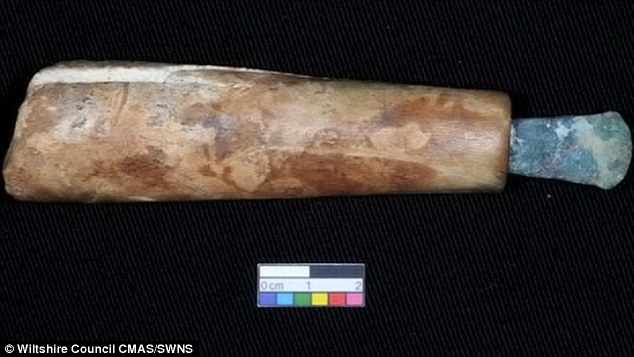
A copper chisel (pictured) with a decorated bone handle was discovered at the burial site during the excavation by injured military personnel and veterans working as part of Operation Nightingale
A Bronze Age cremation site was found after badgers dug into an ancient burial mound on land belonging to the Ministry of Defence at Netheravon in Wiltshire.
Artefacts including Bronze Age tools, a flint knife, pottery and an archer’s wrist guard, dating back to between 2,200BC and 2,000BC, were discovered alongside cremated human remains at a site that sits just 5 miles (8km) from the monument.
Archaeologists spotted the site after a badger unearthed a cremation urn and left shards of pottery lying on the ground around the burial mound.
Richard Osgood, senior archaeologist at the MoD’s Defence Infrastructure Organisation, led an excavation of the site and described it as an ‘exciting find’.
Experts have said the discovery may be of similar significance to the famous Amesbury Archer, which was found in 2002.
Please read the full story and see images of exactly what was found.
We operate achaelogical day tours from London and Salisbury. Our Stonehege day trps from Salisbury explore the wide landscape surrounding Stonehenge.
The Stonehenge Travel and Tour Company.
Mystical Landscape, Magical Tours
http://www.StonehengeTravel.co.uk
The remains of 14 women believed to be of high status and importance have been found at Stonehenge, the iconic prehistoric monument in Wiltshire, England.
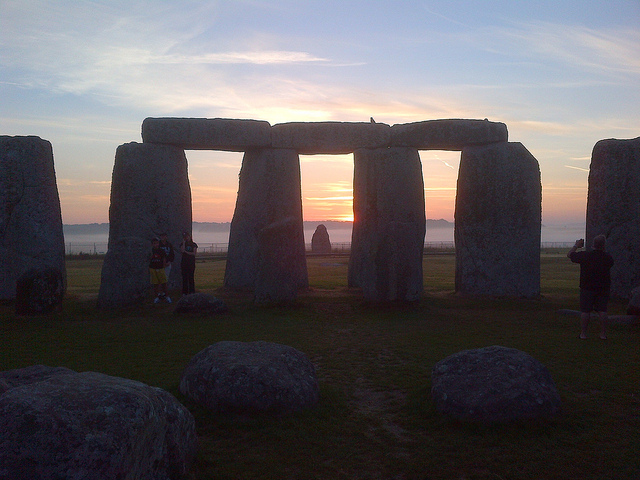
The discovery, along with other finds, supports the theory that Stonehenge functioned, at least for part of its long history, as a cremation cemetery for leaders and other noteworthy individuals, according to a report published in the latest issue of British Archaeology.
During the recent excavation, more women than men were found buried at Stonehenge, a fact that could change its present image.
Photos: ‘Superhenge’ Found Buried Near Stonehenge
In almost every depiction of Stonehenge by artists and TV re-enactors we see lots of men, a man in charge, and few or no women,” archaeologist Mike Pitts, who is the editor of British Archaeology and the author of the book “Hengeworld,” told Discovery News.
“The archaeology now shows that as far as the burials go, women were as prominent there as men. This contrasts with the earlier burial mounds, where men seem to be more prominent.”
Pitts added, “By definition — cemeteries are rare, Stonehenge exceptional — anyone buried at Stonehenge is likely to have been special in some way: high status families, possessors of special skills or knowledge, ritual or political leaders.”
Understanding Stonehenge: Two Explanations
The recent excavation focused on what is known as Aubrey Hole 7, one of 56 chalk pits dug just outside of the stone circle and dating to the earliest phases of Stonehenge in the late fourth and early third millennium B.C.
Christie Willis of the University College London Institute of Archaeology worked on the project and confirmed that the remains of at least 14 females and nine males — all young adults or older — were found at the site. A barrage of high tech analysis techniques, such as CT scanning, was needed to study the remains, given that the individuals had been cremated.
Radiocarbon dating and other analysis of all known burials at Stonehenge reveal that they took place in several episodes from about 3100 B.C. to at least 2140 B.C. Long bone pins, thought to be hair pins, as well as a mace head made out of gneiss — a striped stone associated with transformation — have also been excavated at Stonehenge.
Stonehenge Was Once A Complete Circle
As for why no children’s remains were found during this latest excavation, both Willis and Pitts believe that such corpses must have been treated differently. Pitts suspects that infants and children were also cremated, but that their ashes were scattered in the nearby river Avon.
“There is a common association between late Neolithic religious centers and the sources or upper reaches of significant rivers,” he explained.
Stonehenge’s location is also important because prior U.K. burial sites, which were often large mounds containing stone and timber chambers, tended to be erected on hilltops or other high ground, far away from where people lived.
Intricate Treasures From Stonehenge Burial: Photos
While Stonehenge was also set apart from housing, it and other later cremation cemeteries tended to be on lower ground near rivers that locals must have frequented.
Pitts said this placement is “perhaps in line with a move from a focus on male lineage and hierarchy to both genders and family or class. This reflects a parallel shift from markers of territory and land (via the barrows) to commemorations of communities.”
As for the culture(s) represented by Stonehenge, Willis said the monument was built about 1,000 years after agriculture arrived from the Middle East. The people had wheat, barley, cattle, pigs, sheep and goats, but no horses yet. They did not yet use wheels, but had well-crafted stone tools. Metalworking spread to Britain at around 2400 B.C., which was well after the early stages of Stonehenge construction.
Stonehenge, now a World Heritage Site, radiates timeless beauty and achievement, but it seems women’s status proved to be more ephemeral.
Willis said that the role of women in society “probably declined again towards the 3rd millennium B.C…both archaeological and historical evidence has shown that women’s status has gone up and down quite noticeably at different times in the past.”
BY JENNIFER VIEGAS – DISCOVERY NEWS
Join us on a Stonehenge Guided Tour and hear all the latest theories
Stonehenge and Salisbury Guided Tours
http://www.StonehengeTravel.co.uk
Stonehenge and Avebury form part of an UNESCO World Heritage Site which stands testament to the ages. The explanations behind why the sites are located where they are and what their exact purposes are still remain a mystery to this day with a magnetism that has drawn people to them for centuries.
We are pleased to offer exclusive Archaeology Tours visiting both Stonehenge and Avebury throughout 2016. We believe we offer an excellent up-to-date specialist service; giving you the opportunity to learn in great detail about these amazing prehistoric sites, but also leaving you time to explore your surroundings by yourself.
Stonehenge, Avebury and Bath Guided Tour from London
Britian’s most beautiful landscapes
Tour Leaders are qualified archaeologists
Walk the paths of ritual specialists and builders of Britain’s most fascinating and awe-inspiring prehistoric sites, at Stonehenge and Avebury.
Explore the Roman and Georgian history of Bath.
Guaranteed small groups 8 – 18 participants.
This feature-packed archaeological tour takes in the iconic stone circles of Stonehenge

Small Group Guided Tour of Avebury
and Avebury and a delightful break in the beautiful Roman city of Bath.
Leaving from London by luxury mini coach, this Stonehenge tour will explore its iconic standing stones with expert analysis by a trained archaeologist. Nearby Avebury is an even more impressive site, covering a much wider area and you will also encounter Neolithic burial tombs and the less visited ancient site of Woodhenge.
Mid-day is spent in gorgeous Bath offering history of a different era. There are colorful remnants of its glorious Roman past to see and regency mansion houses from Georgian times. The famous Roman baths are a must see.
Guided tour itinerary:
The morning starts with a visit to Durrington Walls and Woodhenge, home to the ‘Stonehenge Builder’s’ village and the most convincing evidence for human sacrifice. We then travel a short distance to Stonehenge. We enjoy a leisurely paced walk through the landscape immediately surrounding Stonehenge, visiting the Stonehenge Cursus, Bronze Age burial mounds and walk along the Stonehenge Avenue. We complete our morning at Stonehenge with a guided walk around the stone circle, our archaeologists bringing to life this enigmatic, ancient and mysterious monument.
At mid-day we arrive at the beautiful Georgian city of Bath. Here we allow our guests aprox 2 hours to enjoy the centre of this city, famous for Jane Austen, Bath Abbey and the Roman Baths. We also use this opportunity for our guests to have lunch.
We conclude our visit to Bath with a coach tour of the most impressive examples of architecture Bath has to offer, visiting the Assembly Rooms, Royal Circus and Royal Crescent.
The Afternoon is spent at the Avebury World Heritage Landscape. We visit Silbury Hill, the largest man-made hill in prehistoric Europe. We enter the 5500 year old burial chamber of West Kennet Long Barrow, entering a sacred space originally reserved only for ritual specialists and the dead.
We finish by visiting the largest stone circle in Europe at Avebury, with its beautiful medieval village situated inside. As John Aubrey in the 1600’s notes [Avebury]…”does as much exceed in greatness the so renowned Stonehenge as a Cathedral doeth a parish church.”
Please also note as part of the Stonehenge, Salisbury and Avebury Archaeologist Guided Tour, the detailed walk around the Stonehenge Cursus, Stonehenge Avenue and Bronze Age burial mounds only runs between March to October, this is due to time restrictions in the winter months
View 2016 Tour Departures and book now
We also offer a Stonehenge, Bath and Salisbury guided tour
Bringing History Alive……………..
Links:
STONEHENGE & AVEBURY WORLD HERITAGE SITE
VISIT WILTSHIRE WORLD HERITAGE SITE INFORMATION
Stonehenge and Salisbury Guided Tours
The Stonehenge Travel and Tour Company
http://www.StonehengeTravel.co.uk
DISCOVER the magic of Stonehenge and the fun of an off-road safari on a trip to Salisbury Stonehenge attracts tourists from across the globe to Salisbury.

Salisbury Cathedral has the tallest spire in Britain (GETTY)
But the attractions of the city don’t start and end with the incredible prehistoric monument.
Go on safari across a chalk plain, watch polo and test your fitness on a climb up the tower of Britain’s tallest church spire.
There so much to discover on a trip to Salisbury in Wiltshire.
1. Look up to discover Salisbury Cathedral – it has the tallest spire in Britain at a whopping 123 metres tall. Inside you’ll find one of the most significant churches in the country as it houses one of the original copies of the Magna Carta. For great views, take the Tower Tour. It’s a 332 step trip to the top and the reward is stunning views of the surrounding countryside.
2. Find yourself steeped in legend on a visit to Stonehenge. It’s a magical place shrouded in history steeped in legend. If you stand on Salisbury Plain at sunrise or sunset it’s easy to understand why the ancient Britons believed Stonehenge was special. Its orientation on the rising and setting sun is one of its many outstanding features, but why it was built in this way remains a mystery. http://www.english-heritage.org.uk/visit/places/stonehenge/
Join the local Stonehenge experts for a guided tour: http://www.visitwiltshire.co.uk/plan-your-visit/stonehenge-guided-tours-p1550943

Salisbury’s most famous attraction Stonehenge GETTY
3. Watch polo, or even sign up for a beginners’ lesson at Druids Lodge Polo, which is open all year round six days a week (closed on Mondays). From October to March polo takes place in the floodlit arena which is hidden away in a sheltered area near the main house and stables. Druids Lodge provides pony hire, polo livery and high quality tuition for all levels and is the home club for a number of school and university teams. http://www.visitwiltshire.co.uk/things-to-do/druids-lodge-polo-p1938583
4. Go for the ultimate race car experience – on a virtual car! Kids over 12 can have a ago and it’s a great experience to keep them happy during the half-term week. The Ultimate Race Car Experience (URCE) is an exciting brand new, purpose built facility, providing the very latest in full motion race car simulators. You’ll find it at Sarum Business Park,Lancaster Road, Old Sarum, in Salisbury. http://www.visitwiltshire.co.uk/things-to-do/ultimate-race-car-experience-p1827763
5. Get up close to aircraft and see restoration taking place at Boscombe Down Aviation Collection.. It’s a great thing to do when the weather’s bad as it’s mainly all indoors. The collection of aircraft, cockpits, replicas and models weapons and equipment show the story of flight and flight test in the UK. Many of the cockpits are open and you can sit in and use the controls. http://www.visitwiltshire.co.uk/things-to-do/boscombe-down-aviation-collection-p1416553
6. Explore the streets of Salisbury by following the Murder Mystery Walking Treasure Trail of the city. It’s a self-guided fun and imaginative way to explore the city. As you follow the route, there are clues to solve and spot on the buildings, statues and monuments you pass. A great way to keep the kids happy on a walk. http://www.visitwiltshire.co.uk/salisbury/things-to-do/treasure-trails-the-salisbury-murder-mystery-walking-treasure-trail-p1773823
7. Get on your bike! Cycling around is a great way to discover a new area. Hire yours at Hayball Bike Hire and peddle away. Flat, safe traffic-free trails, make Salisbury a cycle friendly city and you can even cycle all the way up to Stonehenge.http://www.visitwiltshire.co.uk/things-to-do/hayball-bike-hire-p1957623

Explore the streets on the gruesome murder mystery tour GETTY
8. Go carting! Take the kids and try your hand around the track at Wessex Raceway Indoor Carting centre. It’s got a unique a700-metre indoor asphalt track, free of pillars with no ramps or bridges – which allows ALL our adult karts to reach a maximum speed of over 50 miles per hour! http://www.visitwiltshire.co.uk/things-to-do/wessex-raceway-indoor-karting-p547143
9. Learn how to juggle at the Discovery Day Circus Workshop at Salisbury Museum over half-term on February 16. Experts will be on hand to teach this top skill at a drop-in session from 10am-1.30pm. http://www.visitwiltshire.co.uk/whats-on/discovery-day-circus-workshop-p1953053
10. Go off road and on safari with Salisbury Plain Safaris for an exciting trip to discover wildlife and local history. Go on tour in a luxury Land Rover Defender 110 that takes groups of up to six. Tours include a refreshment break and chances to get out and explore areas and tracks to parts of the Plain that are simply not accessible to cars and buses.
Spectacular views of Europe’s largest chalk downland and the UK’s largest military training area. http://www..visitwiltshire.co.uk/things-to-do/salisbury-plain-safaris-p1960783
By Anne Gorringe (Daily Express)
Stonehenge and Salisbury Guided Tours
http://www.StonehengeTravel.co.uk
Plans are under way to mark the 950th anniversary of the Battle of Hastings in the town linked to the most famous conflict in English history.
The events aim to mark the significance of the battle which altered the course of history in medieval England and led to the Norman Conquest.
William the Conqueror established a royal castle at Old Sarum (Salisbury, Wiltshire), in the middle of the earthworks, shortly after 1066. This, says English Heritage, transformed the site, effectively dividing the hillfort in two: an inner set of fortifications, which became William’s castle, and a huge outer enclosure, within which a cathedral was built in 1075

Here, we tell you everything you need to know about Old Sarum in Wiltshire…
1) Old Sarum is the site of the earliest settlement of Salisbury. It is two miles north of where the city now stands
2) The Romans, Normans and Saxons all left their mark there: Old Sarum was used as an Iron Age hillfort between about 400 BC and AD 43 – one of the largest in England – before being occupied shortly after the Roman conquest of Britain, when it became known as Sorviodunum. The Romans occupied the site until about AD 410.
William the Conqueror established a royal castle at Old Sarum, in the middle of the earthworks, shortly after 1066. This, says English Heritage, transformed the site, effectively dividing the hillfort in two: an inner set of fortifications, which became William’s castle, and a huge outer enclosure, within which a cathedral was built in 1075
3) The royal castle, created shortly after 1066, was “a major administrative centre”, says English Heritage. The sheriffs of Wiltshire were established in the castle, and the cathedral later provided a body of clerks who assisted with major projects
4) Old Sarum is historically important as the site of the Oath of Sarum of 1 August 1086. Facing revolt and invasion, William I [aka William the Conqueror] gathered the powerful, landholding men of the realm to a ceremony in which they swore allegiance to him. The ceremony, described by English Heritage as “a striking assertion of royal power”, underlined William’s position as the source of tenure of all land across England.
5) Between 1173 and 1189 Henry II’s queen, Eleanor of Aquitaine, was kept under house arrest at Old Sarum for having incited her sons to rebel against their father
6) The cathedral was demolished during the medieval period: dissatisfaction with the site and poor relations with the garrison in the castle caused the cathedral to be moved to its present site in Salisbury (New Sarum) in the 1220s. After this time, royal interest in the castle waned. English Heritage explains: “The castle seems to have limped on as an administrative centre into the 15th century, the end finally coming in 1514, when Henry VIII made over the ‘stones called the castle or tower of Old Sarum’ to Thomas Compton, together with the right to carry away the materials.”
7) Old Sarum lived on as a famous ‘rotten borough’ that continued to elect members of parliament until the Reform Act 1832. The parliamentary constituency had a very small electorate and could be used by a patron to gain unrepresentative influence within the unreformed House of Commons. Thomas Pitt became the owner of the site, and the votes attached to it, in 1691. Arguably, had it not been for this, Pitt’s famous grandson William might never have entered the House of Commons, because he first sat in parliament as a member of Old Sarum.
8) Today, people visiting Old Sarum can see the earthworks of the Iron Age hillfort, the inner stronghold of the Norman castle on the motte at its centre, and the remains of the cathedral
Source: English Heritage
A great year to visit Old Sarum Castle Website
Old Sarum can be visited independently or it is easy to arrange a private guided tour from Salisbury with the local experts.
Stonehenge and Salisbury Guided Tours
http://www.StonehengeTravel.co.uk
 Stonehenge and Salisbury Guided Tours