AWARD WINNING TOURS

10 Top-Rated Tourist Attractions in Salisbury, Wiltshire
Historically a centre of the cloth industry, Salisbury – the county town of Wiltshire – is situated at the point where the Rivers Nadder and Bourne flow into the River Avon. The city is famous for its cathedral, a masterpiece of the early Gothic style that dates to 1220 when the building’s foundation stone was laid.
A checkerboard layout, with enclosed gardens between the houses, was a model for medieval town planning. On receiving market privileges from the king, a bridge was built across the Avon in 1244, thereby creating perfect conditions for Salisbury to become a major trading center.
1 Salisbury Cathedral

Salisbury Cathedral was built in a relatively short time – from 1220 to 1266 – in a typically English style consisting of a nave, long choir, retrochoir, main west transept and east choir transept (shielded from the choir by false arches). The interior of the cathedral, which is of bright-colored limestone and darkly gleaming Purbeck marble, displays the horizontal sequencing of the trusses, strengthened by continuous ledges. The construction of the walls is divided into three zones, with arches, a gallery-like triforium and a passageway above. A ribbed vault in four parts encloses the nave at a height of only 82 ft. The interior fittings of the cathedral, considerably altered in the 18th century, include elaborate tombstones dating back to the 13th century.
Although there are a few medieval fragments, the stained glass – primarily 19th and 20th centuries – is exquisite, particularly the Gabriel Loire window in the Lady Chapel. The Gothic cloister and the octagonal chapterhouse both date from the 14th century, the latter having a single central pillar acting as a vault support, a fine wall-frieze with pictures from the Old Testament and tracery windows divided into four sections with 19th century glass. Items stored there include one of the four original copies of the Magna Carta, the foundation of the British constitution, as well as other Anglo Saxon documents and the inspection report on the cathedral tower written by Sir Christopher Wren in 1668.
Address: Chapter Office, 6 The Close, Salisbury
Accommodation: Where to Stay in Salisbury – TripAdvisor.com
2 Cathedral Close

Within Salisbury Cathedral Close and separated from the rest of the town by three gateways, a number of notable Elizabethan and Georgian houses have lovely green lawns and date from the 14th to 18th centuries. These were the residences of the dean, ecclesiastical officers and teachers at the cathedral school. Of special interest is Mompesson House, with its elegant interior fittings and wonderful collection of glass. Another nearby home worthy of a visit is Arundells, residence of former Prime Minister Sir Edward Heath.
Address: The King’s House, 65 The Close, Salisbury

The old city center includes the 15th century parish church of St Thomas of Canterbury as well as the wide market place with its 15th century market cross, the Guildhall (1788) and the 15th century Plume of Feathers Inn. Nearby is the Red Lion Hotel with its fine 1820s facade and pretty inner courtyard, and Joiner’s Hall, an attractive half-timbered building dating from the 16th century.
Through the North Gate are the meadows of the River Avon with their fine views of the cathedral. John Constable captured these on canvas in his famous painting of 1820.
Address: Pennyfarthing House, 18 Pennyfarthing St, Salisbury

Old Sarum was the precursor of present-day Salisbury, built two miles to the north of the city center on a hill, which even in prehistoric times was fortified. The Romans built the camp of Sorviodonum here, while under the Saxons a town settlement grew up on the site. William the Conqueror chose this strategically favorable spot to build a castle in 1075, and in 1220 the inhabitants of Old Sarum were moved to New Salisbury. Today, only a few remains of the castle within the inner circumference wall can be seen, and the cathedral ruins within the outer wall.
Location: Castle Rd, Salisbury
5 Salisbury and South Wiltshire Museum

The Salisbury and South Wiltshire Museum has permanent displays and special exhibitions throughout the year that highlight the art and history of England and the Salisbury area. This is one of the most fascinating areas in Britain, rich in mediaeval history and home to the World Heritage Site of Stonehenge. The award-winning museum is home to the Stonehenge Gallery, Monkton Deverill Gold Torc, as well as unique costume, glass and chinaware collections.
Address: 58 The Close, Salisbury
6 Larmer Tree Gardens

The Larmer Tree Gardens, set in the ancient forest known as Cranborne Chase, were established by general Pitt Rivers in 1880 as pleasure grounds for “public enlightenment and entertainment” and were the first privately owned gardens to be opened for public enjoyment. You’ll find Indian buildings, a Roman Temple and an open-air theatre amidst acres of gardens inhabited by pheasants, peacocks and other exotic birds.
Location: Rushmore Estate Office, Tollard Royal, Salisbury
7 Salisbury Festival
Salisbury Festival takes place in spring with a different theme each year, and includes orchestral, choral and chamber concerts, recitals, film screenings and lectures. Numerous venues are used, including St Thomas Hall, the cathedral and other historical buildings.
Another important event is the Southern Cathedrals Festival, an annual festival that rotates every year between the cities of Winchester, Salisbury and Chichester. The festival takes place mid-July and includes daily concerts and a program featuring a mix of orchestral, choral and chamber concerts, recitals and fringe events. The repertoire is equally varied and includes classical and sacred music as well as newly commissioned works performed in the host city’s cathedral. Another great event, The Salisbury Arts Festival, runs for two weeks each May and features dance, music, street performances and art exhibitions.
Address: 144 East Main St, Salisbury
8 The Rifles (Berkshire and Wiltshire) Museum

The Wardrobe is an elegant building housing The Rifles (Berkshire and Wiltshire) Museum, an award-winning museum detailing the history of English County Regiments. The building dates to 1254 and contains exhibits on the Royal Berkshire and Wiltshire Regiments.
From the gardens you can stroll down to the River Avon with its views of the Water Meadows. Another military museum to visit is the award-winning Museum of the Duke of Edinburgh’s Royal Regiment.
Address: 58 The Close, Salisbury
9 Cholderton Charlies Rare Breeds Farm
Cholderton Charlies Rare Breeds Farm has breeds dating back hundreds of years, reflecting an animal heritage as interesting as its buildings and monuments. In addition to the many animals is a nature trail, water gardens, a picnic area and adventure playground for children. Also popular are the many opportunities to feed piglets and other young animals.
Location: Amesbury Road, Cholderton, Salisbury
10 Malmesbury House

Malmesbury House is located on The Close near Salisbury Cathedral where many of the city’s historical attractions are found. The house has seen many faces, both architecturally and in its visitors, and was originally a canonry in the 13th century before being enlarged.
The west facade was added decades later to accommodate rooms displaying magnificent rococo plasterwork, and notable visitors included King Charles II and the composer Handel. (Although privately owned, tours are occasionally permitted.)
Location: The Close, Salisbury
Surroundings
Wilton House

Built by architect Inigo Jones in 1653 after the original Tudor home was destroyed by fire, Wilton House is a masterpiece of the Baroque style and most notable for its huge white Double Cube Room. Decorated with gold-painted flowers and garlands of fruit and rounded off with a brilliantly colorful painted ceiling, the room is also fascinating for its portraits by van Dyck, as well as portraits of Charles I, Queen Henrietta Maria and their three children. Equally impressive is the Single Cube Room, its painted ceiling having scenes from Sir Philip Sidney’s Arcadia, written in 1590 while a guest at Wilton House, as well as paintings by Rembrandt, Rubens and Reynolds. The landscaped park surrounding the house harbors a magnificent stock of old trees. Another unusual feature is the Palladian bridge (1737) over the River Nadder.
Be sure to visit the picturesque Village of Wilton, the old capital of the Saxon kingdom of Wessex, and later of Wiltshire. It is famous for its carpets, plus home to antique shops and a weekly market.
Location: The Estate Office, Wiilton, Salisbury
Shaftesbury

Located 19 miles southwest of Salisbury, Shaftesbury is a picturesque little market town famous for its ruined Benedictine abbey. Only the foundation walls remain as a reminder of the abbey’s existence, while in the Shaftesbury Abbey and Garden there’s a model of the building as it once was as well as finds from the Middle Ages.
Shaftesbury is also a notable tourist destination due to the steep cobbled streets of Gold Hill, picturesquely lined on one side with tiny houses dating from the 16th to 18th centuries, while on the other side there’s a 13th century ochre-colored wall. Visitors enjoy superb views across the Blackmoor Vale to Somerset.
St Peter’s Church is the only one of the 12 medieval churches that’s been preserved, and possesses an interesting crypt and a fine doorway. Also of note, the Shaftesbury Gold Hill Museum has many exhibits detailing local history.
Location: Gold Hill, Shaftesbury
Stourhead

Stourhead, 26 miles west of Salisbury, is one of the finest landscaped gardens of the 18th century and unchanged since its inception. The unique design of the garden includes an artificial lake with caves, classical temples and landing stages surrounded by hills planted with trees. The park and the stately Palladian mansion were designed in 1721, with elegant period furniture provided by Chippendale, while the gallery contains paintings by Canaletto, Raphael, Nicolas Poussin and Angelika Kaufmann. King Alfred’s Tower, erected to commemorate the Saxon king, towers over the surrounding parkland and affords fine panoramic views.
Location: Mere, Wiltshire
Old Wardour Castle

Old Wardour Castle, near Tisbury, is a 14th century structure on the edge of a beautiful lake. A battle was fought here in 1643 when Parliamentarian forces besieged the castle causing extensive damage. More recently, Robin Hood Prince Of Thieves starring Kevin Costner was filmed here. The castle’s unusual hexagonal ruins are surrounded by landscaped grounds, and are a picturesque location for picnics or a relaxing day out.
Location: Tisbury, Salisbury
http://www.StonehengeTravel.co.uk
Glaciers, not ancient people, moved Stonehenge from Wales to Wiltshire
It’s a question that has plagued archaeologists and stone enthusiasts for centuries: what’s the deal with Stonehenge?

No one has ever been quite sure where the famous circle of giant bluestones came from or how they came to be arranged in such a precise formation in the wilds of Wiltshire.
A recent paper from researchers at UCL suggested that the stones were collected in at quarries Carn Goedog and Craig Rhos-y-felin around 5,000 years ago, then dragged from Wales to Wiltshire by men.
But archaeologists writing the Archaeology in Wales journal says that UCL got it all wrong.
This newer report says there are “no traces of human intervention in any of the features” that the UCL researchers “so excited”.
Instead, the Arachaeology in Wales paper’s authors, Dr Brian John, Dr Dyfed Elis-Gruffydd and John Downes, think they have evidence that suggests the rocks were moved by glaciers.
Accusing the UCL team of getting carried away by a good yarn, Dr John wrote, “There is substantial evidence in favour of glacial transport and zero evidence in support of the human transport theory.
“We think the archaeologists have been so keen on telling a good story here that they have ignored or misinterpreted the evidence in front of them.
“That’s very careless. They now need to undertake a complete reassessment of the material they have collected.”
Visit Stonehenge and explore the ancient landscape with a local expert tour guide and hear all about the many new theories. Our Stonehenge Special Access Tours allow you to enter the inner circle and walk freely amongst the Stones at sunset or sunrise
The Stonehenge Travel and Tour Company
Mystical Landscape Magical Tours
http://www.StonehengeTravel.co.uk
Archaeologists Feud Over Second-Hand Stonehenge Theory

The ink wasn’t even dry (or the bits weren’t even embedded in the Cloud) yet on the 2 Comments about a new theory that Stonehenge once stood in Wales before being moved to Wiltshire when a cry rose up from other archaeologists who claim that it was glaciers, not humans, that pushed the monoliths to their current resting place in Wiltshire. Who’s right, who’s wrong and what’s the betting line on the fight?

The feud started with a report last week in the journal Antiquity that archaeologists from University College London (UCL) identified two quarries in Wales that matched some of the bluestones at Stonehenge. The more controversial part of the report was their belief that the stones were made into a monument in Wales which stood for a few hundred years before being toppled and moved to England, making Stonehenge what some were sacrilegiously calling a “second-hand monument.”
Just…
View original post 296 more words
Current Archaeology Awards 2016

As the calendar year draws to a close, it’s time to cast your votes for the annual Current Archaeology Awards.

This is especially important if you’re a regular reader of the magazine as the awards are designed to reflect the interests of the readership, but if you’ve not read the magazine, happily that doesn’t preclude you from casting a vote!
As in previous years, there are several categories to vote for:
- Research Project of the Year
- Rescue Dig of the Year
- Book of the Year
- Archaeologist of the Year
The nominations for each award are as follows:
Research Project of the Year
- Digging Sedgeford: A people’s Archaeology
- Burrough Hill: Signs of Life in a Midlands hillfort
- Vindolanda: Revelations from the Roman frontier
- Bannockburn: Scotland’s seminal battlefield rediscovered
- Recapturing Berkeley Castle: One trench, 1,500 years of English history
- Rewriting the origin of the broch builders: Exploring fortifications and farming at Old…
View original post 218 more words
Stonehenge stones ‘spent centuries erected in Wales’ before being transported
Some of the stones used to create Stonehenge may well have been first erected in Wales, a new study has suggested.
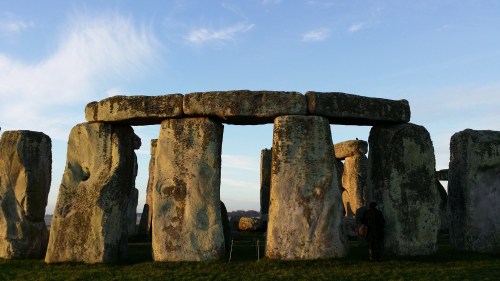
Some of the stones used to create Stonehenge may well have been first erected in Wales, a new study has suggested.
Archaeologists have discovered evidence of quarrying for the world heritage sites’ bluestones in Pembrokeshire – 500 years before they were erected in Wiltshire.
They believe the most likely explanation is that the stones were first used in Wales before being transported 140 miles to Salisbury Plain where they formed part of the monument’s inner horseshoe.
Geologists have known since the 1920s that the bluestones were brought to Stonehenge from somewhere in the Preseli Hills but only now has there been collaboration with archaeologists to locate and excavate the actual quarries from which they came.
Stonehenge was built during the Neolithic period, between 4,000 to 5,000 years ago.
Both of the quarries in Preseli were exploited in the Neolithic, and Craig Rhos-y-felin was also quarried in the Bronze Age, around 4,000 years ago.
Project director Professor Mike Parker Pearson, from UCL Institute of Archaeology, said: “We have dates of around 3,400BC for Craig Rhos-y-felin and 3,200BC for Carn Goedog, which is intriguing because the bluestones didn’t get put up at Stonehenge until around 2,900BC.
“It could have taken those Neolithic stone-draggers nearly 500 years to get them to Stonehenge, but that’s pretty improbable in my view.
“It’s more likely that the stones were first used in a local monument, somewhere near the quarries, that was then dismantled and dragged off to Wiltshire.”
The discovery has been made by a team of scientists from UCL, the universities of Manchester, Bournemouth and Southampton, Amgueddfa Cymru – National Museum Wales, and Dyfed Archaeological Trust.
Professor Kate Welham, of Bournemouth University, believes the ruins of any dismantled monument are likely to lie somewhere between the two megalith quarries.
“We’ve been conducting geophysical surveys, trial excavations and aerial photographic analysis throughout the area and we think we have the most likely spot,” she said.
“The results are very promising – we may find something big in 2016.”
The Stonehenge bluestones are of volcanic and igneous rocks, the most common of which are called dolerite and rhyolite.
The scientists identified the outcrop of Carn Goedog as the main source of Stonehenge’s ‘spotted dolerite’ bluestones and the outcrop of Craig Rhos-y-felin as a source for one of the “rhyolite” bluestones.
The special formation of the rock, which forms natural pillars at these outcrops, allowed the prehistoric quarry-workers to detach each standing stone with a minimum of effort.
“They only had to insert wooden wedges into the cracks between the pillars and then let the Welsh rain do the rest by swelling the wood to ease each pillar off the rock face” said Dr Josh Pollard, of the University of Southampton.
“The quarry-workers then lowered the thin pillars onto platforms of earth and stone, a sort of ‘loading bay’ from where the huge stones could be dragged away along trackways leading out of each quarry.”
Radiocarbon-dating of burnt hazelnuts and charcoal from the quarry-workers’ camp fires reveals that there were several occurrences of megalith-quarrying at these outcrops.
The megalith quarries are on the north side of the Preseli hills, and this location undermines previous theories about how the bluestones were transported from Wales to Stonehenge.
Previous writers have often suggested that bluestones were taken southwards from the hills to Milford Haven and then floated on boats or rafts, but this now seems unlikely.
“The only logical direction for the bluestones to go was to the north then either by sea around St David’s Head or eastwards overland through the valleys along the route that is now the A40,” said Prof Parker Pearson.
“Personally I think that the overland route is more likely. Each of the 80 monoliths weighed less than two tonnes, so teams of people or oxen could have managed this.
“We know from examples in India and elsewhere in Asia that single stones this size can even be carried on wooden lattices by groups of 60 – they didn’t even have to drag them if they didn’t want to.”
The new discoveries may also help to understand why Stonehenge was built.
Prof Parker Pearson and his team believe that the bluestones were erected at Stonehenge around 2,900BC, long before the giant sarsens were put up around 2,500BC.
“Stonehenge was a Welsh monument from its very beginning. If we can find the original monument in Wales from which it was built, we will finally be able to solve the mystery of why Stonehenge was built and why some of its stones were brought so far,” he said.
Further excavations are planned for 2016.
The findings, Craig Rhos-y-felin: A Welsh Bluestone Megalith Quarry For Stonehenge is published in the journal Antiquity
The Stonehenge Travel Company
http://www.StonehengeTravel.co.uk
Christmas in Wiltshire
Looking for something different this Christmas?
The VisitWiltshire tourism website is a great source of ‘things to do this Christmas’ in Wiltshire;
Come and enjoy some of our timeless pleasures in Wiltshire this Christmas and discover some magical Christmas events for all ages including Christmas markets, carol services, ice skating and much more.
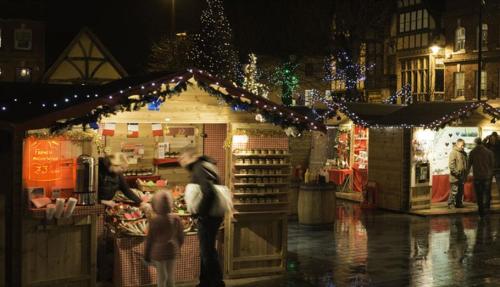
Christmas Market
Salisbury will be hosting its popular annual Christmas Market, bringing with it some wonderful stalls in the historic setting of the Guildhall Square.
Shop for an array of festive gifts from locally made crafts and delicacies, meet the friendly traders and listen to some of the festive music which takes place at various times throughout the market.
Christmas Events in Wiltshire for all the family
For a magical Christmas experience in Wiltshire a visit to Longleat’s Festival of Lights will be a treat – see hundreds of illuminated figures dotted around the Longleat landscape – the largest display in Europe!
In Devizes, there’s the Christmas Festival with lantern parade, street theatre and a firework finale – children will love seeing the lanterns and adults can enjoy a spot of shopping in the Christmas market.
Christmas often isn’t complete without a trip to the pantomime! Look out for pantomimes at both Salisbury Playhouse and Wyvern Theatre.
You can meet Father Christmas at several places around the county including Santa cruises on the Kenavon Venture, aboard the Swindon & Cricklade Railway, within the courtyard of Fisherton Mill in Salisbury and at Stourhead gardens.
Christmas Carols
Join in with Christmas Carols and the Christmas services at Salisbury Cathedral, head to the ‘lost’ church of Imber, now under the care of the Churches Conservation Trust and only open at certain times of the year for their Festival of Carols and look out for other carol services across the churches in the county.
Find out more
So what are you waiting for?
This Christmas in Wiltshire is going to be a memorable occasion so why not come down, join in and create some fantastic memories for you and your family – we would love to see you!
Getting started is easy, simply use our events calendar to search for Christmas events across Wiltshire and plan your festive visit. Visiting Salisbury? Discover more about Christmas events across the city here.
With so much happening, why not make it a short break and enjoy even more of Wiltshire’s festivities this Christmas!
Visit the VisitWiltshire tourism website for further details.
The Stonehenge Travel Company
Stonehenge and Salisbury Guided Tours
http://www.StonehengeTravel.co.uk
Visit Avebury Stone Circle, Wiltshire
Situated in southern England in the county of Wiltshire the village of Avebury is close to two small streams….the Winterbourne and the Sambourne which unite to form the source of the River Kennet. After being re-inforced by a number of springs this beautiful English river rapidly gains in stature as it passes through the North Wessex Downs on its way to Reading where it eventually flows into the River Thames of which it has become the main tributary. The waters of the Kennet therefore pass through London before reaching their ultimate destination in the North Sea.
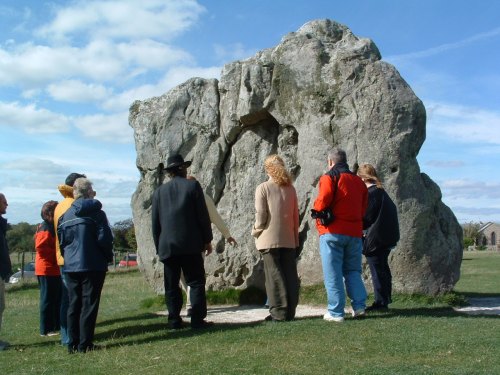
Small Group Guided Tour of Avebury
Around 4,500 years ago, when the site of England’s capital was a thinly inhabited marshland, the area around Avebury almost certainly formed the Neolithic equivalent of a city. By coincidence this waterway has become a link between the two largest cultural centres of their day to have ever existed in the British Isles. As London now contains most of England’s largest buildings Avebury is the location of the mightiest megalithic complex to have ever been constructed in Britain. This henge with its enormous ditch, bank, stones and avenues survives in a much depleted state but the nearby Silbury Hill which is the largest man-made mound in pre-industrial Europe still dominates the surrounding landscape. The two largest surviving British long barrows of West Kennet and East Kennet are also prominent a short distance away and in recent years the remains of two massive palisaded enclosures have also been found. The quote that antiquarian John Aubrey made of Avebury……”it does as much exceed in greatness the so renowned Stonehenge as a Cathedral doeth a parish church” recognises the true importance of what has now been largely absorbed into the modern landscape of Wiltshire. If we could return to the time when the Romans occupied the British Isles it is a sobering thought that we would have to go back as far again to find an Avebury that was already several centuries old.
The history of the modern village is inevitably linked to the prehistoric monuments that surround it. Abandoned for several thousand years the land around the stones became occupied once more when people of the Saxon period began to settle in the area. Their arrival and subsequent development of the present village was to have a dramatic effect on the history of the stones. The relationship between the local inhabitants and the monuments has now added an unfortunate dimension to the Avebury story that helps make it one of the most fascinating historical sites to be found in the British Isles if not the world.
It remains a magical place as so many who have been there will agree. A visit to Avebury is a very personal event. It still seems to retain, somehow, the spirits of all those who laboured in its creation or whatever it was that led them to create it. If you have never been there a visit will not be an empty experience. You will come away with a head full of questions and probably a realisation that somewhere over the years modern society has lost something important.
The Stonehenge Travel company operate guided tours of Avebury and Stonehenge departing from Salisbury.
Avebury links:
http://www.avebury-web.co.uk/avebury_now.html
http://www.english-heritage.org.uk/visit/places/avebury/
http://www.nationaltrust.org.uk/avebury
http://www.visitwiltshire.co.uk/things-to-do/avebury-stone-circle-and-avebury-manor-and-garden-p134483
Stonehenge and Salisbury Guided Tours
Mystical County, Magical Tours…..
www.StonehengeTravel.co.uk
Prehistoric ‘eco-house’ 1,300 years older than Stonehenge discovered by archaeologists
Archaeologists have discovered the oldest prehistoric building ever found in the Stonehenge landscape – but fear a new road tunnel could severely damage the site.
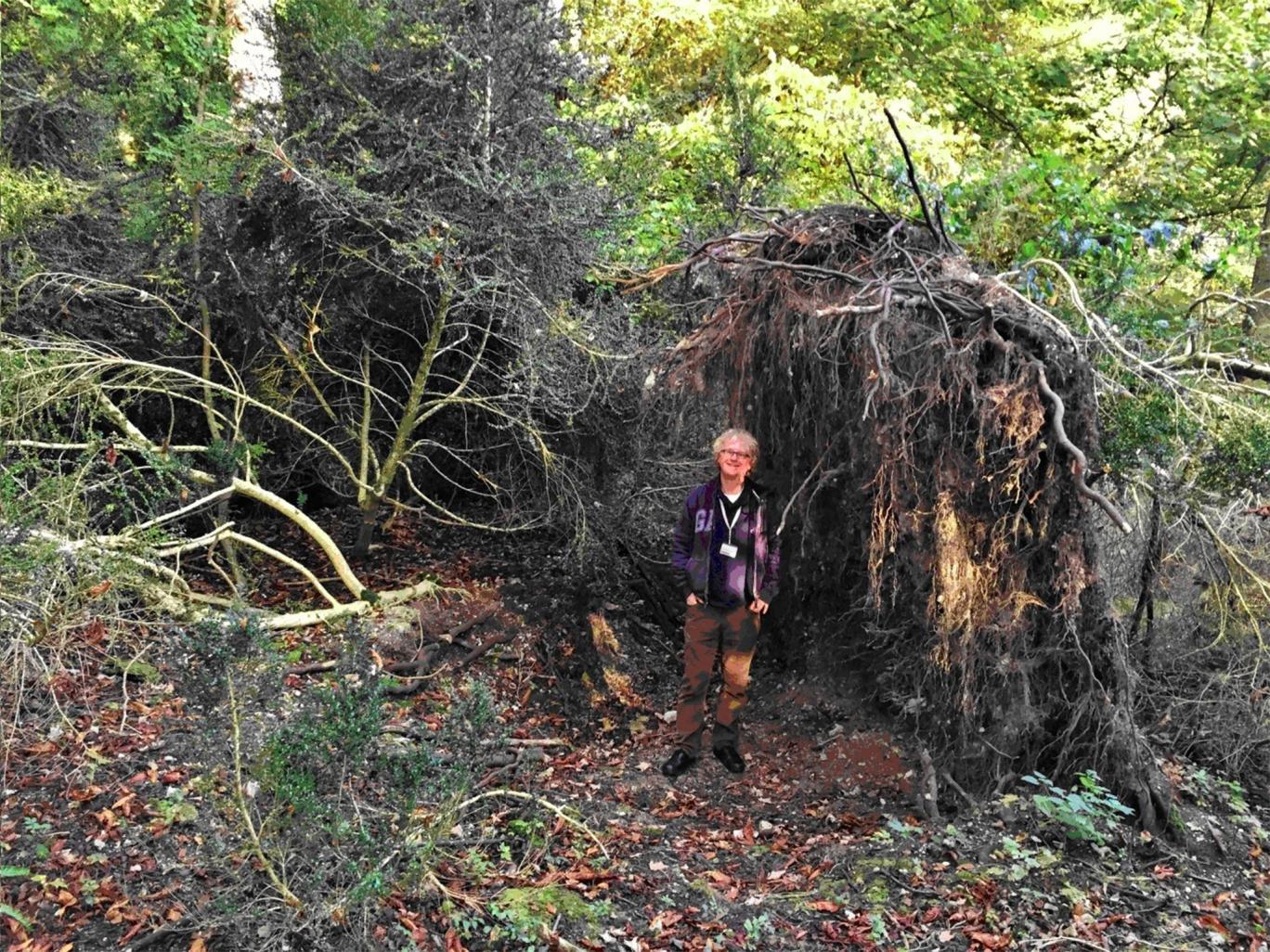
A fallen tree which forms the wall of a Stone Age ‘eco-home’ near Stonehenge David Jacques/Buckingham University
Dating from around 6,300 years ago – at least 1,300 years before Stonehenge – it was built immediately adjacent to a sacred Stone Age spring.
Academics have dubbed it an “eco” house because the base of a fallen tree was used as one of the walls.
The building is important as it appears to have been constructed by indigenous Mesolithic hunter-gatherers at the time when the very first semi-agricultural European-originating Neolithic settlers were arriving in the area.
The tools found in the building are Mesolithic (ie, pre-Neolithic) – but the period they date from is the dawn of the early Neolithic. Archaeological discoveries are revealing that, within just a few generations, the population at the site had adopted Neolithic tool-making traditions – or alternatively had been physically displaced by Neolithic settlers.
The potentially semi-permanent nature of the newly discovered house is suggested by the deep post-holes used to construct it and by a large cobbled area (covering at least 90 square metres – and including a pathway), immediately adjacent to it.

The cobbled path led down to a spring which Mesolithic people used as a place for making ritual offerings.
So far, archaeologists at the site, just over a mile east of Stonehenge, have found tens of thousands of objects placed by these Stone Age people in the spring – including more than 20,000 flint tools, a large sandstone animal skin smoother, a slate arrow head from Cornwall or Wales, pieces of burnt flint and more than 2,400 animal bones .
Archaeologists are now worried that the Government’s plan to improve the Stonehenge landscape by putting the A303 in a cutting and tunnel, will change the local water level and thus destroy or severely damage the spring and any important and potentially unique water-logged archaeological remains.
“I am very concerned that any reduction in the groundwater level at the spring site and elsewhere in the Avon valley might potentially be a threat to archaeologically important waterlogged organic artefacts and ancient environmental evidence,” said University of Buckingham archaeologist David Jacques, directing the excavation.
The newly discovered Stone Age dwelling is believed to have measured around five by three metres and included a sunken area measuring five square metres where animal skins were scraped and cleaned and clothes were made.
The residents also developed an innovative way of keeping warm in winter. They used hot stones, pre-heated in a hearth, as a form of central heating.
In a joint statement, Historic England, English Heritage and the National Trust said: “Our understanding of the site will no doubt be enhanced by the work recently undertaken by the University of Buckingham and we are confident that its importance will be taken into consideration as the various options for the Government’s road scheme are developed. We look forward to hearing more about this important Mesolithic site and seeing the full academic results when available.”
DAVID KEYS Archaeology Correspondent – Article source – Independent
Stonehenge and Salisbury Guided Tours
The Stonehenge Tour Experts
The newly discovered ‘Superhenge’ joins a long list of mysterious sites in the UK
10 mysterious places to visit in Britain
A huge collection of standing stones – dubbed ‘Superhenge’ – has been discovered underground, just a few miles from the famous stone circle in Wiltshire.
Using special radar equipment, archaeologists have mapped out a “unique” collection of up to 90 subterranean stones. It’s believed the vast, 800m-long site was decommissioned during a time of religious upheaval, and the stones subsequently buried.
The Stonehenge Hidden Landscapes Project has been instrumental in revealing astonishing new details about this fascinating prehistoric period. But did you know there are already a whole host of mysterious historical sites you can explore all over the country?
From spooky burial mounds to ancient artworks, famous landmarks to remote rarities, here 10 magical British monuments to visit – no digging required!
Stonehenge, Wiltshire
One of the most famous tourist attractions in Britain, this collection of stones dates back to around 3000BC and was estimated to have taken more than 30 million man-hours to erect (and how exactly these huge rocks were put into position has sparked countless theories).
The unearthing of thousands of cremated bones at the site suggests it was originally a burial ground – but there’s also evidence that the stone circle was used for animal sacrifice, while others say it was a place of healing, or a ritual pilgrimage destination.

St Nectan’s Glen, Cornwall
The waterfall and hermitage at St Nectan’s Glen was once venerated by the Celts, but the picturesque landscape is connected to Arthurian legend as well. It’s believed the King and his knights visited the Glen for a blessing before they began their search for the Holy Grail.
Callanish Stones, Outer Hebrides
This cruciform collection of huge, Neolithic stones near the village of Callanish has been the subject of a variety of mysterious stories throughout the years.
Traditionally, it was believed the stones were petrified giants who had refused to convert to Christianity. It’s also rumoured that on midsummer morning, an apparition known as the ‘Shining One’ walks between two rows of stones.

Lios Na Grainsi, Limerick
Meaning ‘Fort of the Grange’, Ireland’s largest stone circle is positioned so that at summer solstice, the sun shines directly into the centre. But by night, locals apparently won’t enter – fearing the deathly entities that supposedly inhabit the circle after sunset.
Canterbury Cathedral, Kent
It may not have the Neolithic heritage of an ancient stone circle, but stunning Canterbury Cathedral has its own miraculous history. After Thomas Becket was murdered in the Cathedral in 1170, a series of miracles attributed to the canonised Archbishop were reported. The stories – including the curing of diseases and healing of grievous injuries – are depicted in the Cathedral’s stained glass windows.
Avebury, Wiltshire
Part of the same UNESCO World Heritage complex as Stonehenge, lying 25 miles away from it, this stone circle is the largest in England. Like Stonehenge, the discovery of bones suggests the site was used for ritual burial purposes – but it’s also been argued that the Avebury stones relate to gender, because they are either long and thin or short and wide.

Sinnoden Hill, Oxfordshire
Legend has it that a valuable treasure chest is buried beneath this hill that was once a Roman Fort, guarded by a raven. It’s said that the treasure was once uncovered by a local villager, but when the man was spooked by a huge raven overhead declaring “he has not been born yet”, he buried the chest again – and it remains undiscovered.
Skara Brae, The Orkneys
While many Neolithic stone structures appear to have been used for ceremonial purposes, the well-preserved settlement at Skara Brae in Scotland was actually inhabited by people and even had its own drainage system.
Many artefacts have been found at the site, but one mystery remains: experts still haven’t been able to translate a type of ancient runes discovered there.

Loughcrew Cairns, County Meath
Spread across three hilltops, it’s believed that Loughcrew Cairns is primarily a burial ground, scattered with megalithic tombstones. The site also features surfaces carved with ancient art – some of which are illuminated by the sunrise on certain days – but it’s unclear what the artworks mean. Shields, astronomical symbols and even games have all been suggested.
Glastonbury Tor, Somerset
Another very famous ancient attraction, the hill topped with St Michael’s tower has been associated with a whole Round Table’s worth of Arthurian tales. It was believed that the hilltop was once Avalon, the island where King Arthur recovered after a bloody battle, and in 1191, monks at Glastonbury Abbey claimed they had found the graves of Arthur and Queen Guinevere, while in the 1920s it was suggested the Tor represented Aquarius in a giant, 5,000-year-old zodiac spread across the land.

By Katie Wright – Full article here
We operate guided tours of Stonehenge and the new ‘Superhenge’ from Salisbury. Other tours visit Avebury Stone Circle, Glastonbury and many more mysterious sites in the U.K
Mystical County, Magical Tours…………..
The Stonehenge Travel Company
Salisbury, Wiltshire, U.K
Walking the Dead: Exploring the Stonehenge Ceremonial Landscape
A guided tour of the amazing collections of the Wiltshire Museum, followed by a guided walk from Durrington Walls to Stonehenge. This full day tour will be led by Museum Director, David Dawson.
Note: this event was previously advertised for Saturday 19th September.and is now Thursday, 08th October, 2015
The morning visit to the Museum starts at 10.30am and the walk begins at 2pm. We should reach the Stonehenge Visitor Centre at about 5.30pm.
The day begins with coffee and a guided tour of the Wiltshire Museum. The early story of Wiltshire is told in new galleries featuring high quality graphics and leading-edge reconstructions. On display are dozens of spectacular treasures dating to the time of Stonehenge and worn by people who worshiped inside the stone circle.
The tour is followed by a light lunch at the Museum and minibus transport to the start of the walk…
View original post 240 more words
APPROVED MEMBER

 Stonehenge and Salisbury Guided Tours