AWARD WINNING TOURS

English Heritage has opened five recreated Neolithic houses, in the shadow of Stonehenge.
The recently built Neolithic houses built by volunteers next to the new Stonehenge visitor centre have proved popular with tourists. Overseas visitors have found them fascinating. This recent international article in Newsweek gives an indepth insight:
Stonehenge Reconstructions Show Brits Have Always Been Houseproud
English Heritage has opened five recreated Neolithic houses, in the shadow of Stonehenge, revealing how the builders of the monument lived 4,500 years ago. At first glance, we could be forgiven for thinking they were built in the modern age. Certainly, their building techniques are very similar to those used on Victorian cottages in nearby Wiltshire villages. The walls were made from cob, a mixture of the local chalk and hay, slapped, when wet, onto seven-year-old hazel stakes. These walls were then topped with thatched roofs, made from knotted straw tied onto a woven hazel frame.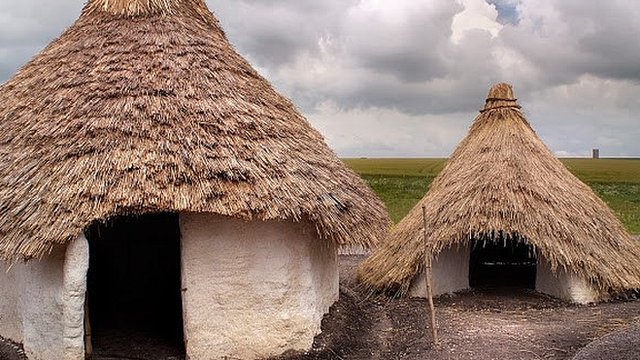
Far from being dark, little Hobbit spaces, the interiors are surprisingly bright, illuminated by the white chalk walls and floors, and open door. A tall man can easily stand up straight inside. In the middle of the room, the ash-log fire on the hearth sends up smoke, which seeps through the thatch. As the smoke slowly dissipates, it creates a thin carbon dioxide layer against the straw that stops any spark from the fire igniting the thatch. As if that weren’t ingenious enough, the thatch expands in the rain, providing an even more waterproof membrane.
The houses are pretty small – around 5m across – but they were certainly big enough to hold a family: English Heritage has managed to fit in 15 people easily into a single house, gathered around the fire.
It wasn’t just the architecture that was astonishingly avant-garde. Furniture in 2,500 BC, when Stonehenge and these cottages were thought to have been built, was pretty advanced too. Neolithic man slept on animal skins on wooden beds, with cupboards and shelves carefully inserted into the wall. In the house and outside the front door, there were handy pits, filled with handsome, striped pottery, known as “grooved ware”, the first pottery in Britain with a flat base. The pits also contained a selection of flints and animal bones, carved to create every conceivable mod con. Near Stonehenge, archaeologists have found chalk axes, bone tweezers, flint awls for piercing holes in bone and leather, flint saws and flint “fabricators” to create sparks for igniting fires.
The beauty of these objects – and the advanced engineering of the houses – seems particularly astonishing when we consider how early on in European, and global, civilisation they were made. In 2,500 BC, the Great Pyramid was being built at Giza, in Egypt. It was 500 years before the Minoan civilisation flourished at the Palace of Knossos; 900 years before the Mycenean civilisation in mainland Greece; and 2,000 years before the Parthenon was constructed. Jesus Christ is 500 years closer to us today than he was to the people who lived in these houses
Constructed over five months by 60 English Heritage volunteers, the buildings were closely based on the remains of Neolithic houses discovered in 2006 and 2007 at Durrington Walls, a ceremonial earthwork enclosure just north-east of Stonehenge. Radiocarbon dating has placed that settlement at about the same time that the mammoth sarsen stones from north Wiltshire, and the smaller bluestones from south Wales, were being raised at Stonehenge. So they’re among the earliest houses ever found in Britain.
Just like those nearby Wiltshire villages today, Durrington Walls consisted of a series of these cottages – and there may be 100s more, yet to be found – clustered closely together, but separated by woven wooden fences.
Again like lots of modern villages, Durrington Walls was built next to the River Avon – a crucial water source, home not just to trout and salmon, but to beavers and otters, much prized for their fur. Edible plants grew in the nearby damp soil, and red deer came to drink at the water’s edge. Deer antlers were used both as pickaxes and rakes to build the ditch and banks that circle Stonehenge. One red deer antler pick was found, laid carefully right on the floor of the ditch, perhaps to celebrate the end of the work.
The Flintstone diet wasn’t so different to ours, either: surviving cow and pig bones, some of them still with butchering marks on them, reveal a meat-rich diet, although there’s little trace of any cereal grain.
Already at this early stage, there are plenty of signs of human migration by water, too. The Amesbury Archer – whose burial was discovered in 2002, 5km east of Stonehenge – was born in the Alps, probably in what is now Switzerland. His origins were found thanks to chemical analysis of his teeth. The Amesbury Archer is thought to have been buried in 2,400 BC, a century after Stonehenge was built.
His body was surrounded by a glittering array of treasures: three copper knives, 16 flint arrowheads and a pair of gold hair ornaments, the earliest gold found in Britain. He was also buried with two archers’ stone wrist-protectors, which gave him his moniker. Alongside him, there were five delicately-carved and shaped Beaker pots, which gave their name to the neolithic Beaker culture, which spread right across western Europe, from present-day Holland to Spain, France and Germany.
The more archaeological research is made into Stonehenge man, the more evidence emerges that Britain wasn’t some remote backwater in the Neolithic Age, waiting for the Romans to provide it with the basics of civilised life. In the new Stonehenge visitors’ centre, hidden in a fold of Salisbury Plain close to the stones, there stands the skeleton of another early Neolithic Briton – whose recent bone analysis reveals quite how advanced this supposedly primitive civilisation was. The skeleton – excavated from a long barrow at Winterbourne Stoke, 3km west of Stonehenge – belonged to a man active in 3,000 BC, when the first earthwork enclosure at Stonehenge was built. Examining the enamel in his teeth – and the levels of strontium and oxygen, elements which vary in quantity from location to location – archaeologists have determined that he was probably born in Wales, moved to Wiltshire at two, went back to Wales at nine, and then shuttled between Stonehenge and Wales from 11 to 15. These regular journeys might explain the Welsh bluestones at Stonehenge – they were religious and sentimental reminders of the old country. This Neolithic man wasn’t so different from us. He was 1.72m, only 25mm shorter than the average British male today. He was 76kg, and lived off a classic West Country diet of dairy products and meat – mostly beef, mutton and venison.
Dr Simon Mays, the English Heritage scientist who carried out the bone analysis, determined that he’d led a peaceful life, with no injuries apart from a damaged knee ligament and a torn back thigh muscle. There was no sign of any illness, disease or nutritional stress in the body. He seems to have died in his late 20s or 30s. Life expectancy was a lot shorter, then, but what’s clear is that the great British obsession – class – was already alive and well 5,500 years ago. Our man was buried in one of the area’s grandest mausolea – and was initially the only body there, until he was joined around a thousand years later by other bodies in less prominent spots in the 82m-long grave.
There are around 350 of these long barrows in Britain. Half of them had no one buried in them at all; another quarter had five to 15 people in them; and only a quarter were allotted to a single person. So we are dealing with a major toff here, moving between his various smart residences in Wales and Wiltshire. A second home for the rich is nothing new.
The Durrington Walls houses may also help unlock one of the great secrets of mankind -–what was Stonehenge actually for? No one can be definitively sure but one of the most popular current theories is that it was a sort of holy cemetery. Its circles of cold stone, with cremated human bones all around, have been called “the land of the dead”. This is contrasted with “the land of the living” – with the timber houses of Durrington Walls, next door to another circular monument, Woodhenge, also built out of timber. Just walking around the Neolithic houses, we begin to see why this part of the West Country is so rich in Neolithic and Bronze Age finds. Not only is the open, rolling country so well-suited to farming – as it still is today – but also it’s purpose-built for house construction.
As visitors stroll around Stonehenge, they still kick up great lumps of chalk, studded with fragments of flint – the same chalk that built those ancient houses, the same flint that lit those long-extinguished ash fires. Suddenly, the Stone Age doesn’t seem so far away.
Stonehenge Reconstructions Show Brits Have Always Been Houseproud
http://www.newsweek.com/2014/06/20/meet-flintstones-265268.html
On Silbury Hill by Adam Thorpe

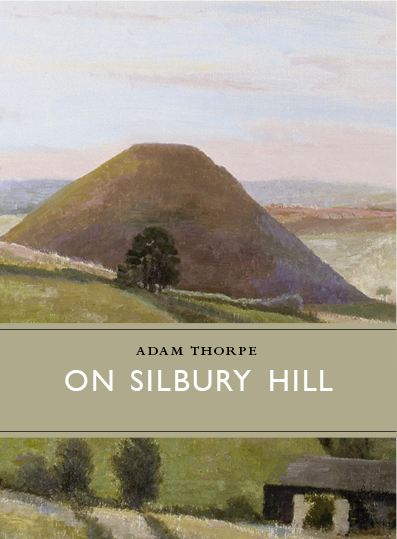
On Silbury Hill by Adam Thorpe
Book of the Week on BBC Radio 4 this week is Adam Thorpe’s On Silbury Hill (see our earlier feature here).
The novel pays personal tribute to the Neolithic monument. The base of Silbury Hill covers five acres of Wiltshire turf that has not seen the daylight for 4,300 years. Adam Thorpe has known the place since he was 13 years old. Abridged by Jill Waters. Read by Philip Franks. Broadcast daily from 9:45am – 10:00am.
Visit Salisbury and Wiltshire in 2015: Magna Carta 800th Anniversary

The Dean of Salisbury, the Very Revd June Osborne, says: “Plans are being advanced here at Salisbury Cathedral to commemorate the forthcoming 800th anniversary of Magna Carta by promoting the values and ideals that it represents. Our ambition is to present a wonderful mix of spiritual and secular celebrations, promoting justice and freedom in a practical sense, and running a full programme of learning and outreach events for people of all ages. We aim to inspire further activity in the years that follow by leaving a lasting national and international legacy.”
Salisbury Cathedral will re-display and re-present its Magna Carta in the newly-conserved Chapter House, safeguarding the document for the future and using the latest interpretation techniques to communicate Magna Carta’s historic background and modern significance to the many extra visitors it expects to welcome in 2015. It has already conserved and repair the Cathedral’s medieval Cloisters where the Chapter House is located.
Plans for further celebrations are underway, and are expected to include a lecture series chaired by the Dean of Salisbury featuring international speakers exploring topics inspired by Magna Carta. The Cathedral will also work with partners to present a Medieval Fair for all the family, a pageant involving hundreds of local people, a special concert, a Celebratory Eucharist and a week-long flower festival (15-20 September 2015), as well as other events. Alongside this activity, the Cathedral’s education department will work closely with schools throughout the year to deliver curriculum-focused programmes supporting citizenship and history.
Salisbury Cathedral will work closely with partners to deliver its ambitious programme, these include: The British Library, Diocese of Salisbury, Lincoln Cathedral, Magna Carta 800th Committee / Magna Carta Trust, Wiltshire Council, Dorset County Council, Salisbury City Council, Visit Wiltshire, UNESCO, and AGEAS Salisbury International Arts Festival.
Further details of Salisbury Cathedral’s Magna Carta 800th anniversary celebrations will be published on a regular basis as 2015 approaches. The Stonehenge Travel Company will be operating guided tours of Salisbury and Stonehenge throughout 2015. Book early to avoid disappointment.
“Wiltshire is the only county in England which has both a Magna Carta Baron Town and a Magna Carta Charter Town,”
DID YOU KNOW: Hip hop artist Jay-Z – husband of Beyonce and the king of America’s music scene – named his new album Magna Carta Holy Grail and looked to Salisbury for inspiration for the album cover artwork, before finally launching his latest product in the Chapter House itself.
Visit Salisbury and Wiltshire in 2015
Salisbury is one of England’s most wonderful cities
Salisbury, Stonehenge and South Wiltshire is a truly unique destination. Set among some of the most beautiful countryside and with a 5,000 year old history the area is steeped in history but with its eye firmly fixed on the future.
Salisbury is one of England’s most wonderful cities – a medieval masterpiece with something for everyone. From traditional English pubs to cosmopolitan street cafes and from hard-to-find specialist shops to major high street stores, you’ll find it in Salisbury. And at its heart there is the magnificent Salisbury Cathedral, towering over the city as it has for over 750 years.
Step outside of the city and you are in another world. Green hills, crystal clear rivers and picturesque towns and villages just waiting to be discovered. And, of course, there’s Stonehenge. The world’s most famous stone circle stands just a few miles north of Salisbury – a must see destination
|
|
Link: http://www.englishcathedrals.co.uk/news/2013/08/salisbury-cathedral-and-magna-carta-800th-anniversary-2015/
Link: http://www.salisburycathedral.org.uk/news.php?id=712
Link: http://www.visitwiltshire.co.uk/ideas-and-inspiration/salisbury-cathedral-and-magna-carta-p130493
Link: http://www.stonehengetravel.co.uk/stonehenge-salisbury-guided-tours.htm
The Stonehenge Travel Company, Salisbury, Wiltshire
Mystical County, Magical Tours
www.StonehengeTravel.co.uk
Wessex Gallery grand opening (12th July). Bringing the history of Stonehenge and Wessex to life.
ANTHROPOLOGIST and BBC TV Coast and Origins of Us presenter Dr Alice Robertswill open Salisbury Museum’s new £2.4m Wessex Gallery on Saturday (Salisbury Journal).
The new gallery will house one of Europe’s most extensive collections of Stonehenge and prehistoric artefacts including the 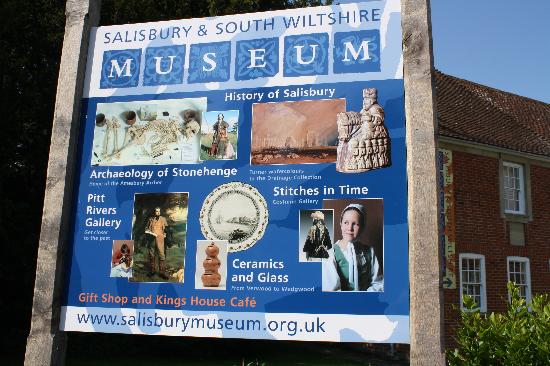 Amesbury Archer – popularly dubbed the King of Stonehenge and the Wardour Hoard.
To mark the event the museum will be hosting an admission-free day of action-packed celebrations, special events, living history displays and demonstrations of traditional skills and crafts.
There will also be other celebrity guests including Channel 4 Time Team presenter and field archaeologist Phil Harding, who will be demonstrating flint knapping – the ancient art of shaping tools and weapons from stones – which early the Britons used.
Along with a free view of the new Wessex Gallery, members of the public will have the opportunity to see Norman falconry displays, try on Norman dresses, or get suited and booted in a knight’s hefty chainmail armour complete with sword.
There will also be ancient coppicing, stone masonry, pottery-making and wool dyeing demonstrations as well as a chance for people to try their hand at reconstructing a prehistoric face, carve a Stone Age chalk animal and experience an Anglo Saxon burial ritual.
Museum director Adrian Green said: “The grand opening of our new Wessex Gallery is going to be a fantastic all-day event with lots of exciting activities to see and do for all age groups.
“It’s also a great opportunity for people to see our amazing new Wessex Gallery which brings the prehistory and history of Stonehenge and Wessex to life.”
The Wessex Gallery Grand Opening is on Saturday, 12 July from 10am to 4pm at Salisbury Museum, The Close.
For more information call 01722 332151 or visit: www.salisburymuseum.org.uk.
Read the full article in the Salisbury Journal: http://www.salisburyjournal.co.uk/news/11321466.New_gallery_set_to_open/?ref=var_0
Stonehenge Guided Tours
Mystical County, Magical Tours
www.StonehengeTravel.co.uk
Neolithic House Project: Stonehenge builders’ ‘bright and airy’ homes re-created
Five Neolithic houses have been recreated at Stonehenge to reveal how the ancient monument’s builders would have lived 4,500 years ago.

More than 20 tonnes of chalk, 5,000 rods of hazel and three tonnes of wheat straw were used
The single-room, 5m (16ft) wide homes made of chalk and straw daub and wheat-thatching, are based on archaeological remains at nearby Durrington Walls.
Susan Greaney, from English Heritage, said the houses are the result of “archaeological evidence, educated guess work, and lots of physical work.”
The houses open to the public, later.
The “bright and airy” Neolithic homes are closely based on archaeological remains of houses, discovered just over a mile away from Stonehenge.
Dated to about the same time as the large sarsen stones were being erected, English Heritage said experts believe they may have housed the people involved with constructing the monument.
Excavations at Durrington Walls, not only uncovered the floors of houses but stake holes where walls had once stood – providing “valuable evidence” to their size and layout.
“Far from being dark and primitive, the homes were incredibly bright and airy spaces” – Spokesman English Heritage

Sited by the new visitor centre, the houses are furnished with replica Neolithic axes, pottery and other artefacts
“We know for example, that each house contained a hearth and that puddled chalk was used to make the floor,” said a spokesman for English Heritage.
“And far from being dark and primitive, the homes were incredibly bright and airy spaces with white chalk walls and floors designed to reflect sunlight and capture the heat from the fire.”
‘Labour of love’
Using authentic local materials including 20 tonnes of chalk, 5,000 rods of hazel and three tonnes of wheat straw, it has taken a team of 60 volunteers five months to re-create the homes.
Susan Greaney, a historian at English Heritage, said it had been a “labour of love” and an “incredible learning experience” for the volunteers.
“One of the things we’re trying to do at Stonehenge is to re-connect the ancient stones with the people that lived and worked in the surrounding landscape,” she said.
“Now visitors can step through the door of these houses and get a real sense of what everyday life might have been like when Stonehenge was built. ”
They are furnished with replica Neolithic axes, pottery and other artefacts
Article source: BBC http://www.bbc.co.uk/news/uk-england-wiltshire-27656212
Link: http://www.theguardian.com/culture/2014/jun/02/neolithic-houses-recreated-at-Stonehenge
English Heritage: https://www.english-heritage.org.uk/daysout/properties/stonehenge/discover/neolithic-houses/
Stonehenge Neolithic Houses Blog
We operate guided tours of Stonehenge. Learn more about the Neolithic Houses and explore the Stonehenge Landscape with a local expert.
The Stonehenge Travel Company, Salisbury, Wiltshire
Mystical County, Magical Tours
The Crop Circle Information Centre is to move into the Wiltshire Museum in Devizes for the peak summer season.
Crop Circle Information Centre moves to Wiltshire Museum in Devizes
It was based at Woodborough Garden Centre in the Pewsey Vale last summer, when it was visited by at least 5,000 people, the majority of them from overseas, but it will be in the museum’s art gallery from mid-June to the end of August.

An intricate pattern in a field near Calne in August 2000
Museum director David Dawson said: “Having the CCIC here is a natural progression in our interest in the Wiltshire landscape.”
The crop circle pass scheme, introduced in Wiltshire last year, is to be repeated, but the charge has been simplified.
There were three types of passes at different prices – per day, week or month – and organiser Monique Klinkenbergh said it was confusing for visitors, so this year the pass will cost £10 for the entire crop circle season.
Ms Klinkenbergh, who has been studying crop circles since 2006 and spends her summers in Clench Common near Marlborough to investigate them, said the pass scheme had been received well generally.
Four farmers – David Hughes of Beckhampton, James and Jill Hussey of Hackpen, Jeremy Leonard of Netherstreet and John Hayward from Titcombe – signed up to the scheme to allow people who bought a pass access to their land which had crop circles. Each farmer received a payment to reimburse them.
She said: “People interested in visiting crop circles felt more comfortable with a pass. For 20 years it has been chaos. People didn’t know if they were welcome on farmers’ land.
“With the pass system people really valued the feeling they could explore knowing they were not doing an illegal thing.”
Last year 206 passes were sold and payments to farmers totalled £2,250 plus a donation of £500 to the Royal Agricultural Benevolent Institution.
Additional donations made by the public amounted to just under £5,000 and this has been carried over into the Wiltshire Farmers Crop Circle Fund.
The crop circle passes will be available to buy online from mid-May at www.cropcircleaccess.com and there is a free App at cropcircleaccess.
Passes can also be bought at Stick & Stones Cafe at Woodborough Garden Centre, and Faux Art in The Parade, Marlborough.
Normal admission charges to the museum will apply for those who wish to visit the CCIC.
Last year was one of the sparsest for the number of crop circle formations.
In Wiltshire, there were 33 circles and just three others elsewhere in the UK.
This was the lowest in Wiltshire since 2006’s 22 reports.
In 2012, there were 54 crop circles in Wiltshire and 19 in the rest of the UK. The year with the most recorded crop circles in Wiltshire was 2000, with 79 instances.
It is thought extreme cold and wet spring in the UK delaying crops was a factor last year, when the first formation was on June 2. The first this year was on April 16, near Wootton Rivers.
| PRIVATE CROP CIRCLE TOURS | MYSTERIOUS WILTSHIRE | |
| Wiltshire has the highest concentration of Crop Circles in the World | ||
 |
|
|
|
During the Summer crop circles in amazingly complex and intricate patterns appear overnight in the Wessex countryside. Debate rages as to whether they are hoaxes or created by aliens. Suggestions linking them to energy lines that circle the earth or to ancient pagan sites have been put forward. Or are they the creation of fakers who use planks and rope to create these geometric patterns; if so why has no-one ever seen them in spite of extensive surveillance! Wiltshire Crop Circle Season Each summer the greatest and most tangible unexplained phenomenon of our time is played out in fields of grain. Every year in Wiltshire scores of geometric symbols, mandalas and beautiful patterns appear in the crop fields, particularly in the county of Wiltshire. This magical landscape includes not only the majority of crop circles, but also some of England’s most remarkable ancient sacred sites. Although June, July and August is the height of the crop circle season we often see them as early as March as as late as September each year. Explore this amazing mystery for yourself. Our guides live in the heart of crop circle country (no coincidence) and have access to the information network that provides breaking news on the latest formations and so we set off in search of new crop circles within hours of them forming, when their energy is strongest. Join us on a private crop circle tour this year. The Stonehenge Travel Company |
Amesbury – including Stonehenge – is the UK’s longest continually-occupied settlement
We offer private guided tours from Salisbury that visit Amesbury and the Heritage Museum. Explore the area with a local expert!

A Wiltshire town has been confirmed as the longest continuous settlement in the United Kingdom.
 Amesbury – including Stonehenge – is the UK’s longest continually-occupied settlement
Amesbury, including Stonehenge, has been continually occupied since BC8820, experts have found.
The news was confirmed following an archaeological dig which also unearthed evidence of frogs’ legs being eaten in Britain 8,000 years before France.
Amesbury’s place in history has also now been recognised by the Guinness Book of Records.
David Jacques, from the University of Buckingham, said: “The site blows the lid off the Neolithic Revolution in a number of ways.
“It provides evidence for people staying put, clearing land, building, and presumably worshipping, monuments.
“The area was clearly a hub point for people to come to from many miles away, and in many ways was a forerunner for what later went on at Stonehenge…
View original post 418 more words
Harry Potter set, Gothic cathedral and an Iron Age village: 10 reasons to visit Wiltshire
THIS beautiful leafy county has more to offer than the historic site of Stonehenge
![Stonehenge is a prehistoric monument built from gigantic stone slabs around 5000 years ago [GETTY]](https://stonehengetransfer.tours/wp-content/uploads/2014/05/stonehenge-473383.jpg)
Stonehenge is a prehistoric monument built from gigantic stone slabs around 5000 years ago [GETTY]
2. Climb the 332 steps to the top of Salisbury Cathedral tower for a great view. Salisbury’s pointy gothic cathedral has the tallest tower in Britain.
3. Meet a real film star. Picturesque Lacock village is a firm favourite with film and TV producers. The village’s historic buildings have starred in the BBC’s Pride and Prejudice and Cranford and in screen in the Harry Potter film, The Half-Blood Prince and Wolfman.
4. Take the family on a day trip to the Iron Age settlement of Old Sarum. Just two miles from Salisbury, it marks the site of the original cathedral and the Romans, Normans and Saxons have all left their mark on the fort. The gift shop even sells wooden bows and arrow too to take you back in time. english-heritage.org.uk/daysout/properties/old-sarum
5. Shop in Kate Middleton’s former neighbourhood. Marlborough is where she went to school and the market centre boasts great tea shops and an interesting selection of independent and interesting upmarket shops.
6. Go back in time to see the oldest working steam engines in the world at Crofton Beam Engines where the 200-year-old engines pump water to the highest point of the Kennet and Avon Canal. Marvel at the historic architecture and picnic in the grounds. croftonbeamengines.org/index.html
7. Discover the walled garden or take the kids to learn to climb a tree and be amazed by the world-famous Stourhead gardens which have been stunning visitors since they first opened in the 1740s. nationaltrust.org.uk/stourhead
8. Enjoy a cruise along the canal at Bradford on Avon. Barge trips leave from the lock, just outside the town centre, all year round. visitwiltshire.co.uk/explore/towns-and-villages/bradford-on-avon-and-trowbridge
9. Tuck into pheasant, smoked salmon and traditional desserts of rhubarb or sticky toffee pudding at the recently revamped Methuen Arms in Corsham, just eight miles from Bath.
10. Walk the footpath up to Chernhill Down to come face to face with the giant white horse carved on the edge of the hill. The chalk horse was cut in 1780 and you’ll find it off the A4 just east of the village of Cherhill.
Full article By: Anne Gorringe: http://www.express.co.uk/travel/shortbreaks/473383/10-things-to-do-in-Wiltshire
Link: www.VisitWiltshire.co.uk
Join us on a guided tour from Salisbury and explore historic Wiltshire
The Stonehenge Travel Company
Mystical Landscape, magical Tours
APPROVED MEMBER