
Private Driver Guided Sightseeing Tours with local experts

What is Human Rights Day?
Human Rights Day is observed every year on 10th December. It commemorates the day (10 December 1948) the United Nations General Assembly adopted the Universal Declaration of Human Rights.
Magna Carta is famous as a symbol of justice, fairness, and human rights. For centuries it has inspired and encouraged movements for freedom and constitutional government in Britain and around the world. But when it was issued by England’s King John in June 1215 it was an attempt to prevent a civil war between the king and his powerful barons…
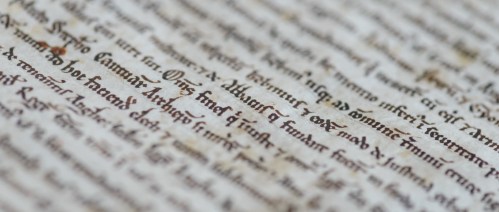
Magna Carta (Latin for “Great Charter”) is one of the most celebrated documents in English history. At the time it was the solution to a political crisis in Medieval England but its importance has endured as it has become recognised as a cornerstone of liberty influencing much of the civilized world
Salisbury Cathedral is extremely proud to be home to the finest of the four surviving original 1215 Magna Carta. Their Magna Carta is on permanent display to visitors in the newly-conserved Chapter House.
Only four copies of Magna Carta dating from 1215 have survived the ravages of time and Salisbury Cathedral is proud to be home to the best preserved original manuscript. Elias of Dereham, priest and steward of the archbishop of Canterbury is thought to have brought Salisbury’s copy of to Old Sarum in the days following the events at Runnymede and it has remained in the Cathedral’s care ever since
The Salisbury Connection
At Runnymede King John was urged to accept the demands of the barons and agree Magna Carta by his half-brother, William Longspeé, whose Effigy is in Salisbury Cathedral. Also present at Runnymede was Elias of Dereham, who at the time was steward to one of the key players in the crisis, the Archbishop of Canterbury Stephen Langton. Elias himself was a skilled negotiator and was at the very centre of the discussions between the King and the barons. Once Magna Carta was agreed and sealed he was entrusted with delivering ten of the thirteen copies made, one of which was given to the original cathedral at Old Sarum. Elias later became a Canon of Old Sarum before masterminding the building of the present Salisbury Cathedral.
Join us on a private guided tour of Salisbury Catheral and see Magna Carta or join a guided coach tour from London
The excellent Visit Wiltshire website will help you plan your trip to Salisbury and Wiltshire.
The Stonehenge and Salisbury Guided Tours Experts
http://www.StonehengeTravel.co.uk
The winter solstice occurs at the moment when the North Pole is tilted furthest away from the sun, giving us the shortest day of the year. (Metro U.K)
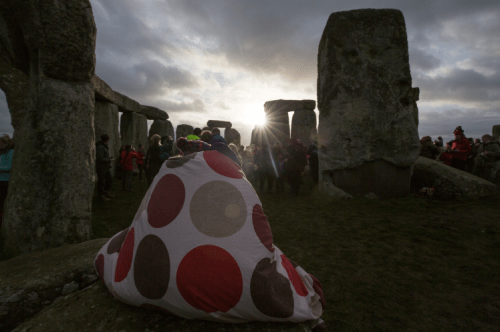
Druids celebrating the winter solstice at Stonehenge (Picture: Getty)
It happens at the same moment for everyone around the world. This year, in the UK it’s happening at 10:44 GMT on Wednesday 21st December.
It falls on a different date each time – between 21 and 23 December, thanks to the fact that the 365-day year is actually 365 days, five hours and 45 seconds long.
The solstice occurs around six hours later each year, meaning the date gradually adjusts over time. Each leap year, the date jumps back to December 21 and we begin again.
The average duration of a year is approximately 365 days five hours 48 minutes and 45 seconds,’ Dr Somak Raychaudhury, Reader in Astrophysics at Birmingham University told the BBC.
‘Even this varies by a few seconds every year, since the Earth’s motion is not just caused by the Sun’s pull of gravity.
‘It is perturbed by the pull of the planets and moons in the Solar System. The relative positions of these change from year to year.’
On 21 December, the sun will rise in the UK at 8:04am and set at 3:45pm. This gives us just 7 hours and 49 minutes of daylight.
Tracking the sun’s yearly progress dates back to the earliest people on Earth, who knew that its path across the sky, amount of daylight and location of the sunrise and sunset changed according to a regular pattern throughout the year.
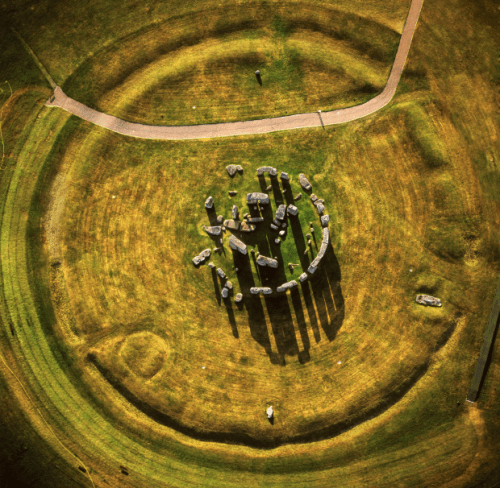
Monuments such as Stonehenge in England and Machu Picchu in Peru were built to track the sun’s progress over the course of the year.
The winter solstice was seen as especially important in the past, as people were economically dependent on the seasons, with starvation a common occurrence in the early months of winter.
Winter solstice customs led to the Christmas tree becoming a major symbol. The Druids used evergreen trees, holly and mistletoe to symbolise everlasting life during their winter solstice rituals.
Centuries before the time of Jesus, cultures brought plants and leaves into their homes when the winter solstice arrived to celebrate the return of life at the start of winter’s decline.
The mornings remain dark until January due to a formula called the Equation of Time.
The equation explains how solar time, which is measured on sundials, differs from clock time.
Because the Earth’s axis is tilted, and its orbit is the shape of an oval, the two times don’t always match – they can be as much as 16 minutes out of sync.
Solar noon – when the sun is at its highest in the sky – isn’t always the same time as noon according to clock time.
As the Earth moves faster in the part of its orbit where it’s nearest to the sun – which comes after the winter solstice – this increased speed pushes the solar noon back, causing winter sunrise time to stand still for a few days.
In other words, the sunrise is ‘hanging’ during the late December – early January period, making mornings remain darker for a bit longer.
The summer solstice is on Wednesday 21 June 2017.
The Stonehenge Travel Company based in Salisbury are offering a guided tour with a local expert on the 21st December 2016. Witness the sun setting on the shortest day of the year and hear why Stonehenge is astronomically aligned. Their exclusive small group Stonehenge Winter Solstice sunset tour departs from Salisbury.
The Stonehenge Experts
http://www.StonehengeTravel.co.uk
Witness the sun setting at Stonehenge from the ceremonial Avenue on the Winter Solstice. Visit two World Heritage Sites in one day!
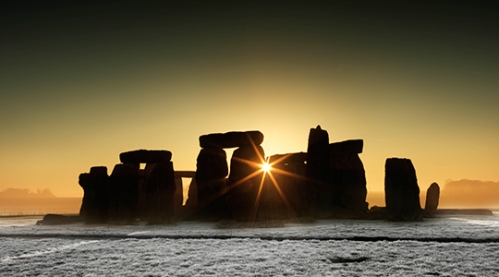
Stonehenge is carefully aligned on a sight-line that points to the winter solstice sunset and it is now thought that the Winter Solstice was actually more important to the people who constructed Stonehenge than the Summer Solstice
Winter Solstice Guided Tour Highlights (21st December):
On this guided tour we’ll follow in the footsteps of people from 4,500 years ago as the made their way across the landscape and up the ceremonial Avenue towards Stonehenge as the Sun set into the centre of the monument before the longest night of the year.
Visit Avebury Stone Circle on the Winter Solstice
Avebury Henge is one of the Wonders of Ancient Britain. Originally, the megalithic complex consisted of over 700 standing stones and contained the world’s largest stone circle. Long and meandering stone avenues coursed for one and a half miles which led to the inner circles and the heart of the stone temple. Walk amongst the Stones with the Druids and Pagans absorbing the magic of the largest Stone Circle in the world at one of the most important times of year. Take time to reflect upon its powerful, mysterious presence and the ancient engineering and design.
Enjoy a walking tour of this ancient and see the many Druids and Pagans gathering for the solstice celebrations. There’s also time to explore the charming village with its thatched cottages, antiques and Saxon village church. Maybe enjoy a traditional cream tea or if you are feeling brave enough why not try some local ale in Avebury’s haunted Inn, the Red Lion (the most haunted pub in England) before we continue to Salisbury via the scenic country back roads
You will pass famous white horses carved into the chalk hillsides and picturesque, tucked away villages. We also explore the mysterious phenomena of crop circles and take a closer look at any which may be in the area (seasonal generally from May to August). Their appearance is always unexpected, unpredictable and largely unexplained. We will pass ancient burial mounds and the mysterious Silbury Hill. This is Europe’s largest prehistoric man-made monument yet still a mystery to modern day man.
Sunset on the 21st December is at 15.52pm. We will be there for sunset!
Our Winter Solstice Sunset Tour departs form Salisbury at 9am on 21st December 2021
We also offer Stonehenge private guided tours and Stonehenge walking tours.
The Local Stonehenge Experts
http://www.StonehengeTravel.co.uk
THE history of the Stonehenge landscape could be rewritten completely after a new discovery by archaeologists.
Remains of a huge ceremonial gathering place were found near Larkhill, dating back to 3650 BC – about 700 years before Stonehenge was built.
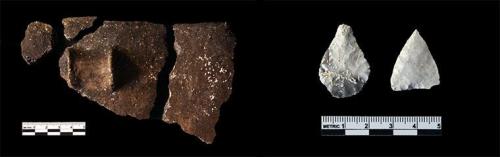
The remains, which were discovered during archaeological excavations ahead of construction of new services accommodation, are of a Neolithic enclosure, a major ceremonial gathering place measuring about 200m in diameter.
So far pottery, worked flint, animal bones and human skull fragments have been found in the ditches surrounding the enclosure, which would likely have been used for temporary settlement, exchanging animals and other goods or for feasting and other ritual activities, including the disposal of the dead.
Dr Matt Leivers of Wessex Archaeology said: “This is an exciting new find, and one that transforms our understanding of this important monumental landscape.”
The majority of the site lies within the Larkhill Garrison, where it will remain unaffected by the current works.
Only about 70 enclosures of this type are known across the UK, and they’re thought to be some of the earliest built structures in the British landscape.
Nearby, at Bulford, archaeologists have found a unique double henge, the only known example in Britain, which dates back to around 2900 BC.
Martin Brown, the principal archaeologist for WYG, who are managing and directing the archaeological work on both site, said: “These discoveries are changing the way we think about prehistoric Wiltshire and about the Stonehenge landscape in particular.
“The Neolithic people whose monuments we are exploring shaped the world we inhabit: they were the first farmers and the first people who settled down in this landscape, setting us on the path to the modern world.
“It is an enormous privilege to hold their tools and investigate their lives.”
Article by Rebecca Hudson. Salisbury Journal
Join the local Stonehenge experts on a Stonehenge guided tour. Explore the neolithic landscape with a tour guide and hear all the latest theories and recent discoveries.
The Stonehenge Travel and Tour Company
Salisbury, Wiltshire
http://www.StonehengeTravel.co.uk
A new paper published in the Journal of the Geological Society has lent support to recent theories about the origin of the mysterious ‘bluestones’ of Stonehenge.
 Stonehenge, a World Heritage Site
It has long been known that some of the rocks that make up Stonehenge must have travelled a long distance before becoming part of the monument. Whilst the larger sandstone blocks (‘sarsen’ stones) that make up its outer circle are thought to have a local origin from the Marlborough Downs area, the smaller ‘bluestones’ are exotic to the region.
 Plan of the central Stone Structure at Stonehenge as it survives today. c. Anthony Johnson
The term ‘bluestone’ in relation to Stonehenge encompasses around twenty different rock types, including rhyolites, dolerites and ‘calcereous ashes.’
In 2011, a megalithic bluestone quarry was discovered at a site in South West Wales known as Craig Rhos-y-felin. Since then, it has been suggested as the source…
View original post 356 more words

English Heritage is celebrating 30 years of World Heritage Site status for Stonehenge this weekend.
To launch the 30th Anniversary celebrations, students from local Stonehenge School and Avon Valley College are today unveiling a special plaque highlighting the World Heritage Site status of the iconic Wiltshire monument.
 Thousands flock to the site for summer solstice every year. Photo: ITV West Country
n 1986 Stonehenge and Avebury were among the first seven sites in the UK to be inscribed on the UNESCO World Heritage List.
World Heritage Site status gives Stonehenge and Avebury international recognition alongside sites such the Egyptian Pyramids, the Great Wall of China and the Galapagos Islands as a place of exceptional importance to all humanity.
View original post 194 more words

As religious beliefs and the location of human settlements have developed over time, so have our burial rites and memorials to the dead.
Our knowledge of these rituals is instrumental in understanding the communities which have inhabited England throughout our known history. Sites such as the recently uncovered Anglo Saxon cemetery in Norfolk, in an excavation by archaeologists from MOLA and funded by Historic England, open up the history of our attitude to death and inform the protection of these important sites.
Here is a short chronology of 5 fascinating burial sites in England:
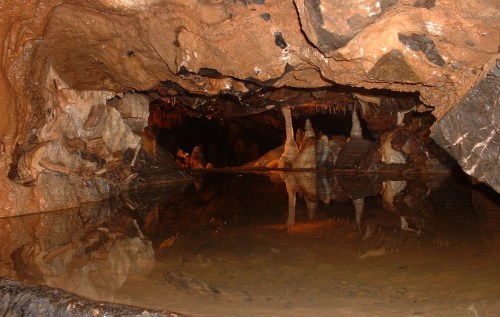 Goughs Cave, by Rwendland via Wikimedia commons
A scheduled monument, Gough’s Cave in Somerset provides rare evidence of human activity in the period from about 40,000 to 10,000 years ago. Organic and other fragile materials often survive well in caves and rock shelters, making them…
View original post 704 more words
The bluestones at Stonehenge are the smaller rocks you can see standing inside the huge sarsens that form the outer circle and the inner trilithons.
 They range in size from stumps barely visible in the turf through to slender pillars standing nearly 2.5m tall (plus another metre or more below gound) with the largest weighing between 2 and 3 tonnes.
These rocks definitely come from the Preseli Mountains in southwest Wales, 150 miles from Stonehenge as the crow flies. Their place of origin was first established in 1923 by the geologist H. H. Thomas and has been confirmed by modern geochemical analysis. They used to be known as the “foreign stones” because it was recognised that they weren’t local to the Stonehenge area.
The name bluestone is a collective term and there are two main types – spotted dolerite and rhyolite.
It’s not obvious why they’re called bluestones to most…
View original post 477 more words
Shop ’til you drop at Salisbury’s annual Christmas Market, held in the beautiful Market Place. (24th November – 18th December)
With beautifully decorated chalets, inspiring and desirable gifts and a very warm welcome, be sure to pay a visit to the Salisbury Christmas Market this year.
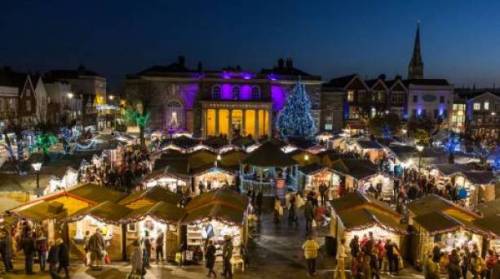
Stalls at Salisbury Christmas Market © Visit Wiltshire
Meet Father Christmas, enjoy the food and drink stalls and hear traditional music from local choirs and schools whilst you shop.
Many of the chalets sell British made products, making it the perfect place to pick up a unique gift.
After exploring the stalls, make time to explore Salisbury’s other attractions too, including twilight tower tours of Salisbury Cathedral and candle-lit services, where you can see the twinkling lights of the city from up high.
With special offers running in many of the city’s hotels, you can turn your visit into a festive break.
Make the most of your visit to this beautiful city with a visit to the historic Cathedral and surrounding Close or explore the beautiful surroundings with a trip to Winchester, Stonehenge, or the New Forest. There’s a whole city to discover in Salisbury with ample parking and easy access to public transport, together with a wide range of shops, restaurants, cafes and plenty of places to stay both inside or near to the city. Wht not organise a guided tour of Salisbury and perhaps Stonehenge or even join a coach tour from London
Content provided by VisitWiltshire
The Stonehenge Travel Company, Salisbury, Wiltshire
http://www.StonehengeTravel.co.uk



 Stonehenge and Salisbury Guided Tours