Home » Posts tagged 'Guided Tours' (Page 4)
Tag Archives: Guided Tours
Among the Ancient Stones, Magic as Potent as Ever
WILTSHIRE DOWNS, England — Standing at the center of the Stone Circle of Stonehenge in the moments before dawn, lulled by low-hanging rain clouds, I am, for a while, unable to understand why so many pilgrimages have been made here.
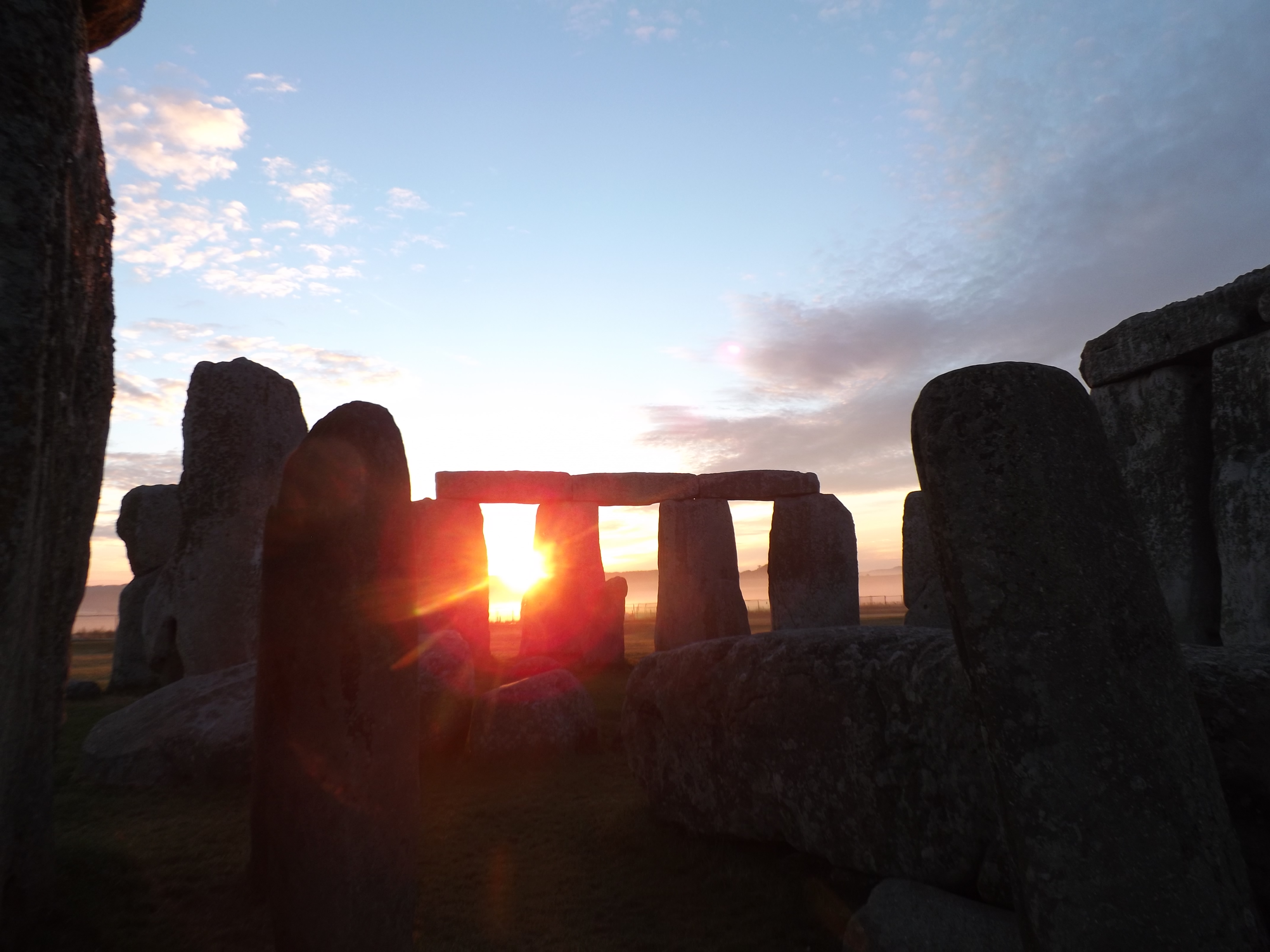 Sure, the setting is attractively pastoral, with gently rolling fields and dark patches of trees on distant hills. But the vista verges on the ordinary. I can even make out the line of a highway not far off, cutting across the meadows, commuters’ headlights poking through the mist. In the half-light, the surrounding stones seem almost familiar and scarcely mysterious.
Is this really the place that Thomas Hardy called “a very Temple of the Winds,” describing it “rising sheer from the grass,” its stones seeming to hum with sound? Did Christopher Wren, the great architect of St. Paul’s Cathedral in London, really think so much of Stonehenge that he left his signature chiseled in one of the stones? And why should this site now lure as many as 18,000 celebrants to a summer solstice festival on the day the sun rises through a gap between its central stones, bisecting the monument?
But after the rain, when the sun breaks through the clouds and the pillars of rock cast corridors of shadow, all misgivings are cast aside. In the privileged calm of early morning – an enviably timed visit that can be arranged with English Heritage, the government agency that manages the area – I begin to understand why more than 1 million visitors a year are drawn here. I see, too, why its nearly completed $44 million transformation has been so celebrated.
The renovation has eliminated a highway that nearly abutted the stones (leaving intact, at least for now, the heavily trafficked road some 500 feet away). And it demolished a similarly intrusive visitor center, replacing it with another a mile and a half away, invisible from the monument, designed by Denton Corker Marshall to appear delicately self-effacing even while enclosing an introductory exhibition, a cafe and an extensive gift shop. A shuttle transports visitors to the main attraction, which requires tickets, typically costing about $25, for entry at a specific time or about $35 for “out of hours” stone circle access.
This touristic enterprise also involves a kind of restoration. The goal is not to restore the stones themselves. That would have been impossible, even in the 12th century, when the earliest known history of Stonehenge appeared (in a volume now on display at the visitor center): Constructed by a race of giants, it was transported to its current site by the wizard Merlin.
And, anyway, what would Stonehenge be restored to? It began as a circular earthwork, created about 3000 B.C.; its major stone circle with enormous pillars topped by lintels dates to about 2500 B.C. The evolving ceremonial site included circles, ovals and horseshoe patterns and apparently remained in use for another thousand years. Extensive work in the 20th century lifted, straightened and set some stones in concrete to prevent tipping. (The largest weighs more than 35 tons.)
The goal now is to restore the landscape, which researchers have been examining recently because of its intimate connections to the site. This emphasis can be felt throughout the new visitor center. A 360-degree theater uses finely detailed laser scans of the stones to show the monument’s evolving shape, while a wall-size animated map shows Stonehenge within a puzzling network of mounds and ditches, barrows containing burial remnants, and vestiges of unexplained earthworks that extend for miles. Display cases show some 300 artifacts that outline the region’s varied modes of life and death during the site’s evolution.
A similar emphasis is evident in the elegant new $4 million Wessex Gallery, at the nearby Salisbury Museum, which gives a reverse archaeological history of the region, proceeding backward in time. Its 2,500 artifacts – including the Stonehenge Archer, a skeleton dating from as early as 2400 B.C., found in a ditch in 1978 – are accompanied by images of a pastoral landscape that still holds unexplored secrets.
I am also preoccupied with the surrounding landscape that morning, standing within the Stone Circle. It is an enclosure that leads us to look outward. During the hours of sunrise (and sunset), when shadows are long, the patterns change every moment. The shadows of the stones hug the ground, climb neighboring pillars, slide over nearby ditches.
The axis of Stonehenge was originally determined by the sun’s rising and setting during summer and winter solstices, when symmetrical movements of shadows must have been something to behold. But even visiting at another time of year, I feel as if I were in a languorously turning kaleidoscope. The stones provide a medium through which we perceive the landscape. We emerge, entranced by the expanse around us, attentive to its details. The site reveals the setting; the setting, the site.
At first, the landscape seems a nondescript series of meadows; now it becomes far more intricate. Look toward the northeast, and you clearly see faint traces of the Avenue, an ancient earthwork path that extends 1.5 miles, ending at the River Avon. One hypothesis is that the river was used to transport the stones of the inner ring (called “bluestones”) which came from Wales, some 150 miles to the west.
I walk across these fields and become aware of dips and banks, ridges and mounds: eroded remnants of ancient human activities, many seemingly related to the monument. Recently, the remains of a Neolithic human settlement were discovered at the Avenue’s other end, near a circular timber counterpart to Stonehenge. During the recent restoration, natural rock fissures were discovered beneath the Avenue that are aligned with Stonehenge’s solar axis and may even have determined the monument’s location. In an article in Smithsonian magazine this month, “What Lies Beneath Stonehenge,” Ed Caesar describes the latest explorations using three-dimensional GPS-guided measurements that have revealed new subterranean features.
The temptation is to think of Stonehenge as a “thing,” a monument erected at a particular time with a particular purpose. Yet displays here suggest that over the 1,500 years or so that the site was in use, cultures and rituals changed along with it.
One of the intriguing things about Stonehenge, as we are reminded again and again, is that it can’t really be pinned down; we will never know enough. Was it a burial site, a temple, an astronomical model, a healing center, a monument to the ancestral dead?
We are destined to feel unsettled, even after learning from the fine exhibitions nearby. In J.M.W. Turner’s 1827 watercolor of Stonehenge, on display in Salisbury’s Wessex Gallery, lightning strikes near the center of the Stone Circle. The flash is luminous, exhilarating. But dread mixes with illumination, mystery with enlightenment. Why is the outer ground littered with the carcasses of shepherd and sheep? A bolt from the heavens? We aren’t certain. It is a bit frightening, which makes the painting as uncanny as the place.
Article source link: http://www.adn.com/article/20140909/among-ancient-stones-magic-potent-ever
Stonehenge Guided Tours, Salisbury, Wilsthire
Mystical Landscape, Magical Tours….
Neolithic House Project: Stonehenge builders’ ‘bright and airy’ homes re-created
Five Neolithic houses have been recreated at Stonehenge to reveal how the ancient monument’s builders would have lived 4,500 years ago.

More than 20 tonnes of chalk, 5,000 rods of hazel and three tonnes of wheat straw were used
The single-room, 5m (16ft) wide homes made of chalk and straw daub and wheat-thatching, are based on archaeological remains at nearby Durrington Walls.
Susan Greaney, from English Heritage, said the houses are the result of “archaeological evidence, educated guess work, and lots of physical work.”
The houses open to the public, later.
The “bright and airy” Neolithic homes are closely based on archaeological remains of houses, discovered just over a mile away from Stonehenge.
Dated to about the same time as the large sarsen stones were being erected, English Heritage said experts believe they may have housed the people involved with constructing the monument.
Excavations at Durrington Walls, not only uncovered the floors of houses but stake holes where walls had once stood – providing “valuable evidence” to their size and layout.
“Far from being dark and primitive, the homes were incredibly bright and airy spaces” – Spokesman English Heritage

Sited by the new visitor centre, the houses are furnished with replica Neolithic axes, pottery and other artefacts
“We know for example, that each house contained a hearth and that puddled chalk was used to make the floor,” said a spokesman for English Heritage.
“And far from being dark and primitive, the homes were incredibly bright and airy spaces with white chalk walls and floors designed to reflect sunlight and capture the heat from the fire.”
‘Labour of love’
Using authentic local materials including 20 tonnes of chalk, 5,000 rods of hazel and three tonnes of wheat straw, it has taken a team of 60 volunteers five months to re-create the homes.
Susan Greaney, a historian at English Heritage, said it had been a “labour of love” and an “incredible learning experience” for the volunteers.
“One of the things we’re trying to do at Stonehenge is to re-connect the ancient stones with the people that lived and worked in the surrounding landscape,” she said.
“Now visitors can step through the door of these houses and get a real sense of what everyday life might have been like when Stonehenge was built. ”
They are furnished with replica Neolithic axes, pottery and other artefacts
Article source: BBC http://www.bbc.co.uk/news/uk-england-wiltshire-27656212
Link: http://www.theguardian.com/culture/2014/jun/02/neolithic-houses-recreated-at-Stonehenge
English Heritage: https://www.english-heritage.org.uk/daysout/properties/stonehenge/discover/neolithic-houses/
Stonehenge Neolithic Houses Blog
We operate guided tours of Stonehenge. Learn more about the Neolithic Houses and explore the Stonehenge Landscape with a local expert.
The Stonehenge Travel Company, Salisbury, Wiltshire
Mystical County, Magical Tours
Stonehenge Myths and Mysteries – Some New Theories
Latest Research and Theories About the World’s Most Famous Standing Stones.
Stonehenge. It stands on Salisbury Plain, massive, isolated and mysterious. People have been trying to fathom the meaning and history of the UK’s – and probably the world’s – most impressive and important standing stones for at least 800 years.

According to English Heritage, which manages the site about 90 miles southwest of London, early references have been found in the mid 12th century writings of Henry of Huntingdon, a Lincoln clergyman who wrote a history of England. Calling the site Stanenges, he wrote of stones of “wonderful size…erected after the manner of doorways, so that doorway appears to have been raised upon doorway; and no one can conceive how such great stones have been so raised aloft, or why they were built there.”
His questions – how was Stonehenge built, why was its location chosen and by whom – have puzzled generations of writers, researchers and visitors. Now, in the first decades of the 21st century, archaeologists are beginning to come up with some new answers – as well as a lot of new questions.
How Was Stonehenge Built and By Whom?
One of the great mysteries of Stonehenge is its actual creation. Some of its heaviest stones, the blue stones that make up the lintels, come from hundreds of miles away in the Preseli Hills of Wales. How were they transported by a society that did not use the wheel? And calling the monument “the most architecturally sophisticated prehistoric stone circle in the world,” English Heritage points out that while other Neolithic stone monuments were essentially piles of natural stones and boulders, Stonehenge is made of dressed stones, fitted together with precise mortise and tenon joints. When all the lintel stones of the outer circle were in place, they formed a perfectly horizontal, interlocking circle, even though the monument stands on sloping ground.
Early writers have theorized the monument was built by Romans – Inigo Jones thought no earlier people had enough engineering skill. In about 1136, Geoffrey of Monmouth in his history of Britain placed it in the heart of Arthurian legends and suggested that Merlin had a hand in building it. There are stories of Merlin flying the bluestones from Wales and levitating them to the top of the monument. And of course, there are plenty of stories of alien involvement.
Current theories are equally impressive though more down to earth. For ten years, in the Stonehenge Riverside Project, teams of archaeologists from the universities of Sheffield, Manchester, Southampton and Bournemouth, along with University College London, have been studying the monument and the surrounding landscape. They suggest that it was built as a unification project between farming tribes of East and West Britons who, between 3,000 BC and 2,500 BC, shared a common culture.
Professor Mike Parker Pearson of the University of Sheffield, author of Stonehenge: A New Understanding, explains, “there was a growing island-wide culture – the same styles of houses, pottery and other material forms were used from Orkney to the south coast…Stonehenge itself was a massive undertaking, requiring the labour of thousands… Just the work itself, requiring everyone literally to pull together, would have been an act of unification.” (Buy Prof. Pearson’s Book Direct).
In fact, a settlement being excavated about two miles northeast of the monument, Durrington Walls, indicates as many as 1,000 houses and 4,000 people from all over Britain took part in the building of Stonehenge. And this was at a time when the estimated population of the entire country was about 10,000. The village of builders was probably the largest Neolithic village in Europe.
So the manpower to undertake so much plain hard work was there. The stones were moved from Wales, via sledges and by boat, not by dark arts or secret sciences. Though the level of organization required at such an early period, is rather amazing.
Of course, that’s just the latest theory about the origin of the stones. Another idea is that the Preseli bluestones were carried to the Salisbury landscape by Ice Age glaciers and were found naturally littering the plain when Stonehenge’s builders walked the earth.
How Old is Stonehenge?
The common wisdom has been that the monument is about 5,000 years old and was built in several stages over a period of 500 years. In fact, much of the main building of Stonehenge, visible today, was probably built within that time frame.
But the use of the Stonehenge site for important, and probably ritual purposes goes back much further – perhaps as long ago as 8,000 to 10,000 years. Excavations around the monument’s parking area in the 1960s and then again in the 1980s found pits that held wooden posts planted between 8500BC and 7000BC.
It’s not clear whether these are directly related to Stonehenge but what is becoming more evident is that the landscape of Salisbury Plain was important to early Britons for many thousands of years.
Why Salisbury Plain?
Nice big landing place for spaceships perhaps? Not very likely. What is more probable is that the landscape chose itself. Ancient Britain was covered by forests. A large open space, thousand of acres of chalk grassland, would have been rare and special. I can tell you myself, that even today, driving across Salisbury plain at in the dark, its mysterious earthworks looming blank against a starry sky, can be a transcendant, almost supernatural experience.
Then, there is the matter of the lines. No not ley lines. Aerial photography, excavations and geophysical surveys have revealed grooves – known as periglacial stripes – that run parallel to the Avenue at the Stonehenge site and coincidentally line up with the axis of the solstice. It is possible that the farming people who settled the area and who closely observed seasonal signs noticed the alignment of these natural geological features and chose the site and position of Stonehenge because of them.
That certainly was the conclusion reached by Prof. Pearson’s group. He said, “When we stumbled across this extraordinary natural arrangement of the sun’s path being marked in the land, we realized that prehistoric people selected this place to build Stonehenge because of its pre-ordained significance…Perhaps they saw this place as the centre of the world”.
Was the Summer Solstice Important to Ancient People?
Every year, Wiccans, Neo Pagans, New Agers and curious tourists flock to Stonehenge for the summer solstice. It is the only time that visitors are allowed to camp out around the site and spend all night waiting for dawn.
But findings at Durrington Walls suggest that midwinter, not midsummer was the most important and the time for rituals and feasting. Scientists have been able to date pigs teeth found at the site and say that they were slaughtered and consumed in winter, not summer. Most of the other monuments in the Stonehenge area are aligned to midwinter sunrise and sunset. That theory makes even more sense when you consider the fire festivals and observances of midwinter all over Northern Europe.
What Was Stonehenge Used For?
Take your pick: Druid worship, burials, harvest festivals, animal sacrifices, solstice celebrations, communal rituals, a healing center, a farming calendar, a defensive earthwork, a signal to the gods, an alien landing strip. There are dozens of theories about what Stonehenge was used for. And over the years, archaeological excavations have found evidence of most of theses activities (except aliens – so far). The discovery of at least 150 burials in the area is a relatively recent finding, for example.
The fact is, the ritual landscape that Stonehenge is a part of was in use by different human societies for thousands of years. It’s likely that it, and the other monuments in the Stonehenge, Avebury and Associated Sites UNESCO World Heritage site, had a variety of different uses over the millennia. We may never fully understand this mysterious place, but archaeologists and historians are getting closer all the time. Article by By Ferne Arfin: http://gouk.about.com
Visit Salisbury, Stonehenge and its landscape with a local expert guide and hear all the latest theories about this mysterious monument.
The Stonehenge Travel Company, Salisbury.
www.StonehengTravel.co.uk
Salisbury Cathedral and Magna Carta 800th Anniversary 2015
Salisbury Cathedral, home to the finest of the four surviving original 1215 Magna Carta, will be taking a leading role in the 2015 celebrations marking the 800th anniversary of the historic and iconic document the legacy of which has been its enduring global influence. Magna Carta’s clauses on social justice form the cornerstone of modern democracy and liberty worldwide and are as pertinent today as they were 800 years ago.

Robert Key, chairman of Salisbury Cathedral’s Magna Carta 800th anniversary committee, said “Salisbury Cathedral is extremely proud to own the finest preserved of the four surviving original 1215 documents. We know how important the Magna Carta is to people from across the globe and what it represents for them. The 1215 Magna Carta is inscribed in the UNESCO ‘Memory of the World’ register, underlining the fact that the documents held by Salisbury Cathedral, Lincoln Cathedral and The British Library are regarded amongst the world’s most significant documentary heritage.”
The Dean of Salisbury, the Very Revd June Osborne, said “Plans are being advanced here at Salisbury Cathedral to commemorate the forthcoming 800th anniversary of Magna Carta by promoting the values and ideals that it represents. Our ambition is to present a wonderful mix of spiritual and secular celebrations, promoting justice and freedom in a practical sense, and running a full programme of learning and outreach events for people of all ages. We aim to inspire further activity in the years that follow by leaving a lasting national and international legacy.”
Salisbury Cathedral intends to re-display and re-present its Magna Carta in the newly-conserved Chapter House, safeguarding the document for the future and using the latest interpretation techniques to communicate Magna Carta’s historic background and modern significance to the many extra visitors it expects to welcome in 2015. It also hopes to conserve and repair the Cathedral’s medieval Cloisters where the Chapter House is located.
Plans for further celebrations are underway, and aim to include a lecture series chaired by the Dean of Salisbury featuring international speakers exploring topics inspired by Magna Carta. The Cathedral also has ambitions to present a Medieval Fair for all the family, a pageant involving hundreds of local people, a special concert, a Celebratory Eucharist and a week-long flower festival, as well as other events. Alongside this activity, the Cathedral’s education department will work closely with schools throughout the year to deliver curriculum-focused programmes supporting citizenship and history.
Salisbury Cathedral is working closely with partners to deliver its ambitious programme, these include: The British Library, Diocese of Salisbury, Lincoln Cathedral, Magna Carta 800th Committee/ Magna Carta Trust, Wiltshire Council, Dorset County Council, Salisbury City Council, Visit Wiltshire, UNESCO, and AGEAS Salisbury International Arts Festival.
Brief background information on Magna Carta 1215
Magna Carta is one of the most celebrated documents in English history, regarded as the cornerstone of English liberty, law and democracy, and its legacy has been its enduring worldwide influence. It was written in Latin, the language of all official documents of the period, on a single skin of vellum (calfskin). It consists of 63 clauses written on 76 tightly packed lines, written with the standard medieval time and space-saving abbreviations. It is one of the most celebrated documents in English history whose importance cannot be exaggerated. It is often claimed to be the cornerstone of English liberty, law and democracy and its legacy has been its enduring and worldwide influence. The critical importance of the charter is that it imposed for the first time detailed written constraints on royal authority in the fields of taxation, feudal rights and justice, and limited unjust and arbitrary behaviour by the king. Magna Carta has become an icon for freedom and democracy throughout the world. The other surviving copies are held by the British Library and Lincoln Cathedral.
Salisbury Cathedral Chapter House opening times to see Magna Carta 1215 are:
Monday-Saturday: 1 April – 31 October, 9.30am – 4.30pm, 1 November – 31 March, 10.00am – 4.30pm
Sundays: all year, 12.45pm – 4.30pm.
ENDS
Link: http://www.englishcathedrals.co.uk/news/2013/08/salisbury-cathedral-and-magna-carta-800th-anniversary-2015/
Link: http://www.salisburycathedral.org.uk/news.php?id=712
Link: http://www.visitwiltshire.co.uk/ideas-and-inspiration/salisbury-cathedral-and-magna-carta-p130493
Link: http://www.stonehengetravel.co.uk/stonehenge-salisbury-guided-tours.htm
The Stonehenge Travel and Tour Company, Salisbury
Expert Guided tours of Stonehenge and Salisbury
New pre-historic galleries at Wiltshire Museum, Devizes
The Wiltshire Museum in Devizes has just opened 4 new fantastic pre-historic galleries following a £750,000 project supported by the Heritage Lottery Fund, English Heritage, Wiltshire Council, the North Wessex Downs Area of Natural Beauty and other sources.
 For the first time for many years some of the “crown jewels” of Stonehenge can be viewed in state of the art exhibition cases. It includes the largest collection of Early Bronze Age gold ever put on public display in England.
David Dawson, Director of Wiltshire Museum said: “Devizes is mid-way between two of the world’s most important ancient monuments – the great prehistoric stone circles of Stonehenge and Avebury. Visiting the Wiltshire Museum completes the experience of seeing these two iconic sites.
A visit to the Wiltshire Museum is essential to really understand the rich history of the WHS and life in the Neolithic and Early Bronze Age.
You can read about the new galleries here.
Stonehenge visitor centre opens on 18 December and the new interpretation gallery features loans from Wiltshire Museum.
The Salisbury Museum opens its newly refurbished prehistoric galleries in Spring 2014.
Links: http://www.stonehengeandaveburywhs.org/new-galleries-at-wiltshire-museum-devizes/
Links: http://www.wiltshiremuseum.org.uk/news/?Action=8&id=163&home=1
Our guided tours from Salisbury will be including this fascinating museum in 2014.
Stonehenge Guided Tours, Salisbury
 Stonehenge and Salisbury Guided Tours