Home » Posts tagged 'History'
Tag Archives: History
Stonehenge Guided Walking Tours
Stonehenge needs little introduction. We all know it. But have you ever experienced it on foot? And do you know how those huge heavy rocks got there? Or what the ancient site was used for?
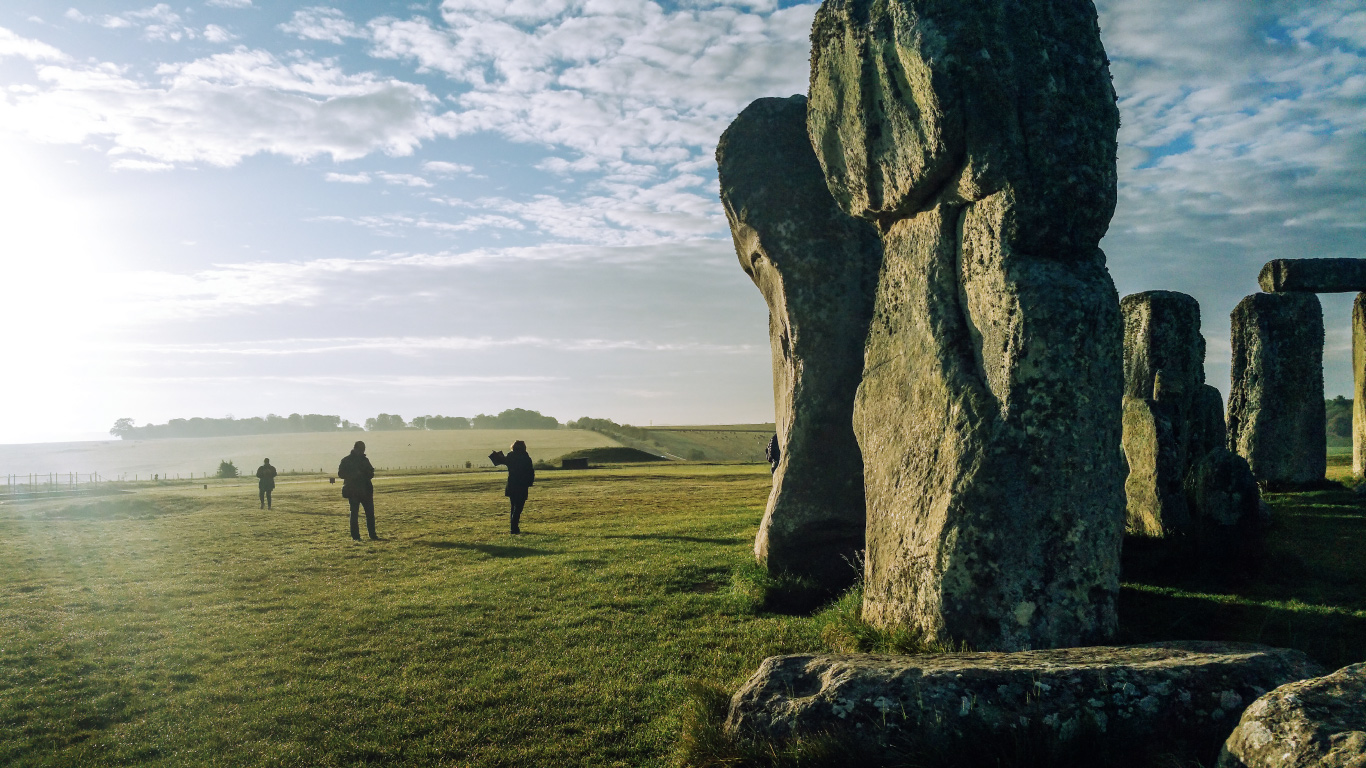
Stonehenge is surrounded by other prehistoric monuments, which are all part of the Stonehenge World Heritage Site? The best way to approach Stonehenge is on foot across the landscape, the same way that the ancient Neolithic and Bronze Age people did over 4000 years ago.
Our private guided walking tours provides you with spectacular views of the Stonehenge area rarely seen by the millions of people who visit the monument each year. This really is a wonderful walk with some tantalizing glimpses of the monument as you approach.
Is it really a Druid temple?
Are there mysterious energy paths that converge at the site?
Is it an eclipse predictor?
Or a place of healing?
Your expert tour guide for this experience is a local historian and astronomer who has spent the last 15 years researching Stonehenge and its surrounding area. He has an in-depth understanding of the solar and lunar alignment theories as well as a passion for the archaeology and history of the World Heritage Site.
Stonehenge special access tours can also be arranged and combined with our walking tours for private groups. Our guide can meet you at the English Heritage visitor center or Transport can be arranged for departures from Salisbury, Bath, Southampton or even London.
The Stonehenge Travel Company
www.StonehengeTravel.co.uk
WINNER: BEST ‘HISTORICAL TOUR OPERATOR’ 2021 / 2022 / 2023 / 2024
WINNERE: ‘BEST CRUISE SHIP TOUR OPERATOR’ 2023 / 2024 UK NAUTICAL TOURISM AWARDS
Famous Stonehenge stone came from Scotland not Wales?
The six-tonne Altar Stone at the heart of Stonehenge came from the far north of Scotland rather than south-west Wales as previously thought, new analysis has found.
The discovery shows the construction of Stonehenge was a far greater collaborative effort than scientists realised.
It also means that the ancient monument, near Salisbury in south-west England, was built with stones from all parts of Great Britain.
The findings suggest Neolithic Britain was a far more connected and advanced society than earlier evidence indicated.
The distance between Stonehenge and the far north of Scotland is about 700km (434 miles).
The research was led by a Welsh PhD student, Anthony Clarke, now working at Curtin University in Western Australia.
Such is the importance of the discovery that it has been published in one of the world’s leading scientific journals, Nature, external, which is an enormous achievement for an apprentice researcher.
But it is a bittersweet moment for the young Welshman, who was born in Pembrokeshire, where the Altar Stone was until now thought to have come from.
“I don’t think I’ll be forgiven by people back home,” he joked to BBC News. “It will be a great loss for Wales!”
But Mr Clarke points out that the remaining stones in the central horseshoe, which are known as bluestones, are from Wales and the larger stones in the outer circle are from England.
“We’ve got to give the Scots something!” he said.
“But on a serious note, Stonehenge seems to be this great British endeavour involving all the different people from all over the island,” he said.
The bluestones at Stonehenge were identified as coming from the Preseli hills in Pembrokeshire in 1923, by Welsh geologist Henry Herbert Thomas. The central Altar Stone was made of a different rock but always assumed to have come from the same area, until 20 years ago when scientists first began to question its origins.
Last year, researchers including Prof Nick Pearce from Aberystwyth in Wales, of all places, concluded that the Altar Stone could not have come from Wales. But its origin had remained a mystery, until now.
“It blew our socks off when we discovered it was from north-east Scotland,” Prof Pearce, who was also involved in the current discovery, told BBC News.
“It was a shock to say the least. Coming from that distance, more than 700km, was remarkable.
“The Neolithic people must have been pretty well connected, far more connected than people give them credit for. They must have been very well organised”.
The breakthrough was made by the team at Curtin university who analysed the chemical composition of fragments of rock that had fallen off the Altar Stone and dated them. The composition and date are unique to rocks from different parts of the world, rather like a fingerprint.
The Australian team had access to one of the most comprehensive global rock fingerprint databases and found the best match was from the Orcadian Basin, which includes the Caithness, Orkney, and Moray Firth regions of north-eastern Scotland.

Construction at Stonehenge began 5,000 years ago, with changes and additions over the next two millennia. Most of the bluestones are believed to have been the first stones erected at the site.
Dr Robert Ixer, from University College London, who was also involved in the study, described the result as “shocking”.
“The work prompts two important questions: how was the Altar Stone transported from the very north of Scotland, a distance of more than 700 kilometres, to Stonehenge, and, more intriguing, why?”
The distance is the longest recorded journey for any stone used in a monument at that period and Prof Peace says that the next mystery to solve is how it got there.
“There are obvious physical barriers to transporting by land, and an equally daunting journey if going by sea.
“These findings will have huge ramifications for understanding communities in Neolithic times, their levels of connectivity and their transport systems”.
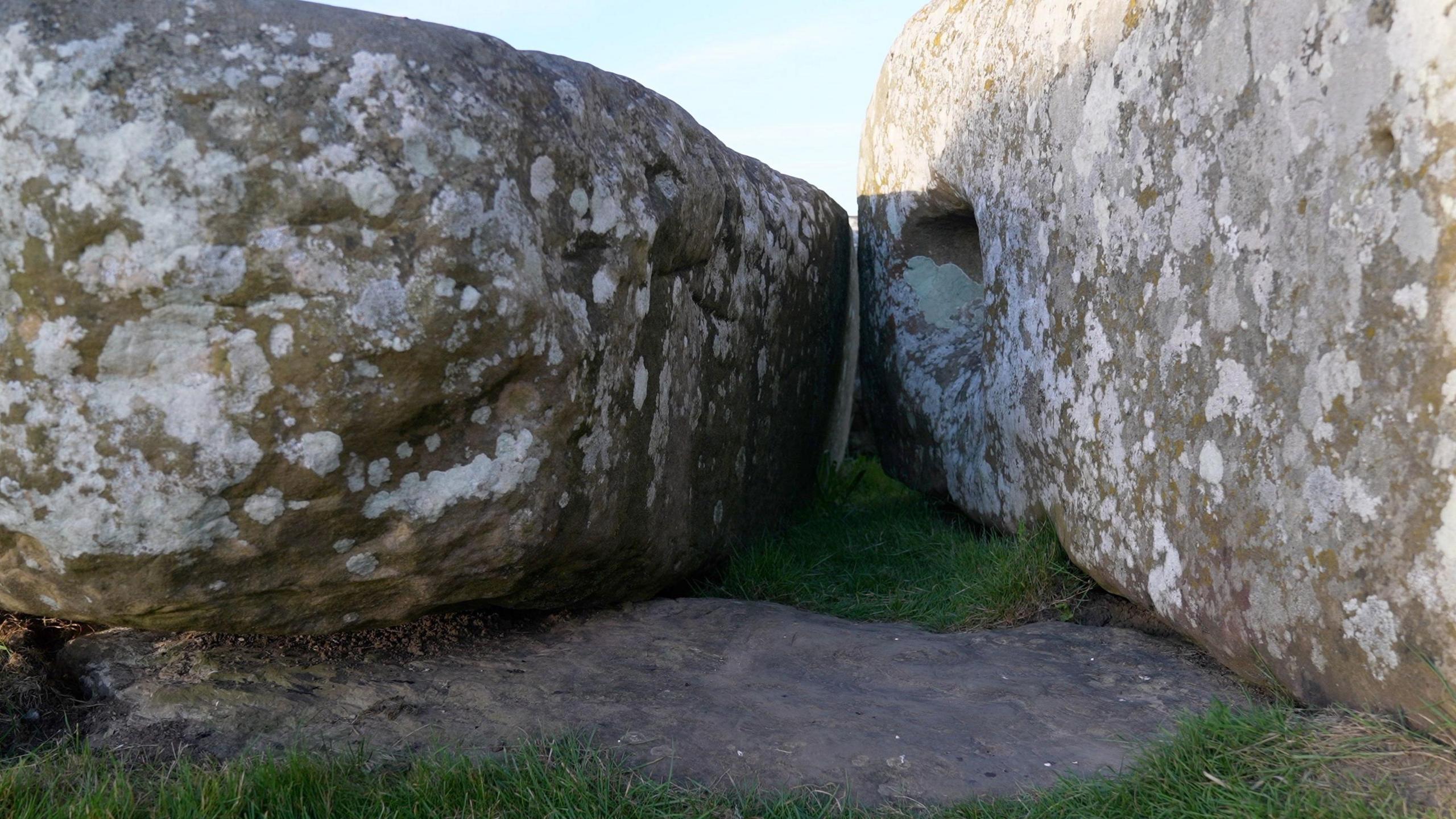
The new research will be pored over by archaeologists working for English Heritage, which looks after Stonehenge, according to one of the monument’s senior curators, Heather Sebire.
”This discovery certainly implies that there were great social connections in Britain at the time,” she told BBC News.
“It is phenomenal that the people of the time brought such a large stone all this way. They must have had a compelling reason to do it.
“They had a sophisticated and developed society and so they probably had a spiritual side, just like we do“. SOURCE: BBC
Book a Stonehenge private guided tour and hear all the latest theories.
The Stonehenge Travel Company
Roman villa unearthed ‘by chance’ in Wiltshire garden
An “elaborate” Roman villa has been unearthed by chance by a home owner laying electric cables in his garden in Wiltshire.
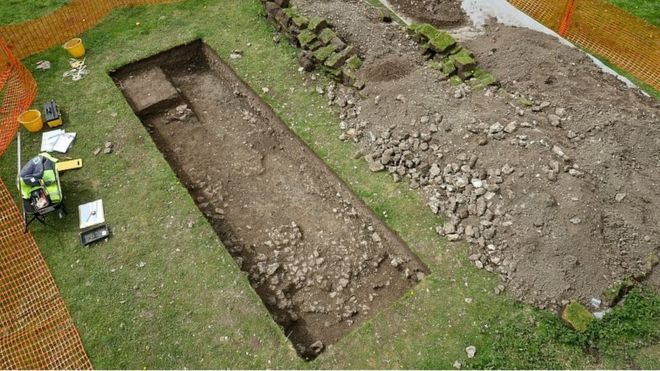
The villa was described as “extraordinarily well-preserved”
It was discovered by rug designer Luke Irwin as he was carrying out some work at his farmhouse so that his children could play table tennis in an old barn.
He uncovered an untouched mosaic, and excavations revealed a villa described as “extraordinarily well-preserved”.
Historic England said it was “unparalleled in recent years”.
Thought to be one of the largest of its kind in the country, the villa was uncovered near the village of Tisbury during an eight-day dig. It is being compared in terms of its size and its owners’ wealth to a similar, famous site at Chedworth in Gloucestershire.
Finds including hundreds of oysters, which were artificially cultivated and carried live from the coast in barrels of salt water, suggest that the villa was owned by a wealthy family.
The dig also turned up “extremely high status pottery”, coins, brooches and the bones of animals including a suckling pig and wild animals which had been hunted.
“We’ve found a whole range of artefacts demonstrating just how luxurious a life that was led by the elite family that would have lived at the villa,” said Dr David Roberts, of Historic England. “It’s clearly not your run-of-the-mill domestic settlement.”
‘Not been touched’
Dr Roberts said the villa, built sometime between AD 175 and 220, had “not been touched since its collapse 1,400 years ago”, which made it “of enormous importance”.
“Without question, this is a hugely valuable site in terms of research, with incredible potential,” he said. “It’s one of the best sites I have ever had the chance to work on.”
FULL STORY ON THE BBC WEBSITE
The Stonehenge Travel
The Best Tours in History
http://www.StonehengeTravel.co.uk
Exploring ancient life in the Vale of Pewsey
Our knowledge of the people who worshipped at Stonehenge and worked on its construction is set to be transformed through a new project led by the University of Reading.
This summer, in collaboration with Historic England, the Arts and Humanities Research Council and Wiltshire Museum, archaeologists are embarking on an exciting three-year excavation in the Vale of Pewsey, Wiltshire.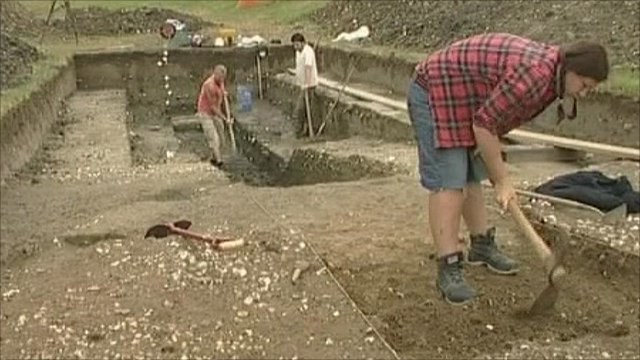
Situated between the iconic prehistoric monuments of Stonehenge and Avebury, the Vale of Pewsey is a barely explored archaeological region of huge international importance. The project will investigate Marden Henge. Built around 2400 BC ‘Marden’ is the largest henge in the country and one of Britain’s most important but least understood prehistoric monuments.
Excavation within the Henge will focus on the surface of a Neolithic building revealed during earlier excavations. The people who used this building will have seen Stonehenge in full swing, perhaps even helped to haul the huge stones upright.
Dr Jim Leary, from the University of Reading’s Department of Archaeology and Director of the Archaeology Field School, said: “This excavation is the beginning of a new chapter in the story of Stonehenge and its surrounds. The Vale of Pewsey is a relatively untouched archaeological treasure-chest under the shadow of one of the wonders of the world.
“Why Stonehenge was built remains a mystery. How the giant stones were transported almost defy belief. It must have been an astonishing, perhaps frightening, sight. Using the latest survey, excavation and scientific techniques, the project will reveal priceless insight into the lives of those who witnessed its construction.
“Marden Henge is located on a line which connects Stonehenge and Avebury. This poses some fascinating questions. Were the three monuments competing against each other? Or were they used by the same communities but for different occasions and ceremonies? We hope to find out.”
The Vale of Pewsey is not only rich in Neolithic archaeology. It is home to a variety of other fascinating historical monuments from various periods in history, including Roman settlements, a deserted medieval village and post-medieval water meadows. A suite of other investigations along the River Avon will explore the vital role of the Vale’s environment throughout history.
Dr Leary continued: “One of the many wonderful opportunities this excavation presents is to reveal the secret of the Vale itself. Communities throughout time settled and thrived there – a key aim of the dig is to further our understanding of how the use of the landscape evolved – from prehistory to history.”
Duncan Wilson, Historic England Chief Executive, added: “Bigger than Avebury, ten times the size of Stonehenge and half way between the Stonehenge and Avebury World Heritage Sites, comparatively little is known about this fascinating and ancient landscape. The work will help Historic England focus on identifying sites for protection and improved management, as well as adding a new dimension to our understanding of this important archaeological environment.”
The Vale of Pewsey excavation also marks the start of the new University of Reading Archaeology Field School. Previously run at the world-famous Roman town site of Silchester, the Field School will see archaeology students and enthusiasts from Reading and across the globe join the excavation.
The six week dig runs from 15th June to 25th July. Visitors are welcome to see the excavation in progress every day, except Fridays, between 10:00am and 5pm. Groups must book in advance.
Read more at: http://phys.org/news/2015-06-exploring-ancient-life-vale-pewsey.html#jCp
Provided by University of Reading
We offer guided tours of Stonehenge and Avebury with local experts.
Stonehenge and Salisbury Guided Tours
The Stonehenge Travel Company
May Day History and Folklore. #Wiltshire Bank Holiday Events.
In medieval times, May Day was often celebrated by young men and women dancing on the village green around a specially-decorated tree called a maypole.
The branches of a slender tree were cut off, coloured ribbons tied to the top and the revellers held on to the ends of the ribbons and danced. Some villages still carry on the tradition today. 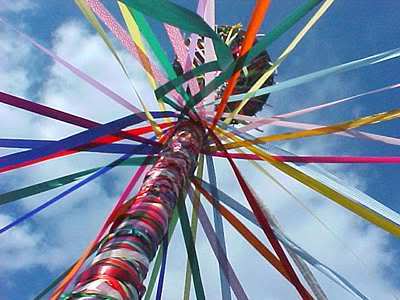
Before the dancing began there was also a procession led by a woman appointed May Queen for the day. Sometimes she was accompanied by a May King, who dressed in green to symbolise springtime and fertility.
In Germany, it was the tradition that a fir tree was cut down on May Eve by young unmarried men. The branches were removed and it was decorated and set up in village square. The tree was guarded all night to prevent it being stolen by the men of a neighbouring village. If the guard was foolish enough to fall asleep the going ransom rate for a maypole was a good meal and a barrel of beer.
A similar festival existed in ancient Rome called Floralia, which took place at around the end of April and was dedicated to the Flower Goddess Flora. On May 1, offerings were made the goddess Maia, after which the month of May is named.
Pagan groups call the fertility festival by its Celtic name of Beltane.
The church in the middle ages tolerated the May Day celebrations but the Protestant Reformation of the 17th century soon put a stop to them. The Puritans were outraged at the immorality that often accompanied the drinking and dancing – and Parliament banned maypoles altogether in 1644.
But when Charles II was restored to the throne a few years later, people all over the country put up maypoles as a celebration and a sign of loyalty to the crown.
May Day had a boost in popularity again in the 19th century when the Victorians seized on it as a “rustic delight”. But many of the significant pagan aspects of the day were ignored by our strait-laced ancestors and instead of a fertility rite, dancing around the maypole became a children’s game.
For traditionalists other things to do on May Day include getting up before dawn and going outside to wash your face in dew – according to folklore this keeps the complexion beautiful.
“Bringing in the May” also involves getting up very early, gathering flowers, making them into garlands and then giving them to your friends to wear. If you are feeling particularly charitable, folklore advises that it is good time to make up a “May basket” of flowers to take to someone who needs cheering up.
May Day Bank Holiday Events in Wiltshire.
May Day celebrations in Ansty (1st May)
MAY Day celebrations in Ansty will feature dancing round the maypole, a whole range of stalls, the White Horse Morris and a bar run by the villagers. The Morris Men will then be at the excellent nearby 14th Century Compasses’s Inn from 7.30pm (Great food and Ale)
May Day Fun at Old Wardour Castle. Join English Heritage for some May Day fun this Bank Holiday weekend. Watch Morris dancing, take part in hands-on activities and games and relax in the beautiful surrounds of Old Wardour Castle.
Please visit http://www.english-heritage.org.uk for details
Siege at Old Sarum Castle: Sun 03 & Mon 04 May
Old Sarum is under siege! Experience a 12th century siege as it springs to life in the castle grounds and witness the forces prepare for battle.
With living history encampments, tales of clashes from days gone by, fun and games activities for young time travellers and an awe-inspiring showdown – this will be a great way for the whole family to discover Old Sarum’s bloodthirsty past.
Please visit http://www.english-heritage.org.uk/visit/whats-on/siege-OldSa-03-05-2015/ for details
Visit the excellent Visit Wiltshire website for full details
Stonehenge and Salisbury Guided Tours
http://www.StonehengeTravel.co.uk
St George : International Man of Mystery
The story of a dragon-slaying hero is legendary, but how much do we really know about the man behind the myth?

The Real St.George.
Much of St George’s life remains shrouded in mystery and mingled with myths and legend, so it’s difficult to separate fact from fiction.
◾It is thought that St George came from Cappodocia in Asia Minor, and lived at the time of the Roman Emperor Diocletian (AD 245 – 313), and became a high-ranking cavalry officer in the Army of Rome
◾To Christians, George is a historical figure who was beheaded in Lydda, Palestine (in AD 303) for refusing to carry out Diocletian’s orders for Christian persecution
◾He was canonised in AD 494, with Pope Gelasius proclaiming that he was one of those “whose names are justly revered among men but whose acts are known only to God”
So Where Did the Dragon Come From?
The dragon-slaying hero we celebrate every year didn’t actually become well-known until the 14th century, during the reign of Edward III. The story goes that St George rode into the city of Silene (modern day Libya), to find the people terrorised by a dragon which was fed daily with one of the citizens. St George rose out, slew the dragon and freed the people from their oppressor.
It is highly unlikely that St George ever visited England, but he was known here from as early as the eighth century. His reputation for virtue and chivalry became the spiritual inspiration for the Crusaders, and by 14th century the story had gained widespread popularity.
Did You Know?
◾St George is also the Patron Saint of Bavaria, Beirut, Portugal and Hungary, to name but a few. He’s also patron saint of soldiers, archers, cavalry and chivalry, farmers and field workers, riders and saddlers, and sufferers of leprosy, the plague and syphilis.
◾Baden Powell also named St George is also the patron saint of Scouts, as “St George was typical of what a scout should be.”
◾At the Synod of Oxford in 1222, St George’s Day was declared a public holiday.
◾Shakespeare died on St George’s Day 1616, and if the story is to be believed, was born on St George’s Day, 1564
English Heritage Events
Calling all knights, dragons and jesters… come and cheer on St George this April as he battles his dastardly fire breathing foe at a historic place near you.
Immerse your family in the action as you learn about England’s heroic patron saint and enjoy the range of fun and games on offer. History hunters of every age will enjoy getting hands-on and cheering our champion as he battles a mighty dragon in a quest to save the fair maiden.
Click here to view English Heritage Events
Stonehenge and Salisbury Guided Tours
 Stonehenge and Salisbury Guided Tours