Home » Posts tagged 'Stonehenge'
Tag Archives: Stonehenge
Stonehenge Guided Walking Tours
Stonehenge needs little introduction. We all know it. But have you ever experienced it on foot? And do you know how those huge heavy rocks got there? Or what the ancient site was used for?
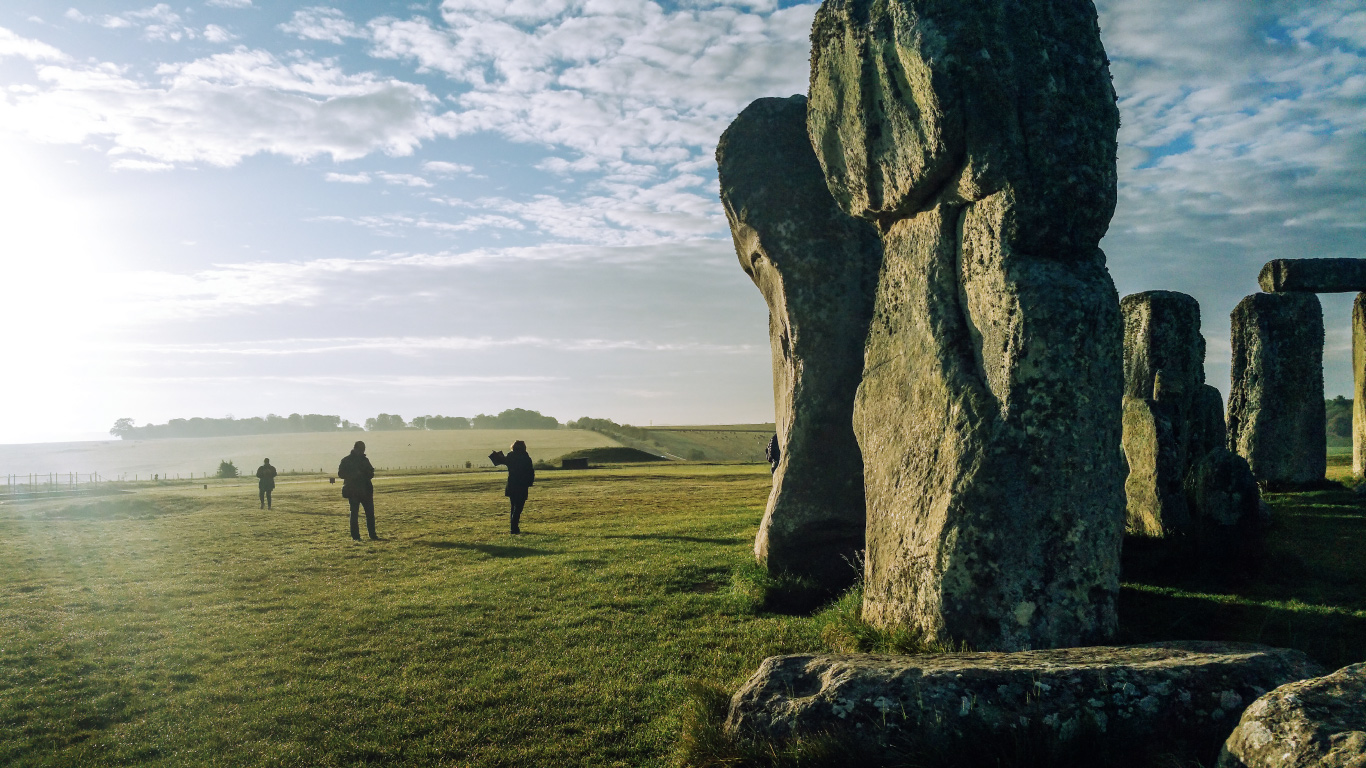
Stonehenge is surrounded by other prehistoric monuments, which are all part of the Stonehenge World Heritage Site? The best way to approach Stonehenge is on foot across the landscape, the same way that the ancient Neolithic and Bronze Age people did over 4000 years ago.
Our private guided walking tours provides you with spectacular views of the Stonehenge area rarely seen by the millions of people who visit the monument each year. This really is a wonderful walk with some tantalizing glimpses of the monument as you approach.
Is it really a Druid temple?
Are there mysterious energy paths that converge at the site?
Is it an eclipse predictor?
Or a place of healing?
Your expert tour guide for this experience is a local historian and astronomer who has spent the last 15 years researching Stonehenge and its surrounding area. He has an in-depth understanding of the solar and lunar alignment theories as well as a passion for the archaeology and history of the World Heritage Site.
Stonehenge special access tours can also be arranged and combined with our walking tours for private groups. Our guide can meet you at the English Heritage visitor center or Transport can be arranged for departures from Salisbury, Bath, Southampton or even London.
The Stonehenge Travel Company
www.StonehengeTravel.co.uk
WINNER: BEST ‘HISTORICAL TOUR OPERATOR’ 2021 / 2022 / 2023 / 2024
WINNERE: ‘BEST CRUISE SHIP TOUR OPERATOR’ 2023 / 2024 UK NAUTICAL TOURISM AWARDS
Famous Stonehenge stone came from Scotland not Wales?
The six-tonne Altar Stone at the heart of Stonehenge came from the far north of Scotland rather than south-west Wales as previously thought, new analysis has found.
The discovery shows the construction of Stonehenge was a far greater collaborative effort than scientists realised.
It also means that the ancient monument, near Salisbury in south-west England, was built with stones from all parts of Great Britain.
The findings suggest Neolithic Britain was a far more connected and advanced society than earlier evidence indicated.
The distance between Stonehenge and the far north of Scotland is about 700km (434 miles).
The research was led by a Welsh PhD student, Anthony Clarke, now working at Curtin University in Western Australia.
Such is the importance of the discovery that it has been published in one of the world’s leading scientific journals, Nature, external, which is an enormous achievement for an apprentice researcher.
But it is a bittersweet moment for the young Welshman, who was born in Pembrokeshire, where the Altar Stone was until now thought to have come from.
“I don’t think I’ll be forgiven by people back home,” he joked to BBC News. “It will be a great loss for Wales!”
But Mr Clarke points out that the remaining stones in the central horseshoe, which are known as bluestones, are from Wales and the larger stones in the outer circle are from England.
“We’ve got to give the Scots something!” he said.
“But on a serious note, Stonehenge seems to be this great British endeavour involving all the different people from all over the island,” he said.
The bluestones at Stonehenge were identified as coming from the Preseli hills in Pembrokeshire in 1923, by Welsh geologist Henry Herbert Thomas. The central Altar Stone was made of a different rock but always assumed to have come from the same area, until 20 years ago when scientists first began to question its origins.
Last year, researchers including Prof Nick Pearce from Aberystwyth in Wales, of all places, concluded that the Altar Stone could not have come from Wales. But its origin had remained a mystery, until now.
“It blew our socks off when we discovered it was from north-east Scotland,” Prof Pearce, who was also involved in the current discovery, told BBC News.
“It was a shock to say the least. Coming from that distance, more than 700km, was remarkable.
“The Neolithic people must have been pretty well connected, far more connected than people give them credit for. They must have been very well organised”.
The breakthrough was made by the team at Curtin university who analysed the chemical composition of fragments of rock that had fallen off the Altar Stone and dated them. The composition and date are unique to rocks from different parts of the world, rather like a fingerprint.
The Australian team had access to one of the most comprehensive global rock fingerprint databases and found the best match was from the Orcadian Basin, which includes the Caithness, Orkney, and Moray Firth regions of north-eastern Scotland.

Construction at Stonehenge began 5,000 years ago, with changes and additions over the next two millennia. Most of the bluestones are believed to have been the first stones erected at the site.
Dr Robert Ixer, from University College London, who was also involved in the study, described the result as “shocking”.
“The work prompts two important questions: how was the Altar Stone transported from the very north of Scotland, a distance of more than 700 kilometres, to Stonehenge, and, more intriguing, why?”
The distance is the longest recorded journey for any stone used in a monument at that period and Prof Peace says that the next mystery to solve is how it got there.
“There are obvious physical barriers to transporting by land, and an equally daunting journey if going by sea.
“These findings will have huge ramifications for understanding communities in Neolithic times, their levels of connectivity and their transport systems”.
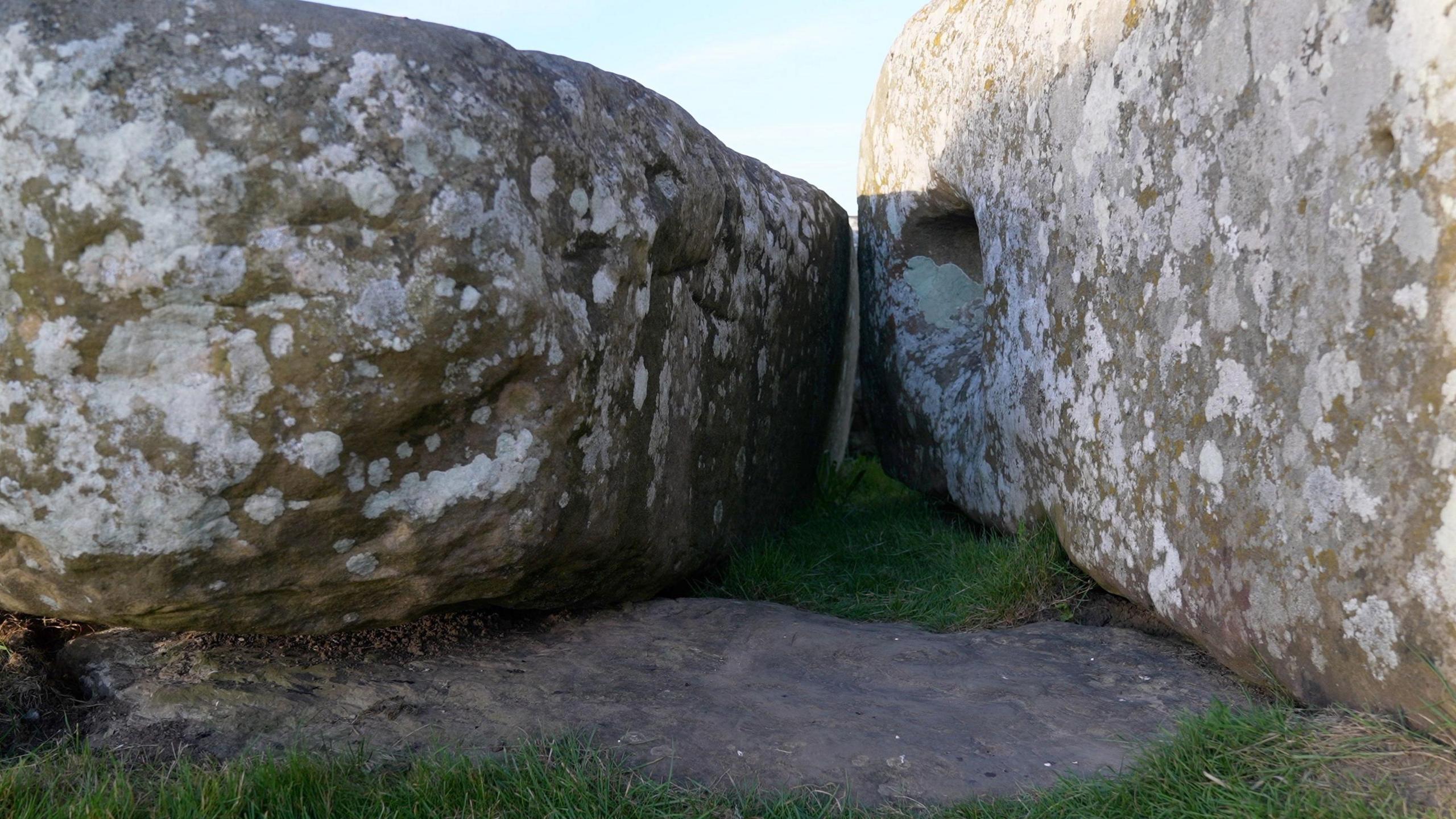
The new research will be pored over by archaeologists working for English Heritage, which looks after Stonehenge, according to one of the monument’s senior curators, Heather Sebire.
”This discovery certainly implies that there were great social connections in Britain at the time,” she told BBC News.
“It is phenomenal that the people of the time brought such a large stone all this way. They must have had a compelling reason to do it.
“They had a sophisticated and developed society and so they probably had a spiritual side, just like we do“. SOURCE: BBC
Book a Stonehenge private guided tour and hear all the latest theories.
The Stonehenge Travel Company
A chance to meet Stonehenge ancestors. Neolithic long barrow burial mound discovered between Stonehenge and Avebury.
A “house of the dead” dating from more than 5,000 years ago could contain the remains of the ancestors of people who lived around Stonehenge, archaeologists have said.
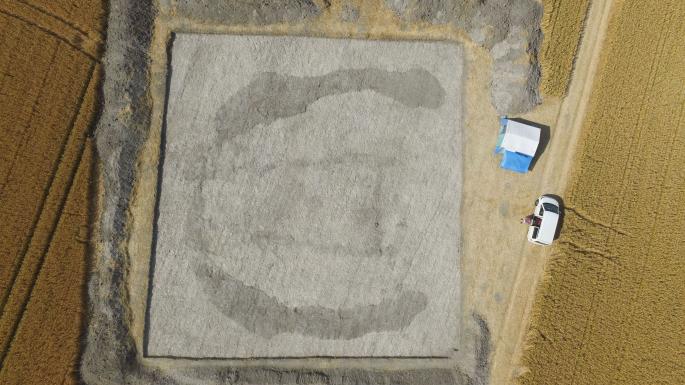
A Neolithic long barrow burial mound in a place known as Cat’s Brain is being excavated by University of Reading experts and students UNIVERSITY OF READING/PA
A Neolithic long barrow burial mound in a place known as Cat’s Brain, in the Vale of Pewsey, Wiltshire, is being excavated by experts and students from the University of Reading in the first full investigation of such a monument in the county for 50 years.
The barrow, which is in the middle of a farmer’s field halfway between the important monuments of Avebury and Stonehenge, was spotted by aerial photography and assessed by geophysical survey imagery.
It consists of two ditches flanking what may be a central building covered with a mound made of the earth…
Stonehenge Travel Co, Salisbury, Wiltshire
A Bronze Age ‘beaker culture’ invaded Britain 4,000 years ago: Intruders forced out ancient farmers that built famous relics such as Stonehenge
- New research carried out one of the biggest ever studies of ancient genomes
- It found that beaker people forced prehistoric Neolithic farmers out of Britain
- DNA analyses found that Britain underwent a 90 per cent shift in its genetic make-up when the beaker folk arrived
One of the biggest ever studies of ancient genomes has found that a Bronze Age ‘beaker culture’ invaded Britain around 4,000 years ago.

This graphic from a beaker folk study in 2007 shows the spread of beaker culture across Europe. Red represents some of the ancient DNA sample sites found, while purple shows bell-shaped beaker artefacts that have been discovered across the continent
The immigrant group, named after the famous bell-shaped pots they carried, likely forced out native Neolithic farmers.
These ancient British farmers were famed for leaving behind massive rock relics, including Stonehenge.
THE BEAKER CULTURE MYSTERY
Beaker folk lived about 4,500 years ago in the temperate zones of Europe.
They received their name from their distinctive bell-shaped beakers, decorated in horizontal zones by finely toothed stamps.
The decorated pots are almost ubiquitous across Europe, and could have been used as drinking vessels or ceremonious urns.
Believed to be originally from Spain, the Beaker folk soon spread into central and western Europe in their search for metals.
But the sheer variety of beaker artefacts across Europe has made the pottery difficult to define as coming from one distinctive culture.
The new study suggests the beaker culture did not always pass from a single migrating entity.
DNA samples from beaker folk in Iberia and Central Europe were found to be genetically distinct.
To me, that’s definitely surprising,’ Dr Pontus Skoglund, a population geneticist at Harvard Medical School in Boston, Massachusetts, who was not involved in the study, told Nature News.
‘The people who built Stonehenge probably didn’t contribute any ancestry to later people, or if they did, it was very little.’
Around 4,500 years ago bell-shaped pottery became popular across much of prehistoric Europe.
The Bronze Age trend has been debated by archaeologists for over a century.
Some argue that it was simply a fashion trend shared by several distinct cultural groups.
But other suggest that an immense migration of ‘beaker folk’ spread across the continent.
The new ancient genome research suggests that both theories are true.
The study, led by researchers at Harvard Medical School, analysed the DNA of 170 ancient Europeans.
They compared this DNA to the genomes of hundreds of other modern and prehistoric Europeans.
Ancient skeletons found in the Iberian peninsula were found to share little genetic connection with bones found in central Europe.
By HARRY PETTIT FOR MAILONLINE
Read the full story n the Daily Mail online
Join us on a guided tour exploring the prehistoric landscape around Stonehenge.
The local Stonehenge Experts
http://www.StonehengeTravel.co.uk
Major archaological find in the Vale of Pewsey, Wiltshire: metal detectors’ Roman hoard gives up rare evidence about ancient plant life
Mick Rae, Rob Abbott and their friend Dave were detecting in a field in the Vale of Pewsey in October 2014 when they came across a hoard of eight metal vessels – including a cauldron and four small pans from weighing scales.
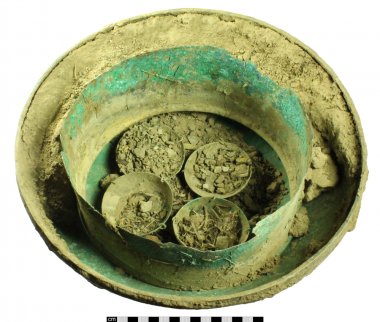
Cauldron showing scale pans [Photo copyright Portable Antiquities Scheme]
The find was quickly identified as Roman. The discovery was reported to Richard Henry who is Wiltshire’s Finds Liaison Officer. His role is to record archaeological finds made by members of the public – mostly metal detectorists, but also by people who are just walking in fields or digging in their back garden.
Most of the cauldron survives and a large copper-alloy vessel had been placed upside down into the cauldron – forming a sealed cavity. What was inside?
There were no gold necklaces or bronze coins in this hoard of Roman vessels. But what was found inside is worth its weight in gold to archaeologists – remains of plants preserved by the copper vessels’ own micro-environment.
Among the remains of the dried plants were heads of common knapweed and pieces of bracken. They also found seeds of cowslips or primrose, milkwort, lesser hawkbit, sedges, clovers, vetches and sweet violet, fat hen, knot grass, black bindweed, buttercup and corn spurrey. They may be what is left of some careful packing.
Remains of the flowers and bracken are now on display at the Wiltshire Museum in Devizes. Organic matter never survives if buried unprotected in the Pewsey Vale’s greensand – so to find dried plants and pollen this old provided the scientists with many opportunities for research.
The find did not count as ‘treasure’ so remains the property of the finder and the landowner. The detectorists donated the organic material to Wiltshire Museum – the scientific processes used to test it with would ultimately destroy it.
Richard Henry led the quest to discover more about the find. He brought in a team to excavate the site of the discovery, led by David Roberts of Historic England with the Assistant County Archaeologist, members of the Wiltshire Archaeology Field Group and the finders. They found shards of domestic and imported ceramics and ceramic building materials.
The project to analyse the plant remains has been led by the British Museum’s Portable Antiquities Scheme and supported by Historic England, Southampton University, the Association for Roman Archaeology and Wiltshire Museum.
The scientists discovered that the plants were dated between AD380 and AD550. They
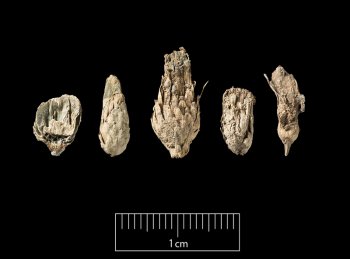
Some of the flower heads from the hoard [Photo Steven Baker at Historic England – their copyright]
But if the age in years is a little speculative, the state of the plants reveals pretty accurately that they were picked and packed away in late summer soon after the harvest – late August to early October.
When their own kind of Brexit happened, the Romans obviously left much more behind them than roads, mosaics, villas and hoards of coins.
Wiltshire Museum’s Director, David Dawson, is thrilled they can display this important material: “Richard Henry has led this remarkable partnership project, drawing specialists from across the country to piece together the fascinating story of the burial of Roman bronze cauldrons that took place on a summer’s day 1,500 years ago.”
Richard Henry said “Such discoveries should be left in situ to allow full archaeological study of the find and its context. The finders did not clean or disturb the vessels which has allowed us to undertake detailed further research. If the vessels had been cleaned none of this research would have been possible.”
It is very tempting to imagine how this hoard came to be made so long after the vessels were first used. It is as though someone today decided to bury the Victorian kitchen pots Aunt Bertha inherited – and packed them with plants.
Why they were buried remains a matter for speculation. Does the careful packing of the metal vessels mean they were the antiques of their day? Were they, so long after the Roman era, still valued as useful cooking pots? Or was this some kind of votive offering?
Marlborough.News understands that metal detector Dave aims to have the vessels professionally conserved.
Ruth Pelling and Stacey Adams will be talking about their research on the flowers and other recent Wiltshire discoveries at the Archaeology in Wiltshire Conference on April 1 in Devizes. Their talk is titled “Bake Off and Brewing in Roman and Early Saxon Wiltshire: recent archaeobotanical finds.”
Article written by Written by Tony Millett and published on the Marlborough News Online Website
Join us on a guided tour from Salisbury and explore hear more about the recent archaeological discoveries.
Stonehenge and Salisbury Guided Tours
The Stonehenge Travel and Tour Company
http://www.StonehengeTravel.co.uk
Winter solstice: When is the shortest day and why are mornings still dark afterwards?
The winter solstice occurs at the moment when the North Pole is tilted furthest away from the sun, giving us the shortest day of the year. (Metro U.K)
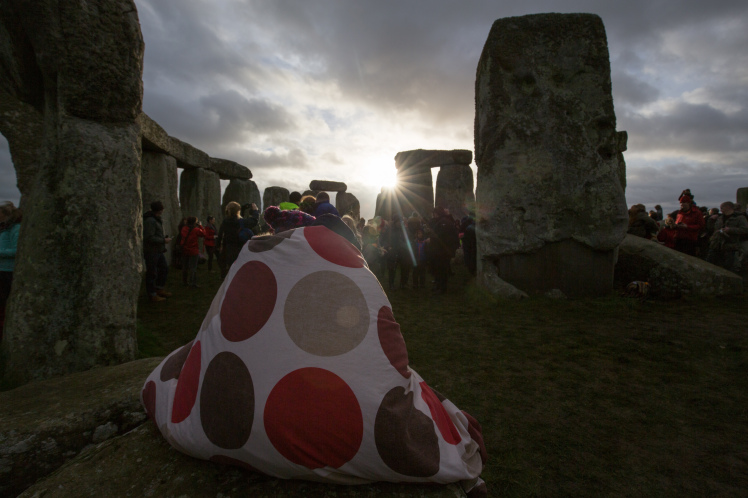
Druids celebrating the winter solstice at Stonehenge (Picture: Getty)
It happens at the same moment for everyone around the world. This year, in the UK it’s happening at 10:44 GMT on Wednesday 21st December.
It falls on a different date each time – between 21 and 23 December, thanks to the fact that the 365-day year is actually 365 days, five hours and 45 seconds long.
The solstice occurs around six hours later each year, meaning the date gradually adjusts over time. Each leap year, the date jumps back to December 21 and we begin again.
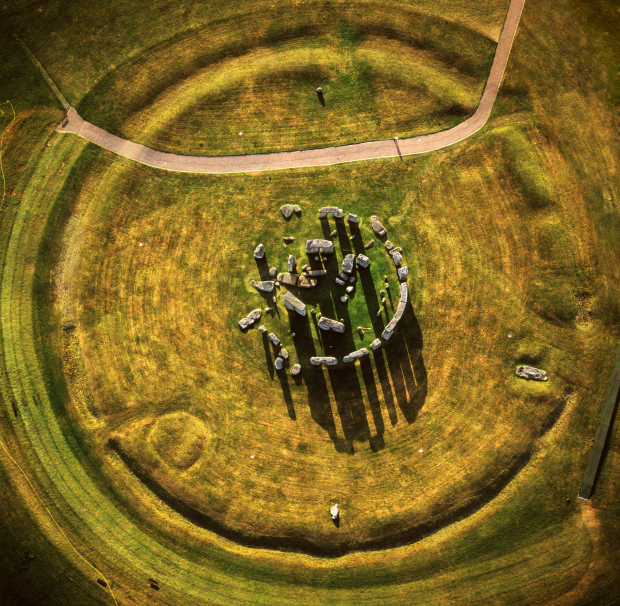
The average duration of a year is approximately 365 days five hours 48 minutes and 45 seconds,’ Dr Somak Raychaudhury, Reader in Astrophysics at Birmingham University told the BBC.
‘Even this varies by a few seconds every year, since the Earth’s motion is not just caused by the Sun’s pull of gravity.
‘It is perturbed by the pull of the planets and moons in the Solar System. The relative positions of these change from year to year.’
How much daylight will we get on the shortest day?
On 21 December, the sun will rise in the UK at 8:04am and set at 3:45pm. This gives us just 7 hours and 49 minutes of daylight.
Where does the winter solstice come from?
Tracking the sun’s yearly progress dates back to the earliest people on Earth, who knew that its path across the sky, amount of daylight and location of the sunrise and sunset changed according to a regular pattern throughout the year.
Monuments such as Stonehenge in England and Machu Picchu in Peru were built to track the sun’s progress over the course of the year.
The winter solstice was seen as especially important in the past, as people were economically dependent on the seasons, with starvation a common occurrence in the early months of winter.
Is the winter solstice linked to Christmas trees?
Winter solstice customs led to the Christmas tree becoming a major symbol. The Druids used evergreen trees, holly and mistletoe to symbolise everlasting life during their winter solstice rituals.
Centuries before the time of Jesus, cultures brought plants and leaves into their homes when the winter solstice arrived to celebrate the return of life at the start of winter’s decline.
Why are mornings still dark after the solstice?
The mornings remain dark until January due to a formula called the Equation of Time.
The equation explains how solar time, which is measured on sundials, differs from clock time.
Because the Earth’s axis is tilted, and its orbit is the shape of an oval, the two times don’t always match – they can be as much as 16 minutes out of sync.
Solar noon – when the sun is at its highest in the sky – isn’t always the same time as noon according to clock time.
As the Earth moves faster in the part of its orbit where it’s nearest to the sun – which comes after the winter solstice – this increased speed pushes the solar noon back, causing winter sunrise time to stand still for a few days.
In other words, the sunrise is ‘hanging’ during the late December – early January period, making mornings remain darker for a bit longer.
When’s the next solstice?
The summer solstice is on Wednesday 21 June 2017.
The Stonehenge Travel Company based in Salisbury are offering a guided tour with a local expert on the 21st December 2016. Witness the sun setting on the shortest day of the year and hear why Stonehenge is astronomically aligned. Their exclusive small group Stonehenge Winter Solstice sunset tour departs from Salisbury.
The Stonehenge Experts
http://www.StonehengeTravel.co.uk
Visit the Amesbury History Centre
For a town which has such a close association with Stonehenge, a history of royal patronage, military activity and Arthurian legend, it has always seemed strange to me that there was no museum or interpretation centre.
In 2012 that situation changed when the Town Council purchased Melor Hall on Church Street and with the help of a team of volunteers created what has become the Amesbury History Centre.
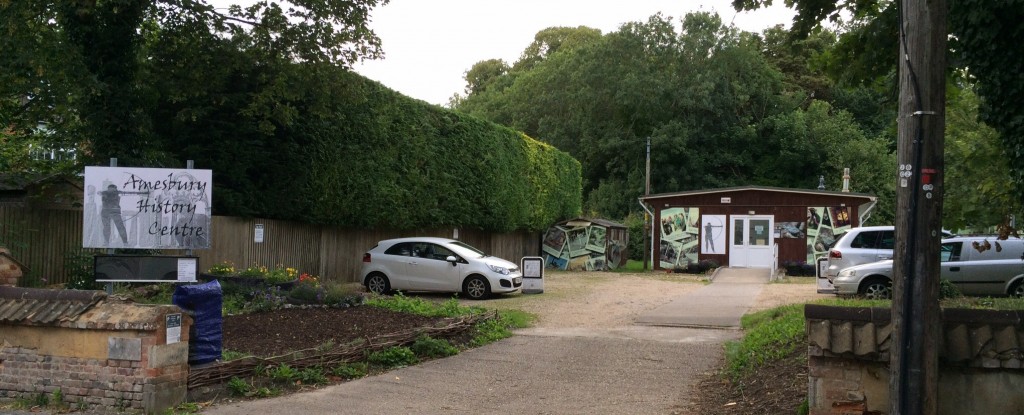
The centre is open from 10am until 3.30pm, Tuesday to Saturday, and is an excellent starting point for your exploration of this remarkable area. Tour groups and educational visits are welcomed and you can book in advance to have exclusive access to the facilities.
Exhibits and displays tell you about the discovery of the Mesolithic hunter-gatherer settlement at Blick Mead which dates back at least 10,000 years and has led the Guinness Book of Records to label Amesbury as the longest continually inhabited settlement in Britain.
Finds from the University of Buckingham’s archaeological digs from the last several years are on show, from Mesolithic flint tools and bones of prehistoric cattle called aurochs through to the astonishing magenta pink flints that are found in the spring.

You can also learn about the discovery of the Amesbury Archer, a Bronze Age burial found in 2002 when a new housing estate was being built in the town.
This man was obviously someone of huge importance because he was buried with extensive grave goods including five beaker pots, three copper knives, 16 barbed flint arrowheads, some boar’s tusks, a flint-knapping and metalworking kit and two beautiful gold hair ornaments – the earliest gold yet found in England.
Analysis of the Archer’s teeth indicates that he wasn’t a local man, but had travelled from central Europe. He may have been one of the first metalworkers to bring his skill to Britain.
Amesbury’s fascinating history continues through the Iron Age, Roman Britain, Anglo-Saxon times and beyond. There is a tale that the legendary King Arthur’s wife Guinevere retired to a convent in the town.
Outside of legend, Henry III’s wife Eleanor of Provence was buried within the grounds of Amesbury Abbey in 1291 although her burial place has been lost and she is the only Queen of England with no known grave.
In more modern times, the military have had a large presence in the surrounding area beginning over 100 years ago with the use and eventual purchase of land on Salisbury Plain for their training.
Nearby, military aviation began at Larkhill in the early 20th century and later Boscombe Down airfield – Britain’s “Area 51” – was the site of the development of many types of experimental aircraft.
All these stories are told in the History Centre, which also has an extensive reference library, maps, interactive models and souvenirs as well as excellent tea and cakes.
Outside in the car park there is the famous mural that used to adorn the wall of the underpass that led up to Stonehenge from the old visitor centre, so if you’ve ever had your photo taken pretending to climb over the stones into the middle of the monument, you can recreate it here.
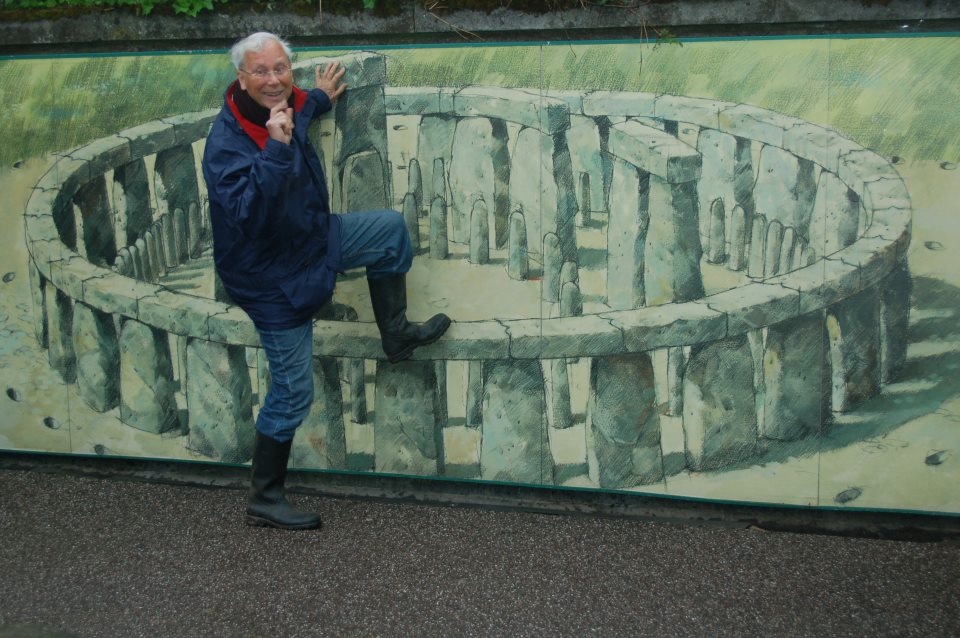
The Amesbury History Centre has its own website (http://www.amesburyhistorycentre.co.uk/) where you can find out more.
Article submitted by local historian Simon Banton
We now include the centre on our Stonehenge private guided tours from Salisbury.
The Stonehenge Travel Company
The Local Stonehenge Tour Experts
http://www.StonehengeTravel.co.uk
The Great West Way: Wiltshire to star in long-distance touring route.
VisitWiltshire has secured funding for its plan to create one of the world’s long-distance touring routes between London and Bristol with about a quarter being in Wiltshire.
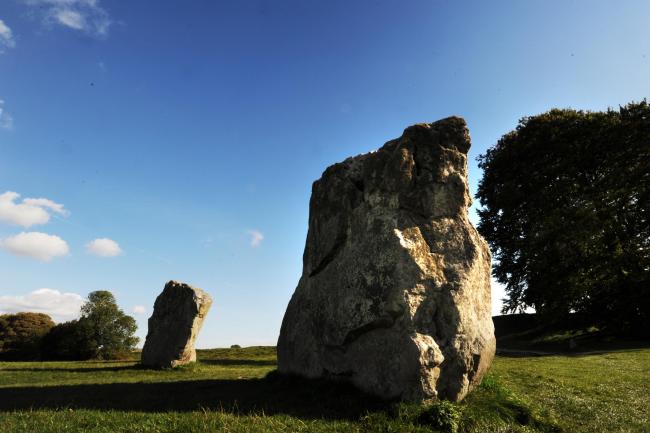
Avebury is one of the World Heritage destinations to be highlighted on the Great West Way
The project is currently operating under the working title of ‘The Great West Way’, and aims to create a world class tourism experience, winning new business and market share for Britain, raising awareness, boosting the visitor economy and transforming the visitor experience along and around the route.
‘The Great West Way’ is one of a number of successful projects to receive funding from the £40m Discover England Fund administered by VisitEngland.
It is a Government-funded programme of activity aimed at offering world-class English tourism products to the right customers at the right time and will be supported by match funding from partners in the public and private sectors.
VisitWiltshire is leading on the project with a £250,000 grant to be spent between October and March 31, 2017.
The project will include:
- Concept testing and case study analysis
- An environmental assessment and economic impact study
- Developing a brand proposition and messaging for the route
- Developing new pilot itineraries for launch in key target markets.
Those supporting the bid include Local Enterprise Partnerships and towns along the route, transport operators, arts and heritage organisations, World Heritage Sites and Areas of Outstanding Natural Beauty, tour operators, guiding companies and a wide range of tourism businesses.
Sally Balcombe, VisitEngland chief executive, said: “We had an exceptionally high number of submissions far outweighing the allocated funding available and following a rigorous applications process we are delighted to work closely with those excellent winners on building world-class ‘bookable’ tourism products showcasing the best of England to international and domestic visitors.
“VisitWiltshire’s project will test the concept of a long-distance touring route in England that will promote places to visit and stay and feature an outstanding, high quality local food and drink offer, providing visitors with a new and exciting experience of rural England.”
And David Andrews, chief executive of VisitWiltshire, said: “We are delighted to have secured funding for this project, and particularly pleased that it has been so well received by so many partners.
“We now have the opportunity to open up a new touring corridor to encourage visitors to travel west of London, creating compelling road, rail, canal, cycling and walking tourism experiences.
“For an international visitor, this route presents many of England’s most iconic attractions – London, Bristol and Bath, the Stonehenge and Avebury World Heritage Site, Windsor, Castle Combe, Lacock and the Cotswolds.
“The aim of the project is to encourage visitors to tour and explore more of the region using a range of new itineraries to experience less-well known areas, slowing and lengthening visits.
“This new project will create a new and exciting addition to England’s existing tourism offer.”
The Discover England Fund was announced by the Government in November 2015, which is aimed at supporting tourism partly through joined-up geographies, themes and transport.
Article by Bruno Clements Wiltshire Times
The Stonehenge Travel Company
Stonehenge and Salisbury Guided Tours
The Anglo Saxon cemetery near Stonehenge: Graves reveal a curious ‘work box’ and ‘fertility’ shells at a site that may have been used for 5,000 years
- Around 150 Anglo Saxon graves found in the village of Bulford, Wiltshire
- Grave goods include a ‘work box’, shells a spear tip and intricate comb
- Nearby site is home to Neolithic chalk goods and carefully arranged bones
- Army site may have been of spiritual significance 5,000 years ago
Salisbury Plain may be best known for Stonehenge, but the chalk plateau hides other secrets too.
Archaeologists have unearthed an Anglo Saxon cemetery of about 150 graves holding beautiful grave goods, including an intricate comb, jewellery, a ‘sewing box’ and intriguing shells in the village of Bulford, Wiltshire.
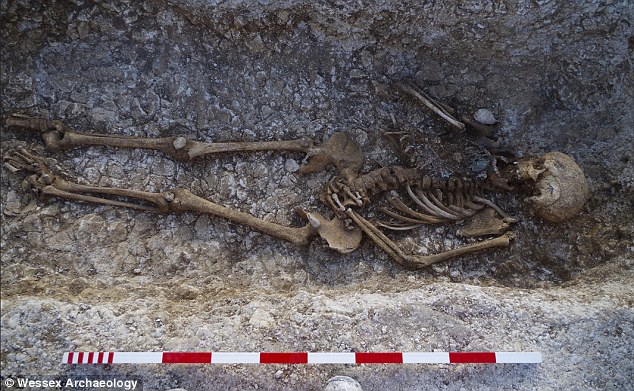
Archaeologists have unearthed an Anglo Saxon cemetery of about 150 graves holding beautiful grave goods, including an intricate comb, jewellery, a ‘sewing box’ and intriguing shells in the village of Bulford. This grave of a woman contains a shell and work box (just seen on the right of her spine and shoulder)
There are also indications the site has been of spiritual significance for 5,000 years with collections of Neolithic goods suggesting it may also have been an important burial site for Stone Age man.
Experts at Wessex Archaeology excavated the site, earmarked for 227 new Army family homes. It is around four miles from the famous Stonehenge circle.
Investigations revealed about 150 graves from the mid-Anglo-Saxon period in England, with one grave dated to between AD 660 and 780.
It held the remains of an Anglo Saxon woman who died in her mid to late 20s and was laid to rest with two boxes and a cowrie shell.
Simon Cleggett of Wessex Archaeology told MailOnline the grave contained a copper alloy ‘work box’ that may have been used as a little sewing box, because pins have been found in similar cylindrical boxes at other sites.
‘But they might be amuletic [served as a lucky charm] – on some occasions they might contain a piece of bone from a saint or a piece of cloth’ he explained, because at the time Christian influences were spreading across the largely pagan population.
The small cylindrical boxes have been found in tens of Anglo Saxon graves as far north as Northumberland and south as the Thames Valley, according to a study by Catherine Hills of the University of Cambridge.
‘Most have some indication that they could be suspended – they have attachment loops and/or chains,’ she wrote.
The work boxes may have been suspended from a woman’s girdle, but then again, they may have been too fragile and unwieldy and could have been carried in a bag, for example.
The box in the grave was found placed next to the woman’s head, which is relatively unusual as it was more normal for them to be buried by the wearer’s legs, based upon others unearthed.
The boxes have largely only been found in the graves of Anglo Saxon women, as have shells.
Two cowrie shells, possibly from as far away as the Red Sea or India, were also found at the site. Mr Cleggett said they may have come from Cyprus, Egypt, Syria or even India.
‘They are almost always buried with women and children,’ he said, explaining they may have symbolised fertility.
Because of the shells’ origins, they shed light on trade links at the time, stretching across the Mediterranean sea and beyond.
One large shell was found in the woman’s grave along with the work box, while another – buried with a child – has a hole in it, meaning it could have been used as a pendant.
Read the full story and see the image gallery on the Daily Mail website
The Stonehenge Travel Company
Stonehenge and Salisbury guided Tours
http://www.Stonehengetravel.co.uk
Archaeology Day Tours of Wiltshire’s World Heritage Sites.
Stonehenge and Avebury form part of an UNESCO World Heritage Site which stands testament to the ages. The explanations behind why the sites are located where they are and what their exact purposes are still remain a mystery to this day with a magnetism that has drawn people to them for centuries.
We are pleased to offer exclusive Archaeology Tours visiting both Stonehenge and Avebury throughout 2016. We believe we offer an excellent up-to-date specialist service; giving you the opportunity to learn in great detail about these amazing prehistoric sites, but also leaving you time to explore your surroundings by yourself.
Stonehenge, Avebury and Bath Guided Tour from London
Britian’s most beautiful landscapes
Tour Leaders are qualified archaeologists
Walk the paths of ritual specialists and builders of Britain’s most fascinating and awe-inspiring prehistoric sites, at Stonehenge and Avebury.
Explore the Roman and Georgian history of Bath.
Guaranteed small groups 8 – 18 participants.
This feature-packed archaeological tour takes in the iconic stone circles of Stonehenge
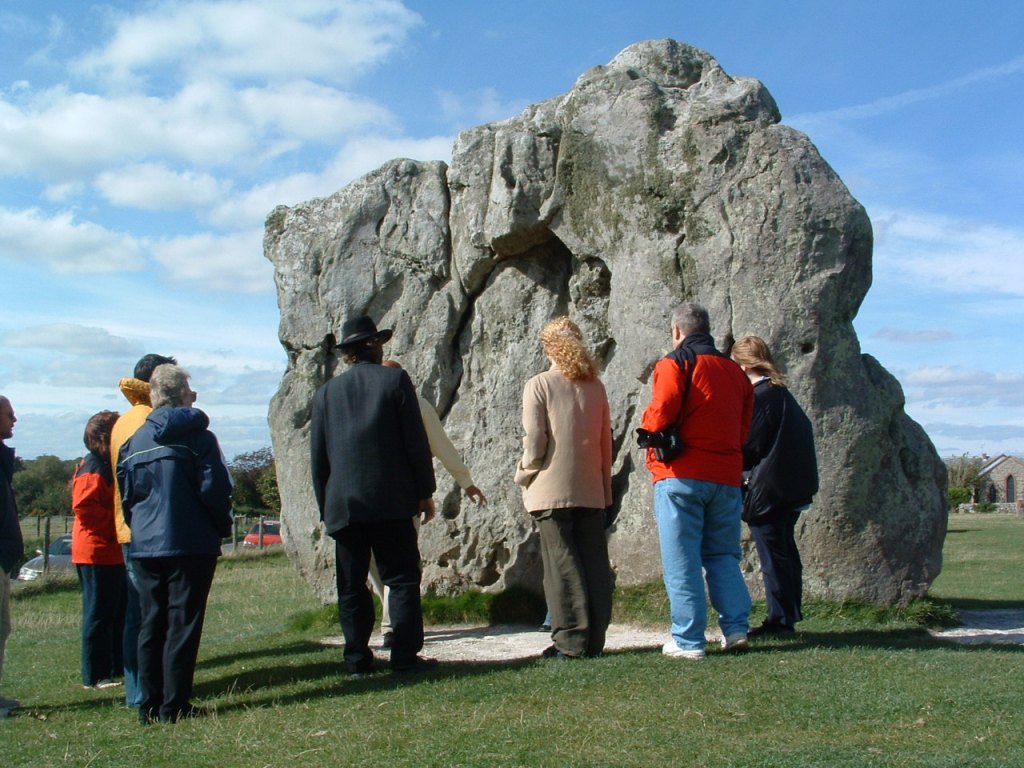
Small Group Guided Tour of Avebury
and Avebury and a delightful break in the beautiful Roman city of Bath.
Leaving from London by luxury mini coach, this Stonehenge tour will explore its iconic standing stones with expert analysis by a trained archaeologist. Nearby Avebury is an even more impressive site, covering a much wider area and you will also encounter Neolithic burial tombs and the less visited ancient site of Woodhenge.
Mid-day is spent in gorgeous Bath offering history of a different era. There are colorful remnants of its glorious Roman past to see and regency mansion houses from Georgian times. The famous Roman baths are a must see.
Guided tour itinerary:
The morning starts with a visit to Durrington Walls and Woodhenge, home to the ‘Stonehenge Builder’s’ village and the most convincing evidence for human sacrifice. We then travel a short distance to Stonehenge. We enjoy a leisurely paced walk through the landscape immediately surrounding Stonehenge, visiting the Stonehenge Cursus, Bronze Age burial mounds and walk along the Stonehenge Avenue. We complete our morning at Stonehenge with a guided walk around the stone circle, our archaeologists bringing to life this enigmatic, ancient and mysterious monument.
At mid-day we arrive at the beautiful Georgian city of Bath. Here we allow our guests aprox 2 hours to enjoy the centre of this city, famous for Jane Austen, Bath Abbey and the Roman Baths. We also use this opportunity for our guests to have lunch.
We conclude our visit to Bath with a coach tour of the most impressive examples of architecture Bath has to offer, visiting the Assembly Rooms, Royal Circus and Royal Crescent.
The Afternoon is spent at the Avebury World Heritage Landscape. We visit Silbury Hill, the largest man-made hill in prehistoric Europe. We enter the 5500 year old burial chamber of West Kennet Long Barrow, entering a sacred space originally reserved only for ritual specialists and the dead.
We finish by visiting the largest stone circle in Europe at Avebury, with its beautiful medieval village situated inside. As John Aubrey in the 1600’s notes [Avebury]…”does as much exceed in greatness the so renowned Stonehenge as a Cathedral doeth a parish church.”
Please also note as part of the Stonehenge, Salisbury and Avebury Archaeologist Guided Tour, the detailed walk around the Stonehenge Cursus, Stonehenge Avenue and Bronze Age burial mounds only runs between March to October, this is due to time restrictions in the winter months
View 2016 Tour Departures and book now
We also offer a Stonehenge, Bath and Salisbury guided tour
Bringing History Alive……………..
Links:
STONEHENGE & AVEBURY WORLD HERITAGE SITE
VISIT WILTSHIRE WORLD HERITAGE SITE INFORMATION
Stonehenge and Salisbury Guided Tours
The Stonehenge Travel and Tour Company
http://www.StonehengeTravel.co.uk
 Stonehenge and Salisbury Guided Tours