Home » Posts tagged 'Stonehenge Landscape'
Tag Archives: Stonehenge Landscape
VISIT WONDERFUL WILTSHIRE.
Attraction-packed Wiltshire cuts a verdant swathe through southern England. High chalk downs and gentle valleys characterise the landscape, which is home to chocolate box villages (Lacock, Tisbury, Castle Coombe) charming market towns (Malmesbury, Devizes, Bradford-on-Avon) and a top-notch cathedral city (Salisbury). 40 per cent of the county is classed as an Area of Outstanding Natural Beauty. English Heritage have produced this wonderful inspirational guide for visitors to Wiltshire, please visit their website for full details.
Wiltshire is famous for its ham, white horses and, above all, for its many prehistoric monuments. In fact, it’s got more than any other county in England. In this guide, we’ll explore some of these places that shine a light on our ancient past, visit a couple of castles, and point out a few other fascinating places along the way.
DAY 1 – AVEBURY AND DEVIZES

AVEBURY
The remarkable village of Avebury can be found between Swindon and Devizes. It’s part of the same UNESCO World Heritage Site as Stonehenge.
The main stone circle here is around 4600 years old, and it’s the largest in Britain. It’s thought that it would have taken 1.5 million man hours to construct the ditch and bank and to transport the stones.
Today, the vision of its original builders can be hard to appreciate. The circle is bisected by roads, and the stones rub up against a medieval church, a timber-framed pub, rose-covered cottages and flocks of friendly sheep. But this jumbled palimpsest is part of Avebury’s unique charm.
And we’re lucky that there’s anything to see at all. In medieval times some of the stones were pushed over or buried, and in the 18th century many of those that survived were broken up for building materials. Alexander Keiller restored some of the stones in the 1930s, and he gives his name to the village’s museum, which tells the story of Avebury and its nearby monuments. The National Trust has also recently refurbished and opened up part of Avebury Manor.
There are toilets, a shop and a café near the museum. On the high street you’ll find a quirky gift shop, a community store and the Red Lion – quite possibly the world’s only pub inside a stone circle.

AROUND AVEBURY
You can walk around Avebury’s stone circle and see the museum in about an hour and a half. But it’s worth exploring some of the other sites around Avebury to really get a sense of how important this place was to our prehistoric ancestors.
The oldest site in the area is Windmill Hill. It’s a ’causewayed enclosure’, built around 3675 BC. It’s thought that people gathered here for trading, festivals or feasts, or all three. Much later, Bronze Age barrows were built on the hill.
West Kennet Avenue joins the stone circle at its southern edge. Once, 100 pairs of stones lined a 2.3km course joining Avebury to the Sanctuary. Today there are 27 upright stones, again restored by Keiller. The Sanctuary itself was begun in about 3000BC, and its purpose is unclear. Circles of timber posts once stood here, and human bones and food remains have been found buried beneath them.
West Kennet Long Barrow is one of the best examples of a long barrow in the country, and you can actually get inside it. This was the resting place of at least 46 people, buried here between 3000 and 2600 BC.
From the top of the barrow you can see East Kennet Long Barrow, and also the enigmatic Silbury Hill, one of the most mysterious remnants of prehistoric Britain. 30 metres high, it’s the largest man made mound in Europe, and was built around the same time as the pyramids of Egypt. There’s a viewing area next to the car park, but to protect the site, you can’t walk on the hill itself.

WILTSHIRE MUSEUM, DEVIZES
One of the best places to dive into the prehistory of this part of the country is the brilliant Wiltshire Museum in Devizes. It tells 500,000 years of Wiltshire’s story, and it contains two thirds of all the Bronze Age gold found in Britain.
Its standout treasures were excavated from the Bush Barrow, half a mile from Stonehenge. It’s Britain’s richest and most important prehistoric burial. An adult male was buried in a crouched position with spectacular grave goods, including a dagger with 140,000 tiny gold studs in its handle, a mace made from rare fossil stone, and an exquisite sheet gold lozenge.
But just as fascinating as the Bronze Age bling is what the finds tell us about the people of Stonehenge. Cases tell the stories of characters like the Shaman and the Marlborough Lady, pieced together from their burials. These small glimpses into the lives of our ancestors help us remember that prehistory isn’t just about pots – it’s about people.
Other galleries cover the later history of Wiltshire and Devizes. Children can follow a stamp trail, dress up in period costumes and get hands on with interactive exhibitions dotted throughout the galleries. There’s a small shop selling gifts and books.
Devizes itself is a pretty market town, with over 500 listed buildings and the largest market square in the west of England. There are plenty of shops, cafés and restaurants. You can also visit the red brick Victorian Wadworth Brewery, where shire horses still deliver beer to the town’s pubs every morning.
DAY 2 – SALISBURY AND OLD SARUM

OLD SARUM
Seated high above the bustling city of Salisbury is Old Sarum. With its origins as an Iron Age hillfort, it’s almost brand spanking new compared to Avebury and Stonehenge. The Romans used it as a fort and as a temple, and after William the Conquerer built a motte and bailey castle a town grew up around it. A cathedral was also built here, but it moved down the hill to Salisbury in the early 13th century.
Salisbury attracted more trade and more people, and was the largest town in Wiltshire by the 14th century. Old Sarum dwindled in size and importance until it gained widespread notoriety in the 18th and 19th centuries for being a ‘rotten borough’ – it still sent two MPs to the House of Commons, despite being almost entirely abandoned.
Today it’s the perfect spot for a picnic, a walk or even a spot of kite flying. There are 29 acres of rare grass chalkland to explore, with wildflowers and ancient trees. The outline of the old cathedral is still visible, and the castle, although well ruined, is still impressive. You’ll get the most out of your visit with a guidebook in hand, but it’s worth the trip just for the stunning views over Salisbury.
There’s plenty of free parking at the site and a small shop by the entrance selling gifts and refreshments.

SALISBURY – CATHEDRAL AND MUSEUM
Venture down the hill to Salisbury’s Cathedral Close and you’ll find an array of attractions. The Cathedral houses the best-preserved of the four surviving copies of Magna Carta. English Heritage members can get two for one entry on Tower Tours on weekdays.
A variety of impressive buildings line the close, including the National Trust’s Mompesson House, Arundells (the former home of Sir Edward Heath) and The King’s House, which now houses the Salisbury Museum.
The museum is another fantastic repository of local prehistoric finds. Its new Wessex Galleries contain objects from Stonehenge and the surrounding area. Standout exhibits include the jadeite axehhead, coins from the Bowerchalke Hoard and watercolours by JMW Turner. There’s also a brilliant interactive exhibition that explores how archaeology has shaped our understanding of the past.
Other galleries explore the town’s more recent past. Highlights include a surprisingly interesting collection of objects found in the city’s drains, and the remarkable 3.6m tall Salisbury Giant, a towering figure used in pageants for hundreds of years.
The museum puts on temporary exhibitions and hosts events and talks – check the website for details. There are interactive exhibitions and trails for kids.
The King’s House Café can be found inside the museum buildings, and Salisbury city centre is a few minutes’ walk away.
DAY 3 – STONEHENGE AND OLD WARDOUR

STONEHENGE
Famous across the world for its iconic stone circle, Stonehenge is a real Wiltshire must-see.
Its visitor centre has a short but sweet exhibition that introduces the development of Stonehenge and sets the stones in their prehistoric context. Have a go a moving one of the huge sarsens, and poke your head into the Neolithic houses. You can walk the one and a half miles to the stones themselves, or catch the bus. It’s well worth plugging into the audio guide as you walk around the stone circle – you can borrow a headset at the visitor centre or download the app from Google Play or the App Store.
The monumental mystery of Stonehenge has fascinated us for thousands of years, and it’s impossible not to be drawn in by it as you get close to the stones. Try to solve the puzzle of the circle’s purpose, or to imagine the immense effort that went into its construction. Or simply marvel at its survival through thousands of years of change.
Back at the visitor centre you’ll find a café serving up locally sourced food and drinks. We serve our snacks and lunches in sustainable takeaway packaging, making it perfect for picnicing.

THE STONEHENGE LANDSCAPE
Many people who visit Stonehenge are happy to see the stones and take a few selfies, but you’ll be missing out if you don’t explore the surrounding landscape and its monuments. Barrows, henges and earthworks fill the fields, and visiting them helps give you a better understanding of just how important this area was for our ancestors. The Stonehenge visitor centre gives a great overview of the story of the landscape, and you can use our interactive map to orient yourself before your visit.
The National Trust owns most of the land and looks after the monuments in it. Take care with dogs, as livestock grazes in the fields. Check their pages for restrictions.
DAY 3 – OLD WARDOUR CASTLE

Old Wardour Castle is hidden at the end of a single track lane, deep within a lush, secluded valley. It’s a world away from the wide open spaces of Salisbury Plain.
Perhaps surprisingly, Old Wardour has been a tourist attraction for longer than it was a working castle. It was built in the 1390s after John Lovell found favour with Richard II. He built his unusual hexagonal castle to confirm his status. In 1596 the godson of Elizabeth I called it ‘the wonder of the west’, but a large chunk of it was blown up during the Civil War in the 1640s.
It was never rebuilt, and 100 years later the owners decided to build a new, grander house a mile away. Old Wardour was preserved as a folly for the enjoyment of the family and their guests. Members of the public probably started visiting from the 18th century, and people have been flocking to Old Wardour ever since.
To this day, these are ruins to have fun in. Over the last few decades, we’ve restored floors and staircases so that you can wander the castle’s rooms and towers, and poke around its nooks and crannies. A brilliant audio guide breathes life back into the ruins with characters and stories from the past. There’s a shop selling gifts and refreshments and plenty of space for picnics. It’s also a good base for walks through the local countryside, which is part of the Cranborne Chase Area of Natural Beauty.
GETTING HERE AND AROUND

The M4 skirts the north of the county and the M3 connects London to the A30 and A303 in the south. There are mainline rail stations in Salisbury, Swindon, Chippenham, Tisbury, Bradford on Avon, Trowbridge, Westbury and Warminster.
There are plenty of places to stay in Wiltshire, but Salisbury is a particularly good base for exploring many of our sites. By rail it’s just an hour and twenty minutes away from London, or an hour and ten from Bristol.
The Stonehenge Tour Bus connects Salisbury with Stonehenge and Old Sarum. Wiltshire Council have information on travelling to Stonehenge on foot or by bike.
You can get buses to Avebury from Swindon or Trowbridge. Buses connect Devizes with Bath, Chippenham, Swindon and Salisbury, and there’s a coach from London.
Old Wardour Castle is not too far from Tisbury, which is ten minutes from Salisbury by train. You may be able to get a taxi to the castle. Alternatively, Discover Nadder have designed a circular 5.5 mile walkfrom the village to the castle.
MORE IN WILTSHIRE & BEYOND

If you’re in Wiltshire for longer you can dive even deeper into the past.
Beautiful Bradford-on-Avon has a spectacular medieval tithe barn you can visit for free. Just over the border with Somerset is Farleigh Hungerford Castle – we’ve come up with a great circular walk that joins the two, making this a great car-free day out. Bratton Camp and its famous White Horse is also nearby.
We also look after the picturesque remains of Ludgershall Castle and Cross, one of the largest Neolithic henges in Britain at Hatfield Earthworks, the thatched Chisbury Chapel and the 18th century Netheravon Dovecote.
English Heritage Members can get two for one entry at Wilton House, as well as discounts at Salisbury Cathedral, Salisbury Museum and the Wiltshire Museum.
Please visit the English Heritage website for full details
We specialise in private guided tours of Stonehenge and Wiltshire and would be happy to help you organise a custom tour for your family or small group. Our bespoke tours can depart from Salisbury, Bath, Southampton and even London
The Stonehenge Travel and Tour Company
Stonehenge and Salisbury Guided Tours
www.StonehengeTravel.co.uk
Archaeological team made new discoveries that rewrite Stonehenge landscape
Archaeologists working near the Stonehenge World Heritage Site have discovered important new sites that rewrite the Stonehenge landscape.
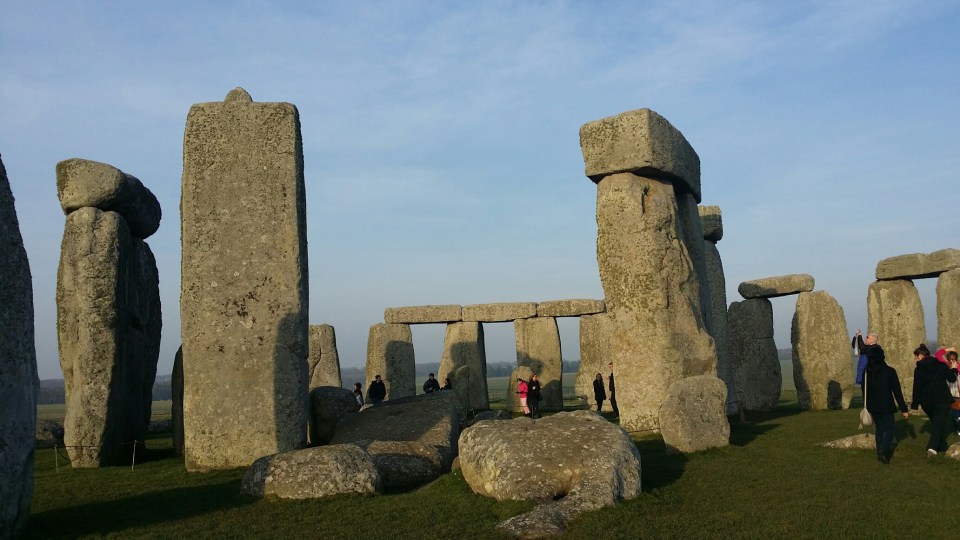
An Stonehenge Exclusive Private Access Inner Circle Guided Tour with http://www.StonehengeTravel.co.uk
Some sites predate the construction of Stonehenge itself. The remains, found at Larkhill and Bulford, were unearthed during excavations ahead of the construction of new Army Service Family Accommodation.
The dig at Larkhill has found remains of a Neolithic causewayed enclosure – a major ceremonial gathering place some 200 m in diameter, and dating from around 3650 BC has been found.
About 70 enclosures of this type are known across England, although this is only the second discovery in the Stonehenge landscape, with the other further to the north at Robin Hood’s Ball on the Salisbury Plain Training Area.
In Wessex they occur on hilltops and along with long barrows are some of the earliest built structures in the British landscape. They were used for temporary settlement, as ceremonial gathering places, to manage and exchange animals, including the first domesticated cattle and sheep and for ritual activity, and disposal of the dead including by exposure.
The Larkhill enclosure has produced freshly broken pottery, dumps of worked flint and even a large stone saddle quern used to turn grain into flour. The Neolithic period saw the first use of domesticated crops and this find provides evidence of this. Early farming would have caused significant localised change across the landscape as small fields were created for the first time. Human skull fragments were also found in the ditch, probably reflecting ceremonial practices and religious belief.
The Larkhill causewayed enclosure is around 700 years older than Stonehenge, and is part of a landscape that included long barrows and cursus monuments. Long barrows may have served as markers within the landscape, often commanding key positions that overlooked areas of downland and only occasionally containing burials. Cursus monuments are possible processional ways, one of which known as the `Lesser Cursus` appears to align on the new enclosure at Larkhill.
The Greater Cursus, an earthwork nearly 3 km in length, is the longest structure. It connects and divides parts of the landscape, and separates the Larkhill causewayed enclosure from the place that became Stonehenge. The eastern end of the cursus terminates just short of the large Amesbury 42 long barrow.
The people who built the causewayed enclosure are the ancestors of the builders of Stonehenge and were shaping the landscape into which the stone circle was placed. Their work shows that this was a special landscape even before Stonehenge was constructed. People were already living and working within what we now call the Stonehenge landscape and they were building the structures that would culminate in the Stonehenge complex of stones and earthworks.
The Larkhill site shows that they had the social organisation necessary to come together to build significant earthworks and the resources to support the work, as well as the people to carry it out. The offerings in the ditches also show the rich religious life they had created.
Dr Alistair Barclay of Wessex Archaeology said “this is an exciting new find and one that transforms our understanding of this important monumental landscape.”
While part of the site has been investigated the majority of the monument remains undisturbed within the Larkhill Garrison.
At nearby Bulford archaeologists have found further evidence of prehistoric activity. Although henges are well-known across the landscape, Bulford has a double henge, the only one known in Britain. Each henge is formed by an open space enclosed by a ditch. The earliest phases were created around 2900 BC with the enclosures formed by ditches dug in segments with openings to the north. This form was altered when both were enclosed within further ditches in the Early Bronze Age (2000 BC), perhaps showing that their function changed or because they had been closed down.
From one of the Bulford henges a skull from a large dog or wolf, maybe a working companion, a trophy from the hunt, or even a totemic symbol, was recovered.
Martin Brown, Principal Archaeologist for WYG said “These discoveries are changing the way we think about prehistoric Wiltshire and about the Stonehenge landscape in particular. The Neolithic people whose monuments we are exploring shaped the world we inhabit: They were the first farmers and the first people who settled down in this landscape, setting us on the path to the modern world. It is an enormous privilege to hold their tools and investigate their lives.”
Archaeological work on both sites is being managed and directed by WYG on behalf of Defence Infrastructure Organisation (DIO), with fieldwork undertaken by Wessex Archaeology.
The sites’ development is part of wider plans to accommodate the 4000 additional Service personnel plus their families who will be based on and around Salisbury Plain by 2019 under the Army Basing Programme. In total, the MOD is planning to invest more than £1 billion in the area which will provide more than 900 new homes for Service families, over 2,600 new bed spaces for single soldiers and the construction, conversion or refurbishment of 250 other buildings within bases, such as offices, garages, workshops and Mess facilities.
News source: WYG.
Join the local tour experts on a Stonehenge guided tour and explore the Stonehenge World Heritage Site.
Stonehenge and Salisbury Guided Tours
http://www.StonehengeTravel.co.uk
Stonehenge “transforms our understanding” of prehistoric Wiltshire.
THE history of the Stonehenge landscape could be rewritten completely after a new discovery by archaeologists.
Remains of a huge ceremonial gathering place were found near Larkhill, dating back to 3650 BC – about 700 years before Stonehenge was built.
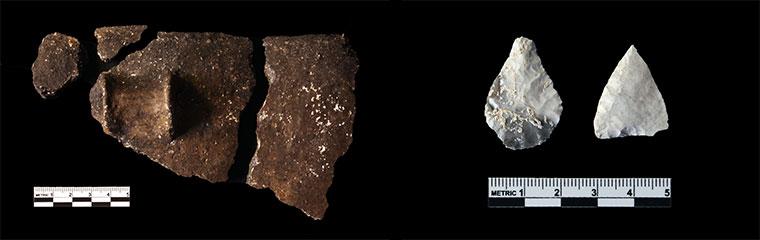
The remains, which were discovered during archaeological excavations ahead of construction of new services accommodation, are of a Neolithic enclosure, a major ceremonial gathering place measuring about 200m in diameter.
So far pottery, worked flint, animal bones and human skull fragments have been found in the ditches surrounding the enclosure, which would likely have been used for temporary settlement, exchanging animals and other goods or for feasting and other ritual activities, including the disposal of the dead.
Dr Matt Leivers of Wessex Archaeology said: “This is an exciting new find, and one that transforms our understanding of this important monumental landscape.”
The majority of the site lies within the Larkhill Garrison, where it will remain unaffected by the current works.
Only about 70 enclosures of this type are known across the UK, and they’re thought to be some of the earliest built structures in the British landscape.
Nearby, at Bulford, archaeologists have found a unique double henge, the only known example in Britain, which dates back to around 2900 BC.
Martin Brown, the principal archaeologist for WYG, who are managing and directing the archaeological work on both site, said: “These discoveries are changing the way we think about prehistoric Wiltshire and about the Stonehenge landscape in particular.
“The Neolithic people whose monuments we are exploring shaped the world we inhabit: they were the first farmers and the first people who settled down in this landscape, setting us on the path to the modern world.
“It is an enormous privilege to hold their tools and investigate their lives.”
Article by Rebecca Hudson. Salisbury Journal
Join the local Stonehenge experts on a Stonehenge guided tour. Explore the neolithic landscape with a tour guide and hear all the latest theories and recent discoveries.
The Stonehenge Travel and Tour Company
Salisbury, Wiltshire
http://www.StonehengeTravel.co.uk
Turner’s Wessex: News of the upcoming exhibition at Salisbury Museum, opening in May 2015.
Salisbury Museum is extremely proud to announce a new exhibition of national importance, throwing new light on the earliest work of the young artist J.M.W. Turner in and around Salisbury and its magnificent cathedral.
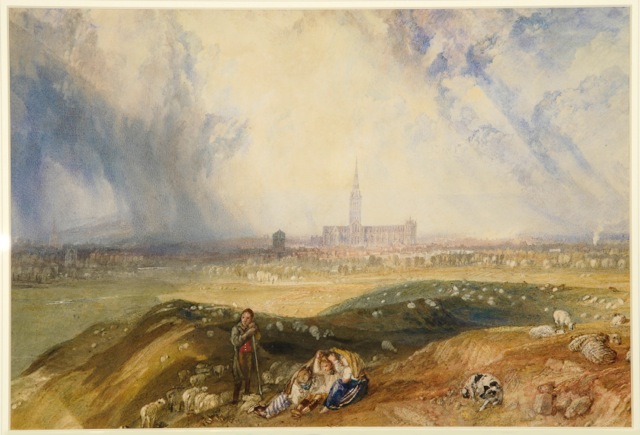 The museum is situated a few meters from Salisbury Cathedral in the historic town of Salisbury, where the 800 year-old Magna Carta will be displayed in 2015. Salisbury Museum is also less than 20 minutes by car from the ancient monument of Stonehenge, and houses a fabulous new gallery where the archaeology of Stonehenge can be explored.
Building on recent successes, particularly the 2011 exhibition exploring Constable’s links with the area, Salisbury Museum will showcase Turner’s meteoric rise as he worked for two very rich patrons in the Salisbury region.
Turner first visited Salisbury in 1795 when he was 20 years old. As his career developed, he returned to paint an area that captivated him as an artist. Set in the vast plains of the Wessex landscape, his depictions of Stonehenge in particular proved to be among his most hauntingly atmospheric works.
In the late 1790s, Sir Richard Colt Hoare commissioned Turner, then barely into his twenties, to produce a series of watercolours of Salisbury, the most impressive of which depict the newly restored great cathedral. Hoare was a wealthy gentleman-antiquarian who inherited the nearby Stourhead estate in 1784. His involvement in the first archaeological surveys of the ancient landscapes around Salisbury led him to publish volumes documenting the history of Ancient and Modern Wiltshire.
Another local patron, who gave the young Turner invaluable work, was William Beckford, described by Byron as ‘England’s wealthiest son’. Turner turned down a commission to work with Lord Elgin in Greece for a year, in favour of Beckford’s much more lucrative commission to paint the famous folly that Beckford was building at Fonthill.
The third part of this exhibition will chart Turner’s fascination with the wider Wessex region – spanning the area of Wiltshire around Salisbury, as well as the Dorset coast, Hampshire and the Isle of Wight. It culminates in Turner’s record of the historic visit made by the French King, the first such visit to England since the fourteenth century, to Queen Victoria in 1844
The exhibition has been selected by Turner scholar Ian Warrell to build a picture of a brilliant young artist, driven by self-belief and limitless ambition, grafting his way in the world.
The inventive and dizzying watercolours at the heart of the exhibition, reassembled for the first time since 1883, will show how commissions from Wiltshire’s great patrons provided the crucial springboard for the career of one of England’s best-loved artists.
The Salisbury Museum
The Kings House
65 The Close
Salisbury
www.salisburymuseum.org.uk
@SalisburyMuseum
Another great reason to visit Salisbury in 2015!
The Stonehenge Travel and Tour Company
Guided Tours of Salisbury and Stonehenge
http://www.StonehengeTravel.co.uk
Twitter: @SalisburyTours
 Stonehenge and Salisbury Guided Tours