Home » Posts tagged 'Stonehenge' (Page 2)
Tag Archives: Stonehenge
10 Top-Rated Tourist Attractions in Salisbury, Wiltshire
Historically a centre of the cloth industry, Salisbury – the county town of Wiltshire – is situated at the point where the Rivers Nadder and Bourne flow into the River Avon. The city is famous for its cathedral, a masterpiece of the early Gothic style that dates to 1220 when the building’s foundation stone was laid.
A checkerboard layout, with enclosed gardens between the houses, was a model for medieval town planning. On receiving market privileges from the king, a bridge was built across the Avon in 1244, thereby creating perfect conditions for Salisbury to become a major trading center.
1 Salisbury Cathedral

Salisbury Cathedral was built in a relatively short time – from 1220 to 1266 – in a typically English style consisting of a nave, long choir, retrochoir, main west transept and east choir transept (shielded from the choir by false arches). The interior of the cathedral, which is of bright-colored limestone and darkly gleaming Purbeck marble, displays the horizontal sequencing of the trusses, strengthened by continuous ledges. The construction of the walls is divided into three zones, with arches, a gallery-like triforium and a passageway above. A ribbed vault in four parts encloses the nave at a height of only 82 ft. The interior fittings of the cathedral, considerably altered in the 18th century, include elaborate tombstones dating back to the 13th century.
Although there are a few medieval fragments, the stained glass – primarily 19th and 20th centuries – is exquisite, particularly the Gabriel Loire window in the Lady Chapel. The Gothic cloister and the octagonal chapterhouse both date from the 14th century, the latter having a single central pillar acting as a vault support, a fine wall-frieze with pictures from the Old Testament and tracery windows divided into four sections with 19th century glass. Items stored there include one of the four original copies of the Magna Carta, the foundation of the British constitution, as well as other Anglo Saxon documents and the inspection report on the cathedral tower written by Sir Christopher Wren in 1668.
Address: Chapter Office, 6 The Close, Salisbury
Accommodation: Where to Stay in Salisbury – TripAdvisor.com
2 Cathedral Close

Within Salisbury Cathedral Close and separated from the rest of the town by three gateways, a number of notable Elizabethan and Georgian houses have lovely green lawns and date from the 14th to 18th centuries. These were the residences of the dean, ecclesiastical officers and teachers at the cathedral school. Of special interest is Mompesson House, with its elegant interior fittings and wonderful collection of glass. Another nearby home worthy of a visit is Arundells, residence of former Prime Minister Sir Edward Heath.
Address: The King’s House, 65 The Close, Salisbury

The old city center includes the 15th century parish church of St Thomas of Canterbury as well as the wide market place with its 15th century market cross, the Guildhall (1788) and the 15th century Plume of Feathers Inn. Nearby is the Red Lion Hotel with its fine 1820s facade and pretty inner courtyard, and Joiner’s Hall, an attractive half-timbered building dating from the 16th century.
Through the North Gate are the meadows of the River Avon with their fine views of the cathedral. John Constable captured these on canvas in his famous painting of 1820.
Address: Pennyfarthing House, 18 Pennyfarthing St, Salisbury

Old Sarum was the precursor of present-day Salisbury, built two miles to the north of the city center on a hill, which even in prehistoric times was fortified. The Romans built the camp of Sorviodonum here, while under the Saxons a town settlement grew up on the site. William the Conqueror chose this strategically favorable spot to build a castle in 1075, and in 1220 the inhabitants of Old Sarum were moved to New Salisbury. Today, only a few remains of the castle within the inner circumference wall can be seen, and the cathedral ruins within the outer wall.
Location: Castle Rd, Salisbury
5 Salisbury and South Wiltshire Museum

The Salisbury and South Wiltshire Museum has permanent displays and special exhibitions throughout the year that highlight the art and history of England and the Salisbury area. This is one of the most fascinating areas in Britain, rich in mediaeval history and home to the World Heritage Site of Stonehenge. The award-winning museum is home to the Stonehenge Gallery, Monkton Deverill Gold Torc, as well as unique costume, glass and chinaware collections.
Address: 58 The Close, Salisbury
6 Larmer Tree Gardens

The Larmer Tree Gardens, set in the ancient forest known as Cranborne Chase, were established by general Pitt Rivers in 1880 as pleasure grounds for “public enlightenment and entertainment” and were the first privately owned gardens to be opened for public enjoyment. You’ll find Indian buildings, a Roman Temple and an open-air theatre amidst acres of gardens inhabited by pheasants, peacocks and other exotic birds.
Location: Rushmore Estate Office, Tollard Royal, Salisbury
7 Salisbury Festival
Salisbury Festival takes place in spring with a different theme each year, and includes orchestral, choral and chamber concerts, recitals, film screenings and lectures. Numerous venues are used, including St Thomas Hall, the cathedral and other historical buildings.
Another important event is the Southern Cathedrals Festival, an annual festival that rotates every year between the cities of Winchester, Salisbury and Chichester. The festival takes place mid-July and includes daily concerts and a program featuring a mix of orchestral, choral and chamber concerts, recitals and fringe events. The repertoire is equally varied and includes classical and sacred music as well as newly commissioned works performed in the host city’s cathedral. Another great event, The Salisbury Arts Festival, runs for two weeks each May and features dance, music, street performances and art exhibitions.
Address: 144 East Main St, Salisbury
8 The Rifles (Berkshire and Wiltshire) Museum

The Wardrobe is an elegant building housing The Rifles (Berkshire and Wiltshire) Museum, an award-winning museum detailing the history of English County Regiments. The building dates to 1254 and contains exhibits on the Royal Berkshire and Wiltshire Regiments.
From the gardens you can stroll down to the River Avon with its views of the Water Meadows. Another military museum to visit is the award-winning Museum of the Duke of Edinburgh’s Royal Regiment.
Address: 58 The Close, Salisbury
9 Cholderton Charlies Rare Breeds Farm
Cholderton Charlies Rare Breeds Farm has breeds dating back hundreds of years, reflecting an animal heritage as interesting as its buildings and monuments. In addition to the many animals is a nature trail, water gardens, a picnic area and adventure playground for children. Also popular are the many opportunities to feed piglets and other young animals.
Location: Amesbury Road, Cholderton, Salisbury
10 Malmesbury House

Malmesbury House is located on The Close near Salisbury Cathedral where many of the city’s historical attractions are found. The house has seen many faces, both architecturally and in its visitors, and was originally a canonry in the 13th century before being enlarged.
The west facade was added decades later to accommodate rooms displaying magnificent rococo plasterwork, and notable visitors included King Charles II and the composer Handel. (Although privately owned, tours are occasionally permitted.)
Location: The Close, Salisbury
Surroundings
Wilton House

Built by architect Inigo Jones in 1653 after the original Tudor home was destroyed by fire, Wilton House is a masterpiece of the Baroque style and most notable for its huge white Double Cube Room. Decorated with gold-painted flowers and garlands of fruit and rounded off with a brilliantly colorful painted ceiling, the room is also fascinating for its portraits by van Dyck, as well as portraits of Charles I, Queen Henrietta Maria and their three children. Equally impressive is the Single Cube Room, its painted ceiling having scenes from Sir Philip Sidney’s Arcadia, written in 1590 while a guest at Wilton House, as well as paintings by Rembrandt, Rubens and Reynolds. The landscaped park surrounding the house harbors a magnificent stock of old trees. Another unusual feature is the Palladian bridge (1737) over the River Nadder.
Be sure to visit the picturesque Village of Wilton, the old capital of the Saxon kingdom of Wessex, and later of Wiltshire. It is famous for its carpets, plus home to antique shops and a weekly market.
Location: The Estate Office, Wiilton, Salisbury
Shaftesbury

Located 19 miles southwest of Salisbury, Shaftesbury is a picturesque little market town famous for its ruined Benedictine abbey. Only the foundation walls remain as a reminder of the abbey’s existence, while in the Shaftesbury Abbey and Garden there’s a model of the building as it once was as well as finds from the Middle Ages.
Shaftesbury is also a notable tourist destination due to the steep cobbled streets of Gold Hill, picturesquely lined on one side with tiny houses dating from the 16th to 18th centuries, while on the other side there’s a 13th century ochre-colored wall. Visitors enjoy superb views across the Blackmoor Vale to Somerset.
St Peter’s Church is the only one of the 12 medieval churches that’s been preserved, and possesses an interesting crypt and a fine doorway. Also of note, the Shaftesbury Gold Hill Museum has many exhibits detailing local history.
Location: Gold Hill, Shaftesbury
Stourhead

Stourhead, 26 miles west of Salisbury, is one of the finest landscaped gardens of the 18th century and unchanged since its inception. The unique design of the garden includes an artificial lake with caves, classical temples and landing stages surrounded by hills planted with trees. The park and the stately Palladian mansion were designed in 1721, with elegant period furniture provided by Chippendale, while the gallery contains paintings by Canaletto, Raphael, Nicolas Poussin and Angelika Kaufmann. King Alfred’s Tower, erected to commemorate the Saxon king, towers over the surrounding parkland and affords fine panoramic views.
Location: Mere, Wiltshire
Old Wardour Castle

Old Wardour Castle, near Tisbury, is a 14th century structure on the edge of a beautiful lake. A battle was fought here in 1643 when Parliamentarian forces besieged the castle causing extensive damage. More recently, Robin Hood Prince Of Thieves starring Kevin Costner was filmed here. The castle’s unusual hexagonal ruins are surrounded by landscaped grounds, and are a picturesque location for picnics or a relaxing day out.
Location: Tisbury, Salisbury
http://www.StonehengeTravel.co.uk
Visit Avebury Stone Circle, Wiltshire
Situated in southern England in the county of Wiltshire the village of Avebury is close to two small streams….the Winterbourne and the Sambourne which unite to form the source of the River Kennet. After being re-inforced by a number of springs this beautiful English river rapidly gains in stature as it passes through the North Wessex Downs on its way to Reading where it eventually flows into the River Thames of which it has become the main tributary. The waters of the Kennet therefore pass through London before reaching their ultimate destination in the North Sea.
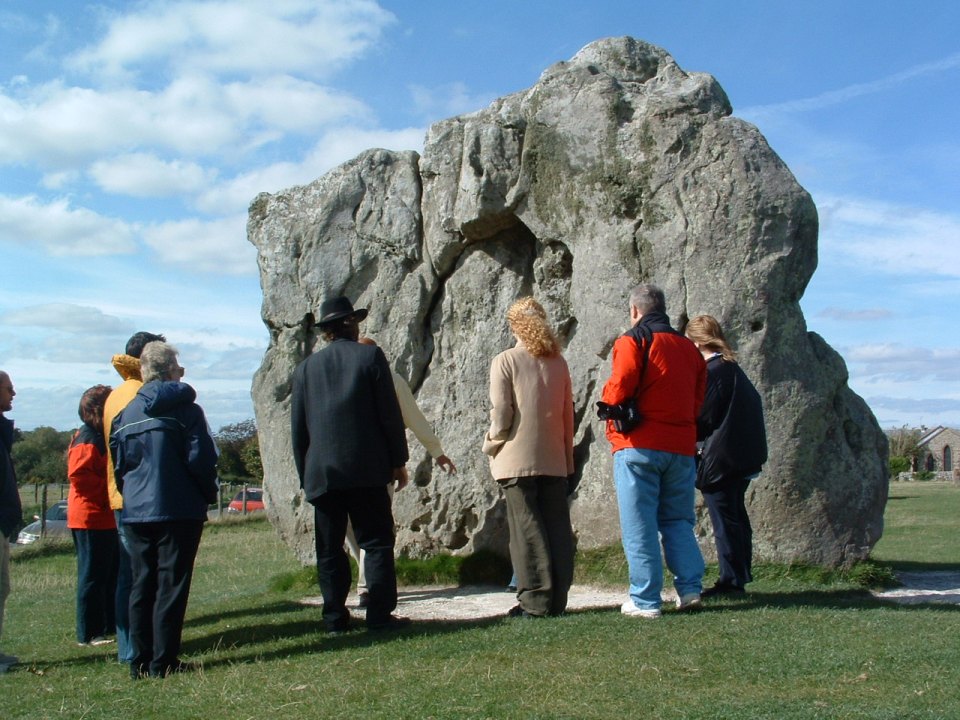
Small Group Guided Tour of Avebury
Around 4,500 years ago, when the site of England’s capital was a thinly inhabited marshland, the area around Avebury almost certainly formed the Neolithic equivalent of a city. By coincidence this waterway has become a link between the two largest cultural centres of their day to have ever existed in the British Isles. As London now contains most of England’s largest buildings Avebury is the location of the mightiest megalithic complex to have ever been constructed in Britain. This henge with its enormous ditch, bank, stones and avenues survives in a much depleted state but the nearby Silbury Hill which is the largest man-made mound in pre-industrial Europe still dominates the surrounding landscape. The two largest surviving British long barrows of West Kennet and East Kennet are also prominent a short distance away and in recent years the remains of two massive palisaded enclosures have also been found. The quote that antiquarian John Aubrey made of Avebury……”it does as much exceed in greatness the so renowned Stonehenge as a Cathedral doeth a parish church” recognises the true importance of what has now been largely absorbed into the modern landscape of Wiltshire. If we could return to the time when the Romans occupied the British Isles it is a sobering thought that we would have to go back as far again to find an Avebury that was already several centuries old.
The history of the modern village is inevitably linked to the prehistoric monuments that surround it. Abandoned for several thousand years the land around the stones became occupied once more when people of the Saxon period began to settle in the area. Their arrival and subsequent development of the present village was to have a dramatic effect on the history of the stones. The relationship between the local inhabitants and the monuments has now added an unfortunate dimension to the Avebury story that helps make it one of the most fascinating historical sites to be found in the British Isles if not the world.
It remains a magical place as so many who have been there will agree. A visit to Avebury is a very personal event. It still seems to retain, somehow, the spirits of all those who laboured in its creation or whatever it was that led them to create it. If you have never been there a visit will not be an empty experience. You will come away with a head full of questions and probably a realisation that somewhere over the years modern society has lost something important.
The Stonehenge Travel company operate guided tours of Avebury and Stonehenge departing from Salisbury.
Avebury links:
http://www.avebury-web.co.uk/avebury_now.html
http://www.english-heritage.org.uk/visit/places/avebury/
http://www.nationaltrust.org.uk/avebury
http://www.visitwiltshire.co.uk/things-to-do/avebury-stone-circle-and-avebury-manor-and-garden-p134483
Stonehenge and Salisbury Guided Tours
Mystical County, Magical Tours…..
www.StonehengeTravel.co.uk
Burial of Bronze-Age Teen Discovered in Wiltshire, England
WILTSHIRE, ENGLAND—The 4,000-year-old skeleton of an adolescent has been uncovered by a team from the University of Reading at Wilsford Henge in the Vale of Pewsey, an area located between Stonehenge and Avebury. The child had been buried in the fetal position, and had been wearing an amber necklace.  “The skeleton is a wonderful discovery which will help tell us what life was like for those who lived under the shadow of Stonehenge at a time of frenzied activity. Scientific analysis will provide information on the gender of the child, diet, pathologies and date of burial. It may also shed light on where this young individual had lived,” Jim Leary of the University of Reading told BT News. The excavation has also recovered flint blades, decorated pottery, shale and copper bracelets, and a Roman brooch. To read more, go to “Under Stonehenge.”
Stonehenge and Avebury Guided Tours
The Stonehenge Travel Company, Salisbury
Wiltshire house rivalled Stonehenge as a hub for ancient Britons
Neolithic building on vast site at Marden Henge is welcoming public visitors again after thousands of years buried beneath farmland.

Pieces of flint tools dropped more than 4,300 years ago on the floor of a house as old as Stonehenge have been laid bare on the edge of Marden Henge, a giant ditch and bank enclosure so buried in rich Wiltshire farmland that it has almost vanished from view.
“We’ve over-fetishised Stonehenge for far too long, because those giant trilithons are just so damn impressive,” said Dr Jim Leary, director of this summer’s excavation with the Reading University archaeology summer school, in the lush Vale of Pewsey. “It could well be that this was really where it was at in the Neolithic.”
The rectangular building will welcome visitors next weekend for an open day which is part of the national festival of archaeology. The house, believed to be one of the best preserved from the period ever found in the UK, and made to look smarter with tonnes of white chalk brought from miles away and stamped into a kind of plaster, is as neatly levelled and regular as the nearby postwar bungalows built on top of part of the henge bank.
The house and other parts of the huge site have already produced finds including beautifully worked flint arrowheads and blades, decorated pottery including some pieces with the residue of the last meals cooked in them, shale and copper bracelets and a beautiful little Roman brooch – and the tiny jawbone of a vole. Analysis of the mass of seeds and charred grains recovered will reveal what the people were growing and eating.
Pig bones – probably the remains of at least 13 animals, food for hundreds of people – and scorch marks from a charcoal firepit suggest the house was never a permanent residence but connected with great gatherings for feasts. When it was abandoned the entire site, pig bones and all, was cleaned and neatly covered with earth, so it would never be used again.
The structure originally stood on a terrace overlooking a mound, within a small earth-banked circle, in turn part of the enormous Marden Henge.
Leary, joined by archaeology students, professionals and amateurs from all over the world, who will continue working on the site for years to come, is peeling back the layers of a monument that was once one of the biggest and most impressive in Britain. Ramparts three metres high enclosed a vast space of 15 hectares, far larger than the Avebury or Stonehenge circles, and too large for any imaginable practical use.
Leary believes the purpose must have been status, showing off wealth and power in the ability to mobilise a massive workforce. “Avebury had the huge ditches, Stonehenge upped the ante with the massive trilothons, Marden had this enormous enclosure.”
The site is so vast that it takes Leary and fellow director Amanda Clarke 40 minutes to walk from the team working on the house to the diggers who have uncovered a previously unrecorded Roman complex including the foundations of an impressive barn.
Like the Durrington Walls henge a few miles downstream, and Stonehenge itself, Marden was linked to the river Avon by a navigable flow, now a sedge- and nettle-choked stream, which forms one side of the henge.
“Avebury in one direction and Stonehenge in the other have been excavated and studied for centuries because the preservation of the monuments on chalk is so much better. Not nearly enough attention has been paid to the archaeology of the fertile valleys because the land is so good the monuments have often been ploughed out above ground – but it is a key part of understanding the story.”
Marden’s banks, cut through by later roads or lying under modern farm buildings, grazing cows and ripening crops in many places, once stood three metres tall, towering over an equally deep ditch. The outer ring enclosed a complex of smaller monuments, including the Hatfield Barrow, which was once 15 metres tall, and now survives only as a 15cm ripple in the field. It was excavated in 1807 and, after a collapse caused by the shaft, later completely levelled by the farmer.
The site welcomes visitors every day, but the open day will have finds on display, tours and activities. It will be among more than 1,000 events across the country over the last fortnight of July, including lectures, site tours and visits to archaeology stores and structures normally closed to the public.
- The Reading University archaeology summer field school open day takes place at Marden Henge, Wiltshire, on 18 July. The Council for British Archaeology festival of archaeology runs nationwide from 11-26 July.
Stonehenge and Avebury Guided Tours
http://www.StonehengeTravel.co.uk
Exploring ancient life in the Vale of Pewsey
Our knowledge of the people who worshipped at Stonehenge and worked on its construction is set to be transformed through a new project led by the University of Reading.
This summer, in collaboration with Historic England, the Arts and Humanities Research Council and Wiltshire Museum, archaeologists are embarking on an exciting three-year excavation in the Vale of Pewsey, Wiltshire.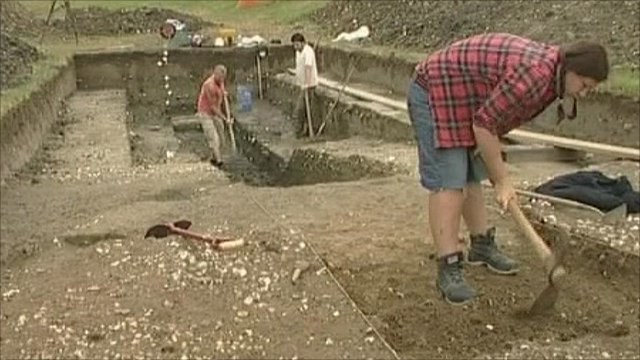
Situated between the iconic prehistoric monuments of Stonehenge and Avebury, the Vale of Pewsey is a barely explored archaeological region of huge international importance. The project will investigate Marden Henge. Built around 2400 BC ‘Marden’ is the largest henge in the country and one of Britain’s most important but least understood prehistoric monuments.
Excavation within the Henge will focus on the surface of a Neolithic building revealed during earlier excavations. The people who used this building will have seen Stonehenge in full swing, perhaps even helped to haul the huge stones upright.
Dr Jim Leary, from the University of Reading’s Department of Archaeology and Director of the Archaeology Field School, said: “This excavation is the beginning of a new chapter in the story of Stonehenge and its surrounds. The Vale of Pewsey is a relatively untouched archaeological treasure-chest under the shadow of one of the wonders of the world.
“Why Stonehenge was built remains a mystery. How the giant stones were transported almost defy belief. It must have been an astonishing, perhaps frightening, sight. Using the latest survey, excavation and scientific techniques, the project will reveal priceless insight into the lives of those who witnessed its construction.
“Marden Henge is located on a line which connects Stonehenge and Avebury. This poses some fascinating questions. Were the three monuments competing against each other? Or were they used by the same communities but for different occasions and ceremonies? We hope to find out.”
The Vale of Pewsey is not only rich in Neolithic archaeology. It is home to a variety of other fascinating historical monuments from various periods in history, including Roman settlements, a deserted medieval village and post-medieval water meadows. A suite of other investigations along the River Avon will explore the vital role of the Vale’s environment throughout history.
Dr Leary continued: “One of the many wonderful opportunities this excavation presents is to reveal the secret of the Vale itself. Communities throughout time settled and thrived there – a key aim of the dig is to further our understanding of how the use of the landscape evolved – from prehistory to history.”
Duncan Wilson, Historic England Chief Executive, added: “Bigger than Avebury, ten times the size of Stonehenge and half way between the Stonehenge and Avebury World Heritage Sites, comparatively little is known about this fascinating and ancient landscape. The work will help Historic England focus on identifying sites for protection and improved management, as well as adding a new dimension to our understanding of this important archaeological environment.”
The Vale of Pewsey excavation also marks the start of the new University of Reading Archaeology Field School. Previously run at the world-famous Roman town site of Silchester, the Field School will see archaeology students and enthusiasts from Reading and across the globe join the excavation.
The six week dig runs from 15th June to 25th July. Visitors are welcome to see the excavation in progress every day, except Fridays, between 10:00am and 5pm. Groups must book in advance.
Read more at: http://phys.org/news/2015-06-exploring-ancient-life-vale-pewsey.html#jCp
Provided by University of Reading
We offer guided tours of Stonehenge and Avebury with local experts.
Stonehenge and Salisbury Guided Tours
The Stonehenge Travel Company
Magna Carta and beyond: stepping back in time in Salisbury
In 2015, Salisbury will celebrate Magna Carta’s 800th anniversary in what promises to be a banner year for the city. This ancient document is one of many treasures in this charming English city, from prehistoric stone circles through to medieval pubs and stately homes. Exploring Salisbury allows you to unravel 5000 years of history. These six experiences are guaranteed to spirit you back in time.
Celebrate Magna Carta, a milestone for human freedom
 Salisbury is packed with history. Image by Barry Winiker / Getty
The ‘Great Charter’ is lauded worldwide as a symbol of freedom and justice – quite astonishing for an 800-year-old document concerning the rights of English noblemen. Sealed on the banks of the Thames in 1215, the Magna Carta curbed the powers of the English throne, gave land-owning rights to noblemen and laid down the right to a fair trial. Barons enjoyed the benefit of these new laws, while peasants remained as downtrodden as ever. But despite this, the Magna Carta has become a global inspiration, in particular the oft-quoted words, ‘No free man shall be seized or imprisoned, or stripped of his rights or possessions, or outlawed or exiled’. It has been credited as a predecessor to the United States Constitution and the Bill of Rights.
True enthusiasts are waiting to hear if they will be part of the lucky few to see all four copies at a one-off exhibition in London’s British Library (decided by ballot). But Salisbury’s copy – the best preserved of the four – continues to be part of a grand display in Salisbury Cathedral’s Chapter House, and will be the focus of a calendar of celebrations, talks and choral music during 2015.
One of the pleasures of visiting Salisbury’s Magna Carta is the enthusiasm of the volunteer guides. Check visiting hours on salisburycathedral.org.uk – avoid 3 February 2015, when Magna Carta will be on tour in London.
Climb the spire of a medieval masterpiece
 Salisbury Cathedral boasts the tallest spire in Britain. Image by Michael Day / CC BY 2.0
There’s much more than Magna Carta to admire at Salisbury Cathedral. This grandiose construction boasts England’s largest cloisters and cathedral close, and harbours a rather singular curio, the world’s oldest working clock (dating to 1386). Most significantly, Salisbury Cathedral boasts the tallest church spire in the United Kingdom (a cloud-piercing 123m high). Those with a head for heights – and a stomach for narrow spiral staircases – mustn’t miss a guided tour of the tower for views over the rolling hills of Wiltshire.

Detail from Salisbury Cathedral. Image by Anita Isalska / Lonely Planet
Visitors with a taste for the days of lordly squabbles and tight-bodiced dames will find other traces of medieval Salisbury throughout the city. It’s impossible to miss the elaborate stone Poultry Cross in the market square, and look out for the coat of arms on the North Gate.
Salisbury Cathedral is open daily. Tours of the tower take 90 minutes and allow limited numbers, so book a slot early on salisburycathedral.org.uk.
Visitors with a taste for the days of lordly squabbles and tight-bodiced dames will find other traces of medieval Salisbury throughout the city. It’s impossible to miss the elaborate stone Poultry Cross in the market square, and look out for the coat of arms on the North Gate.
Salisbury Cathedral is open daily. Tours of the tower take 90 minutes and allow limited numbers, so book a slot early on salisburycathedral.org.uk.
Explore the silent city of Old Sarum
For an alternative view of Salisbury Cathedral, step out on the ramparts of Old Sarum. This Iron Age hill fort, slightly north of the city centre, holds the key to Salisbury’s early history. Old Sarum was established in 3000BC, and for centuries was a castle stronghold with a thriving community. Old Sarum’s significance as a military outpost ended abruptly in the 13th century when its bishop was given permission to build a new cathedral in what is now modern Salisbury. People fled Old Sarum to seek their fortunes in the new city, while Old Sarum’s cathedral was gutted and torn down. The result is a site frozen in time: the old cathedral is a ghostly outline, and the windswept ramparts jealously overlook Salisbury.
Roaming this exposed site is best reserved for a sunny day. Old Sarum is a 10-minute drive (or short bus ride on the 8 or X5) from Salisbury city centre. Plan your visit on english-heritage.org.uk.
Hail the solstice at Wiltshire’s stone circles
Few sights inspire such a mixture of bewilderment and awe as Stonehenge, the world-famous circle of boulders on Salisbury’s outskirts. Now known to have been transported by labourers from southwest Wales (250km from the site) and assembled around 2400BC, the motivation for this incredible feat remains obscure. Historians’ best guess is that it was an ancient burial site and then a monument to celebrate the winter solstice (pagan worshippers gather at the site to this day). Considering the various theories about Stonehenge is part of the fun, so allow time for the recently upgraded visitors’ centre at the site. Avebury Stones. Image by Gordon Robertson / CC BY 2.0
These millennia-old monoliths certainly draw the crowds, but further north lies a site vaster and more ancient than Stonehenge. The Avebury Stones stretch back even further (to an estimated 2850BC) and form Europe’s largest stone circle. The three rings making up this Neolithic monument are thought to have been the focus of rituals warding off nature’s crueller whims. Today, a chapel and a pub, the Red Lion Inn, are encircled by these ancient stones.
Visit Stonehenge and Avebury as a combined day-trip from Salisbury. Stonehenge is a 20-minute drive north of Salisbury, and Avebury another 35 minutes by car from there. Tours from London are also available.
Swoon at 18th-century stately homes
Want to explore a more genteel era? Salisbury boasts an array of period buildings from the 18th and 19th centuries, and the jewel in the crown is Mompesson House. With its stone exterior, iron gates and tranquil walled gardens, Mompesson House is so unabashedly English that it was chosen as a filming location for the 1995 movie Sense and Sensibility.
Exploring the interior is evocative of Georgian England – you can almost detect a whiff of smelling salts. You’ll sidle past delicate plasterwork and period furniture, glance at 18th-century goblets and mother-of-pearl jewellery boxes… anyone else need their corset loosening?
Mompesson House rewards eco-friendly travellers: mention that you arrived by bike or public transport and enjoy a discount in their tea room. Plan your visit at nationaltrust.org.uk.
Quaff ales like a medieval peasanti The Cloisters has open fires and Sunday roasts. Image by Charles D P Miller / CC BY 2.0

Time travel is thirsty work. Luckily Salisbury’s pubs have rich enough folklore to keep the history flowing along with the ale. Start at the Haunch of Venison: not only does this pub, dating to 1320, conceal secret passageways (supposedly wending their way to the cathedral), it’s also the site of a mischievous ghost. Another 14th-century drinking haunt is Grade II-listed The Cloisters (cloisterspubsalisbury.co.uk), a winter favourite for its open fires and Sunday roasts. Finally, the Ox Row Inn (theoxrowinn.co.uk) is a relative youngster, pouring brews since the 16th century. Some of the old-world charm has been polished out of it during recent makeovers, but its black and white timbered exterior and ale selection make it a fine stop on a historic pub crawl.
Want to go right to the source? Book a visit to a’Beckett’s Vineyard (abecketts.co.uk) or Wadworth Brewery (wadworthvisitorcentre.co.uk).
Make it happen
Salisbury is an easy day-trip by train from London (1½ hours) or Bristol (from 1 hour 10 minutes) but you’ll need your own wheels if you want to explore the Wiltshire countryside. Basing yourself in Salisbury for a couple of days allows plenty of time to explore the sights and make the most of pubs and local eats. Sticky your fingers over cream tea at Howard’s House (howardshousehotel.co.uk), splurge on confit duck at local favourite Charter 1227 (charter1227.co.uk) or go for sophisticated contemporary Indian at Anokaa. If you want sumptuous lodgings in the city centre, choose St Ann’s House or Milford Hall. For rustic atmosphere and river views, go with the Legacy Rose & Crown Hotel.
Full article in the excellent Lonely Planet Guide Book: http://www.lonelyplanet.com/europe/travel-tips-and-articles/magna-carta-and-beyond-stepping-back-in-time-in-salisbury
Stonehenge and Salisbury Guided Tours
http://www.StonehengeTravel.co.uk
Salisbury Museum Festival of Archaeology Planned in Salisbury. July 2015
Salisbury Museum, home of the Wessex Gallery of Archaeology, is hosting a new Festival of Archaeology during the weekend of 18/19 July 2015.
The grand opening of the new Wessex Gallery attracted 2,241 visitors in the space of 6 hours on the 12th July last year. The

Wessex gallery grand opening
gallery is beautifully designed to display many important finds from the Stonehenge World Heritage sites and England’s “Valley of the Kings”.
Alex Langlands, archaeologist and presenter of BBC TV’s Wartime Farm said, “With Stonehenge, Avebury, Old Sarum and the cathedral at Salisbury, there are few counties in the south of England that boast a better line up of archaeological sites. However, as an archaeologist, the real jewel in the crown for me is the Salisbury Museum.
“Following enthusiastic responses to the Wessex Gallery from both public and press, the museum has planned this larger Festival, fuelled by a passionate ambition to inspire further public engagement in archaeology. The Wessex Gallery, led by energetic museum Director Adrian Green, has set its sites to become a major international resource at the centre of England’s ancient archaeological heartland.
“The Festival falls within the ‘Digging Season’ and before the schools summer holidays. The weekend will include presentations and lectures, set against a big showground event. Leading figures in the British archaeology community will be present to debate, make presentations and engage with the public.
“Tucked away in the cathedral close, the Salisbury Museum is an absolute treasure trove of archaeological goodies. In particular, the Wessex Gallery is a hugely impressive exhibition that will have any visitor beguiled. I’m really looking forward to the Festival weekend that the museum is hosting.”
Full article in the Blackmore Vale
Stonehenge and Salisbury Guided Tours
The Stonehenge Travel Company
http://www.StonehengeTravel.co.uk
Discover the historic gems on our doorstep
YOU can travel back in time on this holiday and trace thousands of years of British history, from Stonehenge up to the signing of the Magna Carta.

Visit Salisbury Cathedral, is unique among English medieval cathedrals having been built in a single architectural style – early English gothic.
From the famous standing stones through to the celebrated document inspired by King John and the Georgian streets of Bath, this is a trip that will no doubt fascinate and delight.
After boarding the private coach in the early morning you will travel towards your hotel, visiting the quant villages of Castle Combe and Laycock along the way.
Both have featured in major films and TV series, Castle Combe in Stephen Spielberg’s War Horse and Lacock was used in some scenes for the Harry Potter films. Lacock also featured in the popular TV programme The Cranford Chronicles.
After dinner and a chance to relax in the hotel, day two will be all about Stonehenge, where you’ll head after breakfast.
The first stop of the day is the famous standing stones and its long-awaited and now open exhibition and visitor centre.
The exhibition contains nearly 300 archaelogical treasures found in the area, and also valuable insights into how and why the stone circle was built, and the people responsible.
The monument itself is a little over a mile from the centre, so you will have the choice of walking to it with a complementary audio guide or using the shuttle for the ride to the stones.
After seeing the stones, you will then travel to Salisbury Cathedral, which is unique among English medieval cathedrals having been built in a single architectural style – early English gothic.
The Chapter House here is home to the finest of only four surviving Magna Carta, the first formal document of its kind that paved the way for democracy. An exhibition explaints how it came about, and what its significance is even today.
On day three you will head to Bath and enjoy a full day at leisure in this fine city, which boasts its famous Roman baths, the Royal Crescent and beautiful Pulteney Bridge.
After breakfast the following day you will enjoy a brief tour of the Cotswolds, including the charming village of Malmesbury, before heading home.
Full Article in the excellent Bristol Post: http://www.bristolpost.co.uk/Discover-historic-gems-doorstep/story-25845069-detail/story.html#ixzz3OmEXVcC8
We operate guided tours including Stonehenge, Salisbury, Lacock, Castle Combe, Bath and the Cotswolds
Stonehenge Travel Co.
Mystical Landscape, Magical Tours
http://www.StonehengeTravel.co.uk
Old Sarum archaeologists reveal plan of medieval city
A detailed plan of a medieval city has been produced by experts without any digging at the site.
The latest scanning techniques were used to uncover a network of buildings at the 11th Century Old Sarum near Salisbury in Wiltshire.
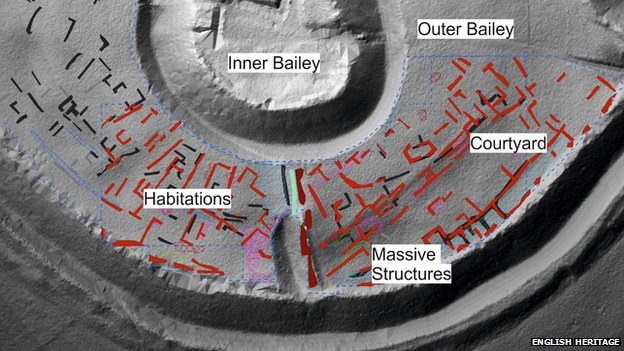
The inner and outer baileys of the Old Sarum Iron Age fort were surveyed
The results include a series of large structures, possibly defences, with open areas of ground behind possibly for mustering resources or people.
Old Sarum was the original site of Salisbury, which is two miles away


WHAT IS OLD SARUM?
- It was the location of the original Salisbury
- It combines a royal castle and cathedral within an Iron Age fortification
- The Romans, Normans and Saxons have all left their mark there
- For 150 years it was a major centre of government
Source: English Heritage

It was originally an Iron Age fort, established around 400 BC, and occupied by the Romans after the conquest of Britain in AD 43.
This latest survey of the site was carried out by the University of Southampton and concentrated on the inner and outer baileys of what would have been the fort.
Modern techniques used to survey the land included magnetometry, earth resistance, ground penetrating radar and electric resistivity tomography, which uses electrodes to probe underground.
The university’s director of archaeological prospection services, Kristian Strutt, said: “Archaeologists and historians have known for centuries that there was a medieval city at Old Sarum, but until now there has been no proper plan of the site.
“Our survey shows where individual buildings are located and from this we can piece together a detailed picture of the urban plan within the city walls.”
Full Story: http://www.bbc.co.uk/news/uk-england-wiltshire-30300837
We operate guided tours from Salisbury that visit Old Sarum and Stonehenge
Stonehenge and Salisbury Guided Tours
http://www.StonehengeTravel.co.uk
Magna Carta tourist trail unveiled by Visit Wiltshire.
A NEW two-day tourist trail has been announced by VisitWiltshire and Salisbury Cathedral to celebrate the 800th anniversary of the Magna Carta in 2015.
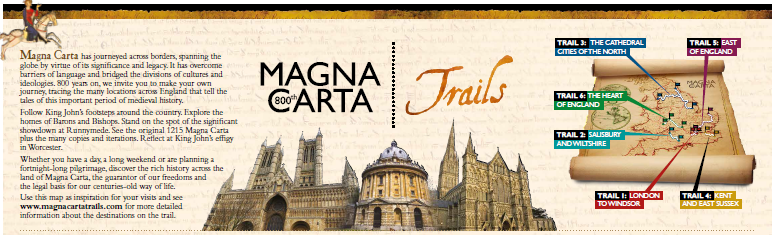
The new Salisbury and Wiltshire trail includes Salisbury Cathedral and Magna Carta on day one and the Stonehenge World Heritage Site and the Baron Town of Trowbridge on day two.
The Wiltshire trail is one of six special trails, each covering different aspects of the Magna Carta story.
Salisbury Cathedral is home to the best preserved of only four remaining copies of the original 1215 Magna Carta which will be re-displayed in an interactive exhibition for 2015.
Robert Key, chairman of Salisbury Cathedral’s Magna Carta Celebrations Committee, said: “This trail is great news and will bring many visitors to Wiltshire and to Salisbury Cathedral to see the finest preserved original Magna Carta in its anniversary year.
“We are looking forward to making those visitors a part of 2015’s 800th anniversary celebrations with a great programme of events and a wonderful new exhibition around Salisbury Cathedral’s Magna Carta.”
On June 15 it will be exactly 800 years after King John added his seal to Magna Carta, as presented to him by the barons at Runnymede on the Thames near Windsor.
The trails were commissioned by the 800th Commemoration Committee of the Magna Carta Trust to encourage visitors to the Magna Carta towns as history, heritage and anniversary tourism become increasingly popular themes for travellers.
Sir Robert Worcester, chairman of the Magna Carta Trust’s 800th anniversary committee said: “They will be colourful guides for the thousands of visitors who will converge on England from around the world next summer, wishing to explore the areas which are part of the Magna Carta story. Doing all six trails will take visitors just over a fortnight, and immerse them in 800 years of history.” Article by: by Alex Rennie, Salilsbury Journal Reporter
Magna Carta 2015
Salisbury Cathedral is extremely proud to be home to the finest of the four surviving original 1215 Magna Carta. It plans to take a leading role in the 2015 celebrations marking the 800th anniversary of the historic and iconic document.
Download a copy of the Magna Carta 800 trails leaflet
For more information about the trails go to www.visitwiltshire.co.uk/magnacarta.
More News on this story:
Salisbury Cathedral has been awarded £415,800 by the Heritage Lottery Fund (HLF) to mark the 800th anniversary of the Magna Carta in 2015. Click here
The Stonehenge Travel Company are operating guided tours of Stonehenge and Salisbury throughout 2015 featuring the 800th anniversary of the Magna Carta.
www.StonehengeTravel.co.uk
 Stonehenge and Salisbury Guided Tours