Stonehenge and Salisbury Guided Tours

Home » Posts tagged 'Visit Wiltshire' (Page 2)

Tag Archives: Visit Wiltshire

2021 / 2022 Stonehenge Special Access Tours: Go beyond the fences and into the inner circle with a local expert guide. Salisbury, Bath, Southampton and London departures.

Experience the magic and mystery of Stonehenge with a private access tour at sunrise or sunset on our exclusive private guided tours from Salisbury, Bath, Southampton or London. Guests will be able to access the historic stone circle, and explore the surrounding area rich in history, myths and legends

“Exclusive entry into the stone circle allows you to wonder in and around the heritage site and experience an up close and personal look at this iconic monument.”

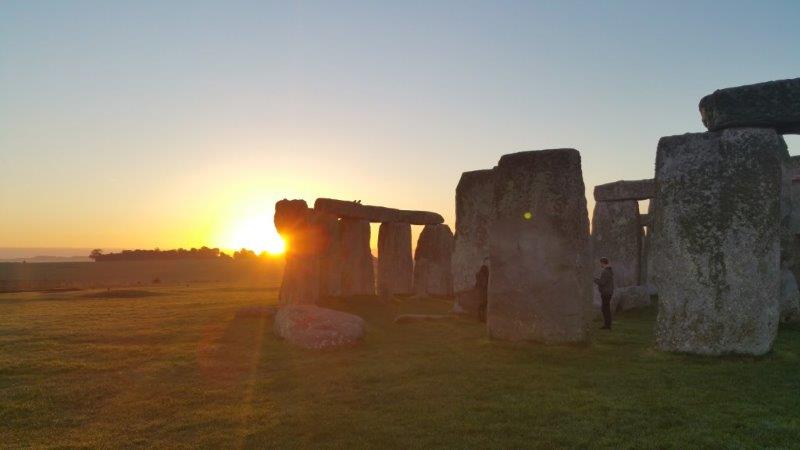
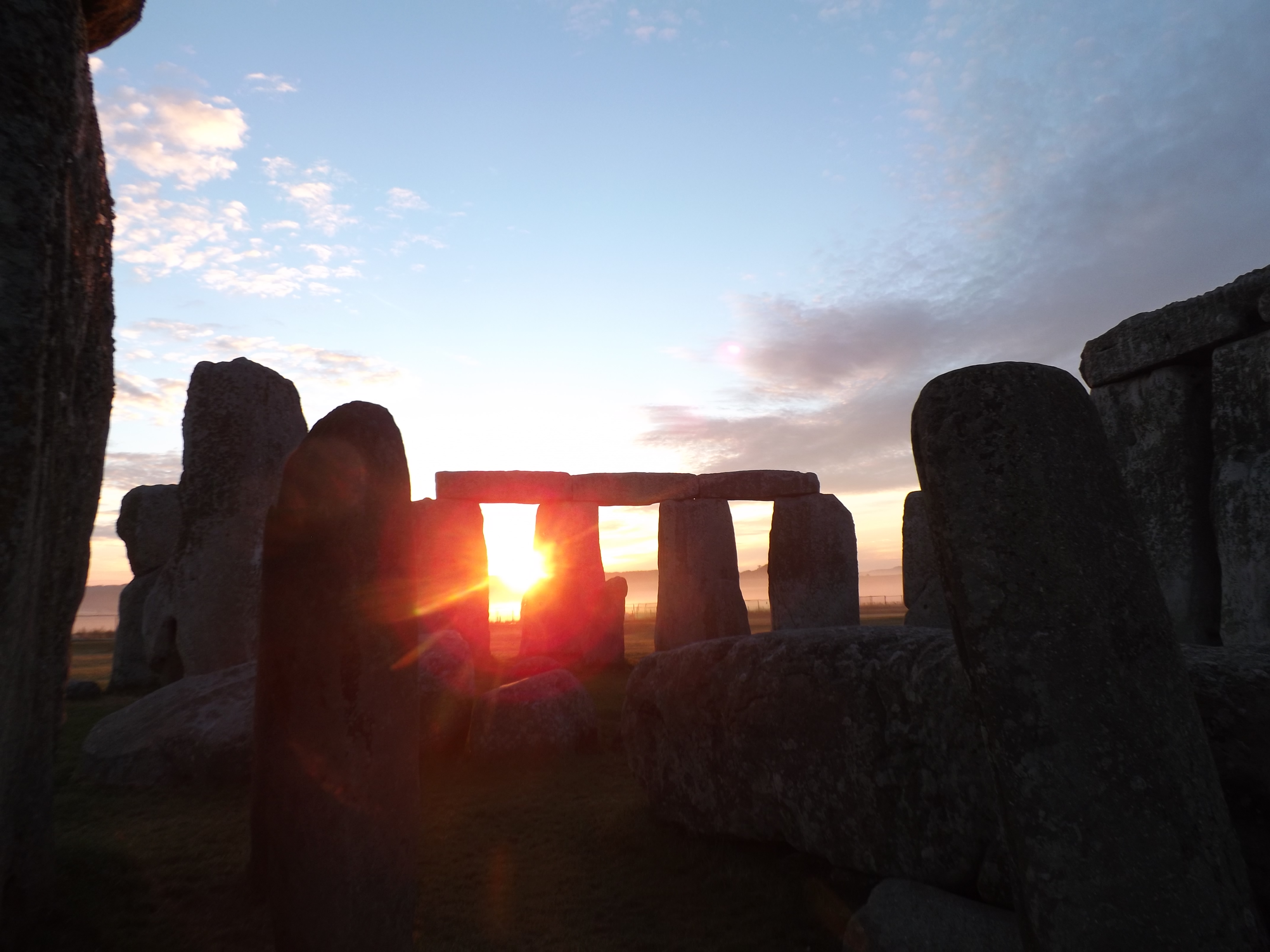
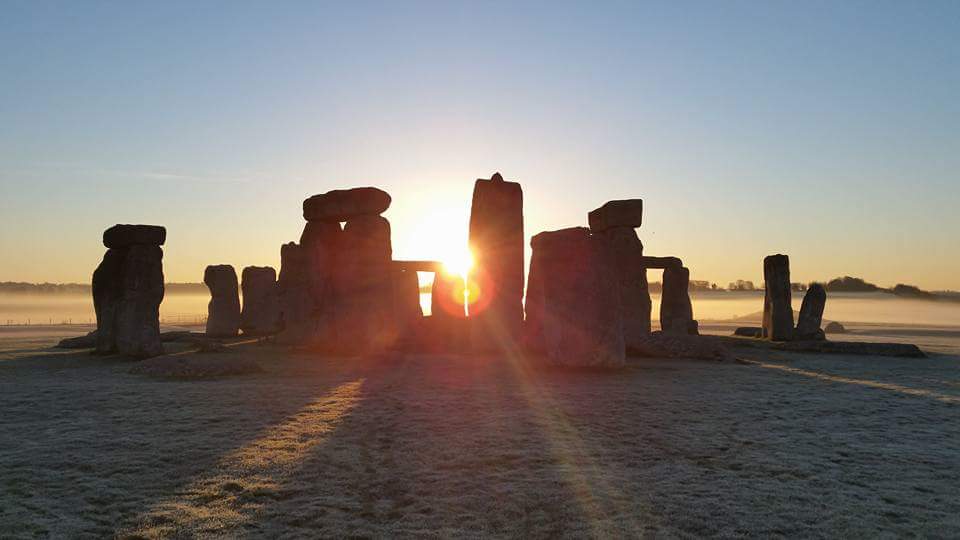
Stonehenge sunrise access tour

Stonehenge at sunrise on a private guided tour from Salisbury. A unique photo opportunity and magical experience

Click here to view our exclusive small group 2021 / 2022 Stonehenge sunset tours

The Stonehenge Travel Company, based in Salisbury are widely considered as the local megalithic experts. Established in the 1990’s and approved by Visit Wilsthire

Salisbury, Bath and London tour departures throughout 2021 \ 2022: Perfect for individuals, couples, families and small groups.  Experience an up close look at Stonehenge with a private viewing and exclusive entry into the inner circle. Our Stonehenge private tours enable you to depart from Salisbury and be dropped off after your tour in Bath, London, Southampton or any other UK destination giving the ultimate flexibility, reducing your travel costs and maximising your UK sightseeing.

“After traveling thousands of miles to England to experience Stonehenge, make the journey truly worth while with a professional driver-guide and local expert.”

Email us today for advance availability and travel options: tours@stonehengetravel.co.uk

The Stonehenge Travel and Tour Company
Stonehenge and Salisbury Guided Tours
The Local Experts

Prehistoric Burials and Artifacts Unearthed in Wiltshire

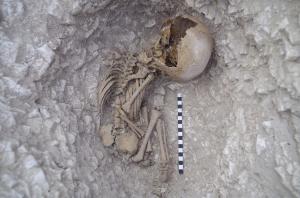
LARKHILL GARRISON, ENGLAND—Prehistoric burials were uncovered duringEngland-Larkhill-Garrison construction work at a military base located about a mile and a half from Stonehenge, according to a report in Salisbury Journal. One of the burials contained the remains of an infant who had been placed in a grave dug in an existing ditch. “Prehistoric pottery was found in the ditch fill which sealed the grave, which suggests the burial was also prehistoric,” said archaeologist Ruth Panes of Wessex Archaeology. A second body was identified as a male aged between 15 and 17 at the time of death. A third had been buried in a crouched position, probably sometime between 2400 and 1600 B.C. Postholes from a roundhouse measuring about 14 feet in diameter were also revealed, as well as prehistoric pits and ditches, and worked flint. The excavators said they think the area under investigation was once a woodland, since they have uncovered a large number of hollows formed by fallen or removed trees. More recent features include five zig-zag-shaped air-raid trenches, and the foundations of three military buildings that probably date to World War II. For more, go to “Quarrying Stonehenge.”
Read the full article (source) on the Archaeology Website

Stonehenge and Salisbury Guided Tours
The Stonehenge Travel and Tour Company
http://www.StonehengeTravel.co.uk

Massive Wooden Fire Monument Is Older Than Stonehenge

Carbon dating shows that the site dates back to 3300 B.C.

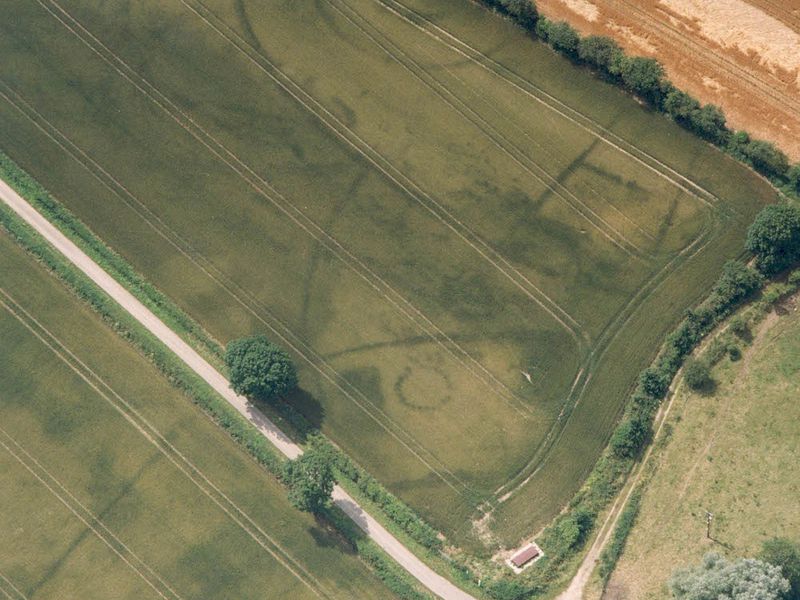
Sonehenge, the iconic Neolithic site in Wiltshire, England, has intrigued researchers for generations. In recent decades, however, archaeologists have found that Stonehenge isn’t the only ancient megastructure in that area—in fact there are a lot, including Woodhenge, the Southern Circle and Durrington Walls’ recently discovered “super-henge”. Now, new research is putting the spotlight on another monument: an ancient structure consisting of two giant wooden circles, located 23 miles away in Avebury, which predates Stonehenge by 800 years, reports the BBC.

wooden_circles

Aerial view of the wooden circle site (Historic England)

Researchers used bits of charcoal collected from the site 30 years ago to carbon date the structure to 3,300 B.C. Tia Ghose at LiveScience reports that researchers are not certain exactly what the circles were used for, but they were palisades constructed of thousands of logs that were purposely burnt down, perhaps in some sort of fire ritual. The research appears in the magazine British Archaeology.

“The date of 3300 B.C. puts the palisades in a completely different context; it’s the end of the early neolithic, when there’s a blank in our knowledge of the big monuments of the time,” Alex Bayliss, an archaeologist with Historic England, tells Simon de Bruxelles at The Times. “We have an entirely new kind of monument that is like nothing else ever found in Britain.”

Ghose reports that the site was originally found sometime in the 1960s or 1970s when a pipeline was laid in the area. It wasn’t until the late 1980s, though, the area was partially excavated. Researchers found the charred remains of the two circles, one of which was 820 feet in diameter. In total, the enclosures were made of over 4,000 trees and stretched an incredible 2.5 miles. Bayliss says it’s possible that one of the circles was for men and one for women during the fire ritual.

Constructing the monuments was no easy undertaking. The builders would have dug massive trenches, fitting oak posts into holes in the bottom. Then they would have then refilled the trenches to make the palisade.

Ghose reports that during the first excavation, researchers dated a shard of pottery to the time Stonehenge was constructed. Other finds in the area also indicated that it was in use during that time. But advances in carbon dating led to the new findings.

Mike Pitts, editor of British Archaeology, tells de Bruxelles that the new date is sure to stir up debate. “Having this massive palisade structure, not just at Avebury but even in southern England, at 3300 B.C. is completely unexpected,” he says. “The dates are so surprising some archaeologists are going to question it.”

Ghose reports that animal bones, pottery and remains of housing show that people occupied the site and nearby areas for centuries after burning the great circles, which is consistent with historical patterns in England during those times.

Join us on a guided tour of Stonehenge and Avebury and learn more about this important discovery

Stonehenge and Avebury Guided Tours
The local Stonehenge Experts
http://www.StonehengeTravel.co.uk

Ancient Britain in a day. Exploring Prehistoric Wiltshire

The American travel writer Bill Bryson once wrote:

“Impressive as Stonehenge is, there comes a moment somewhere about 11 minutes after your arrival when you realize you’ve seen pretty well as much as you care to, and you spend another 40 minutes walking around the perimeter rope looking at it out of a combination of politeness, embarrassment … .”

avebury-pic

Avebury Stone Circle. Image: Tharik Hussain

In many ways, Bill is spot on. The first time I visited England’s most iconic ancient site, I too had set aside a couple of hours to “take in,” “absorb,” “immerse” and “feel” the mystical stone circles that adorn the cover of almost every guidebook to Britain, and then, just like Bill, about 11 minutes in I looked at my watch, then back up at the huge stones and began to wonder what I should do next.
That’s the problem with ancient stones. Besides staring at them for a while, there really isn’t much else to do.
Fortunately, Stonehenge is in an area littered with ancient monuments that bring prehistoric Britain to life, and as spectacular as it is, Stonehenge is certainly not the only ancient site in the English county of Wiltshire. In fact, two historic sites are less than an hour away by car, making it the ideal region to spend a day exploring the very best of ancient Britain, and here’s how …

Avebury
Start in the little village of Avebury, as it is the easiest to access from London via the M4, and the one that will take the longest time to explore. This is because Avebury is home to the largest stone circle in Europe. It doesn’t have the impressive arches Stonehenge can boast, but Avebury’s size makes it clear it was probably more important than its headline-grabbing neighbor. It is certainly far more atmospheric and remains an important site for modern British pagans who frequent it for gatherings at various times of the year, including the summer and winter solstices.
Many of the original stones are missing, though quite a few were put back up by the circle’s late Victorian savior, Alexander Keiller. Keiller was a Scottish businessman-cum-archaeologist, who studied at nearby Eton and fell in love with the area’s ancient history. He had many of the stones dug up from where they had been buried by earlier fundamentalist Christians, and re-installed. Before Keiler, the stones were neglected and dismissed as a “shameful” reminder of England’s pagan past.
In total there are three circles around a henge – a bank and a ditch – the largest of which is 348m in diameter. Despite the village of Avebury cutting across the huge site, there is definitely an “atmosphere” about Avebury’s stone circles, which is no doubt enhanced by the fact that the crowds here are much smaller than those at Stonehenge.

Silbury Hill
From Avebury, head south on the B4003, turning right where it meets the A4. Do not drive too fast otherwise you’ll miss it, for Silbury Hill is on your right only minutes after the turn. It is true that in the pictures it looks just like any other hill, but when you are standing next to Europe’s largest man-made ancient structure, the perfection of the hill makes it clear this was not crafted by nature.
In truth, visiting Silbury Hill is no more thrilling than staring at a large grassy mound, for that is what it is. The excitement of reading the sign that tells you this is the largest prehistoric man-made structure in Europe is about as good as it will get – at least until English Heritage develop some kind of tourist access to the ancient monument. Until then, you’ll have to admire it from the roadside as you speculate what possessed ancient Britons to build the thing. No one knows the real reason of course, but I personally like the local legend that it is the final resting place of King Sil, represented as a life-size statue of gold and riding a horse.

Stonehenge
From Silbury Hill carry on toward the A361 and turn left to head south. From there you can follow signs all the way down to Britain’s most famous ancient site, Stonehenge, now accessed via the new visitor’s center. English Heritage appear to have taken Bill’s comments on board as the new center seems to have been designed specifically to occupy visitors for more than 11 minutes.
They do this first with the center’s exhibition where you can discover the Stonehenge story — essentially a rundown of all the latest theories about the possible purpose of the famous henge. Outside the center, there is a Neolithic village that has been built to show us how the prehistoric Brits who built the henge may have lived, and next to this is a replica of one of the huge sarsens they somehow brought all the way here and positioned in that spectacular style. This comes complete with a rope to pull and a screen that tells you just how many more of you are needed to move the real thing – 95 in my case.
The approach to the stones is either an “atmospheric” 30-minute walk or a short ride on the shuttle bus, with most people combining the two. After your 11 minutes admiring England’s most famous set of rocks, the visitor center’s cafe will make the ideal place to enjoy that other classic English institution, a cup of tea.
Article source: <IMG src=”http://b.scorecardresearch.com/p?c1=8&c2=19888642&c3=2″>Ancient Britain in a day : Tharik Hussain

Join the local experts on a guided tour of ancient Wiltshire exploring Avebury and Stonehenge.

Stonehenge and Salisbury Guided Tours
http://www.StonehengeTravel.co.uk
 

Winter solstice: When is the shortest day and why are mornings still dark afterwards?

The winter solstice occurs at the moment when the North Pole is tilted furthest away from the sun, giving us the shortest day of the year. (Metro U.K)

solstice-21

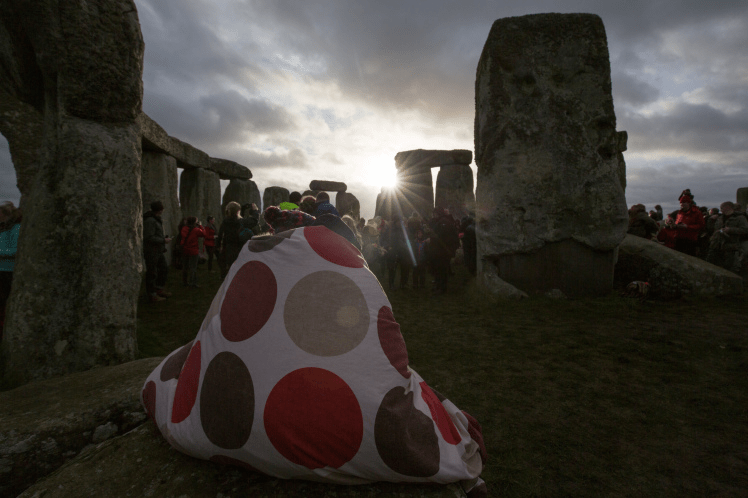
Druids celebrating the winter solstice at Stonehenge (Picture: Getty)

It happens at the same moment for everyone around the world. This year, in the UK it’s happening at 10:44 GMT on Wednesday 21st December.

It falls on a different date each time – between 21 and 23 December, thanks to the fact that the 365-day year is actually 365 days, five hours and 45 seconds long.

The solstice occurs around six hours later each year, meaning the date gradually adjusts over time. Each leap year, the date jumps back to December 21 and we begin again.

solstice-aerial.png

The average duration of a year is approximately 365 days five hours 48 minutes and 45 seconds,’ Dr Somak Raychaudhury, Reader in Astrophysics at Birmingham University told the BBC.

‘Even this varies by a few seconds every year, since the Earth’s motion is not just caused by the Sun’s pull of gravity.

‘It is perturbed by the pull of the planets and moons in the Solar System. The relative positions of these change from year to year.’

How much daylight will we get on the shortest day?

On 21 December, the sun will rise in the UK at 8:04am and set at 3:45pm. This gives us just 7 hours and 49 minutes of daylight.

Where does the winter solstice come from?

Tracking the sun’s yearly progress dates back to the earliest people on Earth, who knew that its path across the sky, amount of daylight and location of the sunrise and sunset changed according to a regular pattern throughout the year.

Monuments such as Stonehenge in England and Machu Picchu in Peru were built to track the sun’s progress over the course of the year.

The winter solstice was seen as especially important in the past, as people were economically dependent on the seasons, with starvation a common occurrence in the early months of winter.

Is the winter solstice linked to Christmas trees?

Winter solstice customs led to the Christmas tree becoming a major symbol. The Druids used evergreen trees, holly and mistletoe to symbolise everlasting life during their winter solstice rituals.

Centuries before the time of Jesus, cultures brought plants and leaves into their homes when the winter solstice arrived to celebrate the return of life at the start of winter’s decline.

Why are mornings still dark after the solstice?

The mornings remain dark until January due to a formula called the Equation of Time.

The equation explains how solar time, which is measured on sundials, differs from clock time.

Because the Earth’s axis is tilted, and its orbit is the shape of an oval, the two times don’t always match – they can be as much as 16 minutes out of sync.

Solar noon – when the sun is at its highest in the sky – isn’t always the same time as noon according to clock time.

As the Earth moves faster in the part of its orbit where it’s nearest to the sun – which comes after the winter solstice – this increased speed pushes the solar noon back, causing winter sunrise time to stand still for a few days.

In other words, the sunrise is ‘hanging’ during the late December – early January period, making mornings remain darker for a bit longer.

When’s the next solstice?

The summer solstice is on Wednesday 21 June 2017.

The Stonehenge Travel Company based in Salisbury are offering a guided tour with a local expert on the 21st December 2016. Witness the sun setting on the shortest day of the year and hear why Stonehenge is astronomically aligned.  Their exclusive small group Stonehenge Winter Solstice sunset tour departs from Salisbury.

The Stonehenge Experts
http://www.StonehengeTravel.co.uk


The Great West Way: Wiltshire to star in long-distance touring route.

VisitWiltshire has secured funding for its plan to create one of the world’s long-distance touring routes between London and Bristol with about a quarter being in Wiltshire.

avebury-great-west-way

Avebury is one of the World Heritage destinations to be highlighted on the Great West Way

The project is currently operating under the working title of ‘The Great West Way’, and aims to create a world class tourism experience, winning new business and market share for Britain, raising awareness, boosting the visitor economy and transforming the visitor experience along and around the route.

‘The Great West Way’ is one of a number of successful projects to receive funding from the £40m Discover England Fund administered by VisitEngland.

It is a Government-funded programme of activity aimed at offering world-class English tourism products to the right customers at the right time and will be supported by match funding from partners in the public and private sectors.

VisitWiltshire is leading on the project with a £250,000 grant to be spent between October and March 31, 2017.

The project will include:

  • Concept testing and case study analysis
  • An environmental assessment and economic impact study
  • Developing a brand proposition and messaging for the route
  • Developing new pilot itineraries for launch in key target markets.

Those supporting the bid include Local Enterprise Partnerships and towns along the route, transport operators, arts and heritage organisations, World Heritage Sites and Areas of Outstanding Natural Beauty, tour operators, guiding companies and a wide range of tourism businesses.

Sally Balcombe, VisitEngland chief executive, said: “We had an exceptionally high number of submissions far outweighing the allocated funding available and following a rigorous applications process we are delighted to work closely with those excellent winners on building world-class ‘bookable’ tourism products showcasing the best of England to international and domestic visitors.

“VisitWiltshire’s project will test the concept of a long-distance touring route in England that will promote places to visit and stay and feature an outstanding, high quality local food and drink offer, providing visitors with a new and exciting experience of rural England.”

And David Andrews, chief executive of VisitWiltshire, said: “We are delighted to have secured funding for this project, and particularly pleased that it has been so well received by so many partners.

“We now have the opportunity to open up a new touring corridor to encourage visitors to travel west of London, creating compelling road, rail, canal, cycling and walking tourism experiences.

“For an international visitor, this route presents many of England’s most iconic attractions – London, Bristol and Bath, the Stonehenge and Avebury World Heritage Site, Windsor, Castle Combe, Lacock and the Cotswolds.

“The aim of the project is to encourage visitors to tour and explore more of the region using a range of new itineraries to experience less-well known areas, slowing and lengthening visits.

“This new project will create a new and exciting addition to England’s existing tourism offer.”

The Discover England Fund was announced by the Government in November 2015, which is aimed at supporting tourism partly through joined-up geographies, themes and transport.

Article by Bruno Clements Wiltshire Times

The Stonehenge Travel Company
Stonehenge and Salisbury Guided Tours

Stonehenge VIP Private Access Trips: Custom tours departing from Salisbury, Bath and Southampton.

Exclusive Private Guided Stonehenge Inner Circle Tours.  Ideal for individuals, families and small groups.

In the evening after Stonehenge is closed to the public, or at dawn before it is open, we can arrange exclusive private access for you to visit this awe-inspiring prehistoric monument and walk among the giant sarsen stones towering 6.4 m high and weighing up to 50 tonnes. Go beyond the fences & after the crowds have gone home. Walk amongst the stones & experience the magical atmosphere within the inner circle.

Our local expert Stonehenge tour guides are considered as the very best in Wiltshire!

Our custom special access tours visit Stonehenge in the early morning (sunrise) or evening (sunset). Walk amongst the stones and stand within the stone circle!

20150927_071307

Join a local expert on our VIP Stonehenge guided tours

Normal viewing only permits access from the path that surrounds the circle. Stonehenge dates from 3100BC, and you will be walking where very few people have access. Your guide will explain some of the theories behind this amazing feat of Prehistoric construction.

A unique photo opportunity….

Explore the beautiful Wiltshire countryside in the luxury of your own private car, MPV or mini bus, enjoying the knowledge and expertise of our professional Stonehenge guide.

Our private access tours can also include Bath, Highclere Castle (Downton Abbey), Salisbury Cathedral, Windsor Castle, Winchester, Avebury Sone Circle, Silbury Hill, Lacock Village, Glastonbutu, The Cotswolds or where ever you want to visit.  Many of our clients choosing to depart from one location and be dropped off in another
Tour / Transfer example itineraries;

Depart Southampton | Visit Stonehenge, Bath and Salisbury. Ending in London.
Depart Bath | Visit Stonehenge, Salisbury and perhaps Windsor Castle. Ending in London.
Depart London | Visit Stonehenge, Salisbury, Avebury. Ending in Bath.
Depart Salisbury |  Visit Stonehenge, Avebury, Lacock, The Cotswolds. Ending in Bath
the list goes on…………

Stonehenge Private Tour Prices departing from Salisbury, Southampton and Bath. 

Passengers Price
Medium Car up to 2 from £245.00
Large car up to 5 from £345.00
Extra large up to 8 from £445.00
Minibus up to 16 from £695.00
We are pleased to offer this service from London, Bath, Oxford, Salisbury and all U.K airports / seaports

Visit our website for more tour information or contact us today. Tours@StonehengeTravel.co.uk

Approved VisitWitltshire Member

The Stonehenge and Salisbury Guided Tour Company
http://www.StonehengeTravel.co.uk
tours@stonehengetravel.co.uk

Top ten things to do on a trip to Salisbury 2016

DISCOVER the magic of Stonehenge and the fun of an off-road safari on a trip to Salisbury Stonehenge attracts tourists from across the globe to Salisbury.

Cathedral

Salisbury Cathedral has the tallest spire in Britain (GETTY)

But the attractions of the city don’t start and end with the incredible prehistoric monument.

Go on safari across a chalk plain, watch polo and test your fitness on a climb up the tower of Britain’s tallest church spire.

There so much to discover on a trip to Salisbury in Wiltshire.

1. Look up to discover Salisbury Cathedral – it has the tallest spire in Britain at a whopping 123 metres tall. Inside you’ll find one of the most significant churches in the country as it houses one of the original copies of the Magna Carta. For great views, take the Tower Tour. It’s a 332 step trip to the top and the reward is stunning views of the surrounding countryside.

2. Find yourself steeped in legend on a visit to Stonehenge. It’s a magical place shrouded in history steeped in legend. If you stand on Salisbury Plain at sunrise or sunset it’s easy to understand why the ancient Britons believed Stonehenge was special. Its orientation on the rising and setting sun is one of its many outstanding features, but why it was built in this way remains a mystery. http://www.english-heritage.org.uk/visit/places/stonehenge/
Join the local Stonehenge experts for a guided tour: http://www.visitwiltshire.co.uk/plan-your-visit/stonehenge-guided-tours-p1550943

Stone henge
Salisbury’s most famous attraction Stonehenge GETTY

 3. Watch polo, or even sign up for a beginners’ lesson at Druids Lodge Polo, which is open all year round six days a week (closed on Mondays). From October to March polo takes place in the floodlit arena which is hidden away in a sheltered area near the main house and stables. Druids Lodge provides pony hire, polo livery and high quality tuition for all levels and is the home club for a number of school and university teams. http://www.visitwiltshire.co.uk/things-to-do/druids-lodge-polo-p1938583

4. Go for the ultimate race car experience – on a virtual car! Kids over 12 can have a ago and it’s a great experience to keep them happy during the half-term week. The Ultimate Race Car Experience (URCE) is an exciting brand new, purpose built facility, providing the very latest in full motion race car simulators. You’ll find it at Sarum Business Park,Lancaster Road, Old Sarum, in Salisbury. http://www.visitwiltshire.co.uk/things-to-do/ultimate-race-car-experience-p1827763

5. Get up close to aircraft and see restoration taking place at Boscombe Down Aviation Collection.. It’s a great thing to do when the weather’s bad as it’s mainly all indoors. The collection of aircraft, cockpits, replicas and models weapons and equipment show the story of flight and flight test in the UK. Many of the cockpits are open and you can sit in and use the controls. http://www.visitwiltshire.co.uk/things-to-do/boscombe-down-aviation-collection-p1416553

6. Explore the streets of Salisbury by following the Murder Mystery Walking Treasure Trail of the city. It’s a self-guided fun and imaginative way to explore the city. As you follow the route, there are clues to solve and spot on the buildings, statues and monuments you pass. A great way to keep the kids happy on a walk. http://www.visitwiltshire.co.uk/salisbury/things-to-do/treasure-trails-the-salisbury-murder-mystery-walking-treasure-trail-p1773823

7. Get on your bike! Cycling around is a great way to discover a new area. Hire yours at Hayball Bike Hire and peddle away. Flat, safe traffic-free trails, make Salisbury a cycle friendly city and you can even cycle all the way up to Stonehenge.http://www.visitwiltshire.co.uk/things-to-do/hayball-bike-hire-p1957623

Salisbury town
Explore the streets on the gruesome murder mystery tour GETTY

8. Go carting! Take the kids and try your hand around the track at Wessex Raceway Indoor Carting centre. It’s got a unique a700-metre indoor asphalt track, free of pillars with no ramps or bridges – which allows ALL our adult karts to reach a maximum speed of over 50 miles per hour! http://www.visitwiltshire.co.uk/things-to-do/wessex-raceway-indoor-karting-p547143

9. Learn how to juggle at the Discovery Day Circus Workshop at Salisbury Museum over half-term on February 16. Experts will be on hand to teach this top skill at a drop-in session from 10am-1.30pm. http://www.visitwiltshire.co.uk/whats-on/discovery-day-circus-workshop-p1953053

10. Go off road and on safari with Salisbury Plain Safaris for an exciting trip to discover wildlife and local history. Go on tour in a luxury Land Rover Defender 110 that takes groups of up to six. Tours include a refreshment break and chances to get out and explore areas and tracks to parts of the Plain that are simply not accessible to cars and buses.

Spectacular views of Europe’s largest chalk downland and the UK’s largest military training area. http://www..visitwiltshire.co.uk/things-to-do/salisbury-plain-safaris-p1960783

By Anne Gorringe (Daily Express)

Stonehenge and Salisbury Guided Tours
http://www.StonehengeTravel.co.uk
Discover the historic gems on our doorstep

YOU can travel back in time on this holiday and trace thousands of years of British history, from Stonehenge up to the signing of the Magna Carta.

Visit Salisbury Cathedral, is unique among English medieval cathedrals having been built in a single architectural style - early English gothic.

Visit Salisbury Cathedral, is unique among English medieval cathedrals having been built in a single architectural style – early English gothic.

From the famous standing stones through to the celebrated document inspired by King John and the Georgian streets of Bath, this is a trip that will no doubt fascinate and delight.

After boarding the private coach in the early morning you will travel towards your hotel, visiting the quant villages of Castle Combe and Laycock along the way.

Both have featured in major films and TV series, Castle Combe in Stephen Spielberg’s War Horse and Lacock was used in some scenes for the Harry Potter films. Lacock also featured in the popular TV programme The Cranford Chronicles.

After dinner and a chance to relax in the hotel, day two will be all about Stonehenge, where you’ll head after breakfast.

The first stop of the day is the famous standing stones and its long-awaited and now open exhibition and visitor centre.

The exhibition contains nearly 300 archaelogical treasures found in the area, and also valuable insights into how and why the stone circle was built, and the people responsible.

The monument itself is a little over a mile from the centre, so you will have the choice of walking to it with a complementary audio guide or using the shuttle for the ride to the stones.

After seeing the stones, you will then travel to Salisbury Cathedral, which is unique among English medieval cathedrals having been built in a single architectural style – early English gothic.

The Chapter House here is home to the finest of only four surviving Magna Carta, the first formal document of its kind that paved the way for democracy. An exhibition explaints how it came about, and what its significance is even today.

On day three you will head to Bath and enjoy a full day at leisure in this fine city, which boasts its famous Roman baths, the Royal Crescent and beautiful Pulteney Bridge.

After breakfast the following day you will enjoy a brief tour of the Cotswolds, including the charming village of Malmesbury, before heading home.

Full Article in the excellent Bristol Post: http://www.bristolpost.co.uk/Discover-historic-gems-doorstep/story-25845069-detail/story.html#ixzz3OmEXVcC8

We operate guided tours including Stonehenge, Salisbury, Lacock, Castle Combe, Bath and the Cotswolds

Stonehenge Travel Co.
Mystical Landscape, Magical Tours
http://www.StonehengeTravel.co.uk
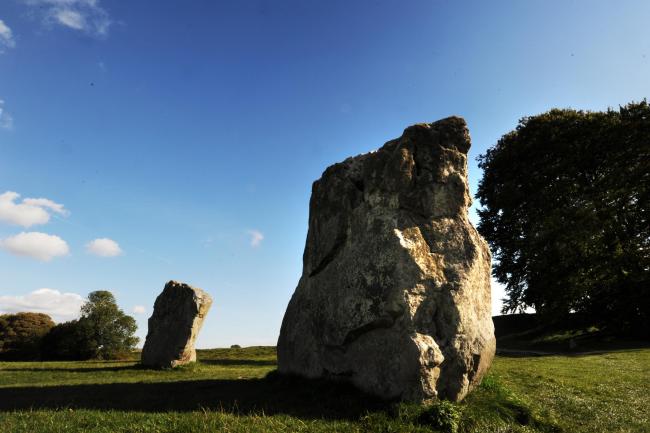
Among the Ancient Stones, Magic as Potent as Ever

WILTSHIRE DOWNS, England — Standing at the center of the Stone Circle of Stonehenge in the moments before dawn, lulled by low-hanging rain clouds, I am, for a while, unable to understand why so many pilgrimages have been made here.

Stonehenge SunriseSure, the setting is attractively pastoral, with gently rolling fields and dark patches of trees on distant hills. But the vista verges on the ordinary. I can even make out the line of a highway not far off, cutting across the meadows, commuters’ headlights poking through the mist. In the half-light, the surrounding stones seem almost familiar and scarcely mysterious.

Is this really the place that Thomas Hardy called “a very Temple of the Winds,” describing it “rising sheer from the grass,” its stones seeming to hum with sound? Did Christopher Wren, the great architect of St. Paul’s Cathedral in London, really think so much of Stonehenge that he left his signature chiseled in one of the stones? And why should this site now lure as many as 18,000 celebrants to a summer solstice festival on the day the sun rises through a gap between its central stones, bisecting the monument?

But after the rain, when the sun breaks through the clouds and the pillars of rock cast corridors of shadow, all misgivings are cast aside. In the privileged calm of early morning – an enviably timed visit that can be arranged with English Heritage, the government agency that manages the area – I begin to understand why more than 1 million visitors a year are drawn here. I see, too, why its nearly completed $44 million transformation has been so celebrated.

The renovation has eliminated a highway that nearly abutted the stones (leaving intact, at least for now, the heavily trafficked road some 500 feet away). And it demolished a similarly intrusive visitor center, replacing it with another a mile and a half away, invisible from the monument, designed by Denton Corker Marshall to appear delicately self-effacing even while enclosing an introductory exhibition, a cafe and an extensive gift shop. A shuttle transports visitors to the main attraction, which requires tickets, typically costing about $25, for entry at a specific time or about $35 for “out of hours” stone circle access.

This touristic enterprise also involves a kind of restoration. The goal is not to restore the stones themselves. That would have been impossible, even in the 12th century, when the earliest known history of Stonehenge appeared (in a volume now on display at the visitor center): Constructed by a race of giants, it was transported to its current site by the wizard Merlin.

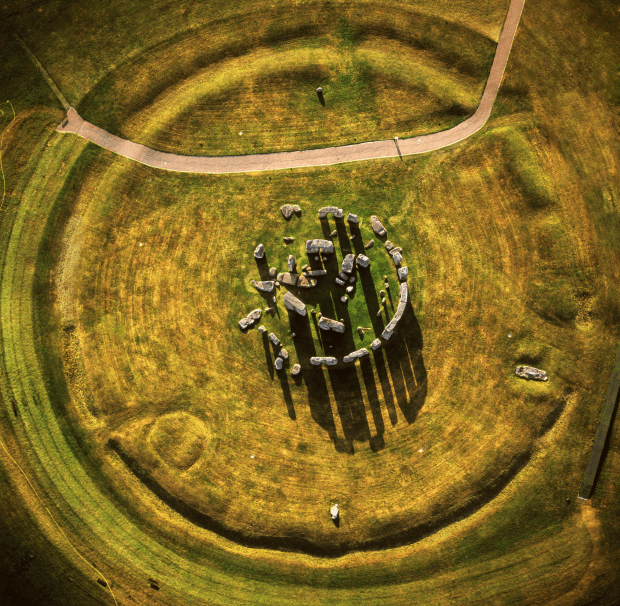
And, anyway, what would Stonehenge be restored to? It began as a circular earthwork, created about 3000 B.C.; its major stone circle with enormous pillars topped by lintels dates to about 2500 B.C. The evolving ceremonial site included circles, ovals and horseshoe patterns and apparently remained in use for another thousand years. Extensive work in the 20th century lifted, straightened and set some stones in concrete to prevent tipping. (The largest weighs more than 35 tons.)

The goal now is to restore the landscape, which researchers have been examining recently because of its intimate connections to the site. This emphasis can be felt throughout the new visitor center. A 360-degree theater uses finely detailed laser scans of the stones to show the monument’s evolving shape, while a wall-size animated map shows Stonehenge within a puzzling network of mounds and ditches, barrows containing burial remnants, and vestiges of unexplained earthworks that extend for miles. Display cases show some 300 artifacts that outline the region’s varied modes of life and death during the site’s evolution.

A similar emphasis is evident in the elegant new $4 million Wessex Gallery, at the nearby Salisbury Museum, which gives a reverse archaeological history of the region, proceeding backward in time. Its 2,500 artifacts – including the Stonehenge Archer, a skeleton dating from as early as 2400 B.C., found in a ditch in 1978 – are accompanied by images of a pastoral landscape that still holds unexplored secrets.

I am also preoccupied with the surrounding landscape that morning, standing within the Stone Circle. It is an enclosure that leads us to look outward. During the hours of sunrise (and sunset), when shadows are long, the patterns change every moment. The shadows of the stones hug the ground, climb neighboring pillars, slide over nearby ditches.

The axis of Stonehenge was originally determined by the sun’s rising and setting during summer and winter solstices, when symmetrical movements of shadows must have been something to behold. But even visiting at another time of year, I feel as if I were in a languorously turning kaleidoscope. The stones provide a medium through which we perceive the landscape. We emerge, entranced by the expanse around us, attentive to its details. The site reveals the setting; the setting, the site.

At first, the landscape seems a nondescript series of meadows; now it becomes far more intricate. Look toward the northeast, and you clearly see faint traces of the Avenue, an ancient earthwork path that extends 1.5 miles, ending at the River Avon. One hypothesis is that the river was used to transport the stones of the inner ring (called “bluestones”) which came from Wales, some 150 miles to the west.

I walk across these fields and become aware of dips and banks, ridges and mounds: eroded remnants of ancient human activities, many seemingly related to the monument. Recently, the remains of a Neolithic human settlement were discovered at the Avenue’s other end, near a circular timber counterpart to Stonehenge. During the recent restoration, natural rock fissures were discovered beneath the Avenue that are aligned with Stonehenge’s solar axis and may even have determined the monument’s location. In an article in Smithsonian magazine this month, “What Lies Beneath Stonehenge,” Ed Caesar describes the latest explorations using three-dimensional GPS-guided measurements that have revealed new subterranean features.

The temptation is to think of Stonehenge as a “thing,” a monument erected at a particular time with a particular purpose. Yet displays here suggest that over the 1,500 years or so that the site was in use, cultures and rituals changed along with it.

One of the intriguing things about Stonehenge, as we are reminded again and again, is that it can’t really be pinned down; we will never know enough. Was it a burial site, a temple, an astronomical model, a healing center, a monument to the ancestral dead?

We are destined to feel unsettled, even after learning from the fine exhibitions nearby. In J.M.W. Turner’s 1827 watercolor of Stonehenge, on display in Salisbury’s Wessex Gallery, lightning strikes near the center of the Stone Circle. The flash is luminous, exhilarating. But dread mixes with illumination, mystery with enlightenment. Why is the outer ground littered with the carcasses of shepherd and sheep? A bolt from the heavens? We aren’t certain. It is a bit frightening, which makes the painting as uncanny as the place.
Edward Rothstein New York Times
Article source link: http://www.adn.com/article/20140909/among-ancient-stones-magic-potent-ever

Stonehenge Guided Tours, Salisbury, Wilsthire
Mystical Landscape, Magical Tours….