Home » Uncategorized (Page 15)
Category Archives: Uncategorized
All Cannings: Wiltshire’s ‘Neolithic’ long barrow burial chamber opens
Would you fancy spending eternity inside a burial chamber in the corner of a field in Wiltshire? I do!

Tim Daw and Arch Druid of Avebury blessing the Long Barrow
The first “Neolithic” long barrow to be built in the UK for 5,500 years has been completed and already the first urn of human ashes has been placed inside.
The structure at All Cannings near Devizes, took almost nine months to build, using traditional materials and stone working techniques.
The tomb, designed by farmer Tim Daw, has been positioned to let the midwinter sunrise shine right down the length of the chamber where people’s ashes will be placed in urns set into the walls.
What is a long barrow?
- Barrows are artificial hills of earth and stones built over the remains of the dead
- They were usually reserved for members of the social elite or Anglo-Saxon royalty
- Ordinary people were usually cremated or buried in more humble graves
- They were first constructed in about 4,000 BC up to the late pre-Christian era
- England’s most famous barrow is at Sutton Hoo in Suffolk
News link: http://www.bbc.co.uk/news/uk-england-wiltshire-29225327
Visit the Long Barrow website here: http://www.thelongbarrow.com/
We intend to include the Long Barrow on future tours and I have already booked a niche.
The Stonehenge Travel Company, Salisbury, Wiltshire
Stonehenge and Salisbury Guided Tours
http://www.StonehengeTravel.co.uk
Among the Ancient Stones, Magic as Potent as Ever
WILTSHIRE DOWNS, England — Standing at the center of the Stone Circle of Stonehenge in the moments before dawn, lulled by low-hanging rain clouds, I am, for a while, unable to understand why so many pilgrimages have been made here.
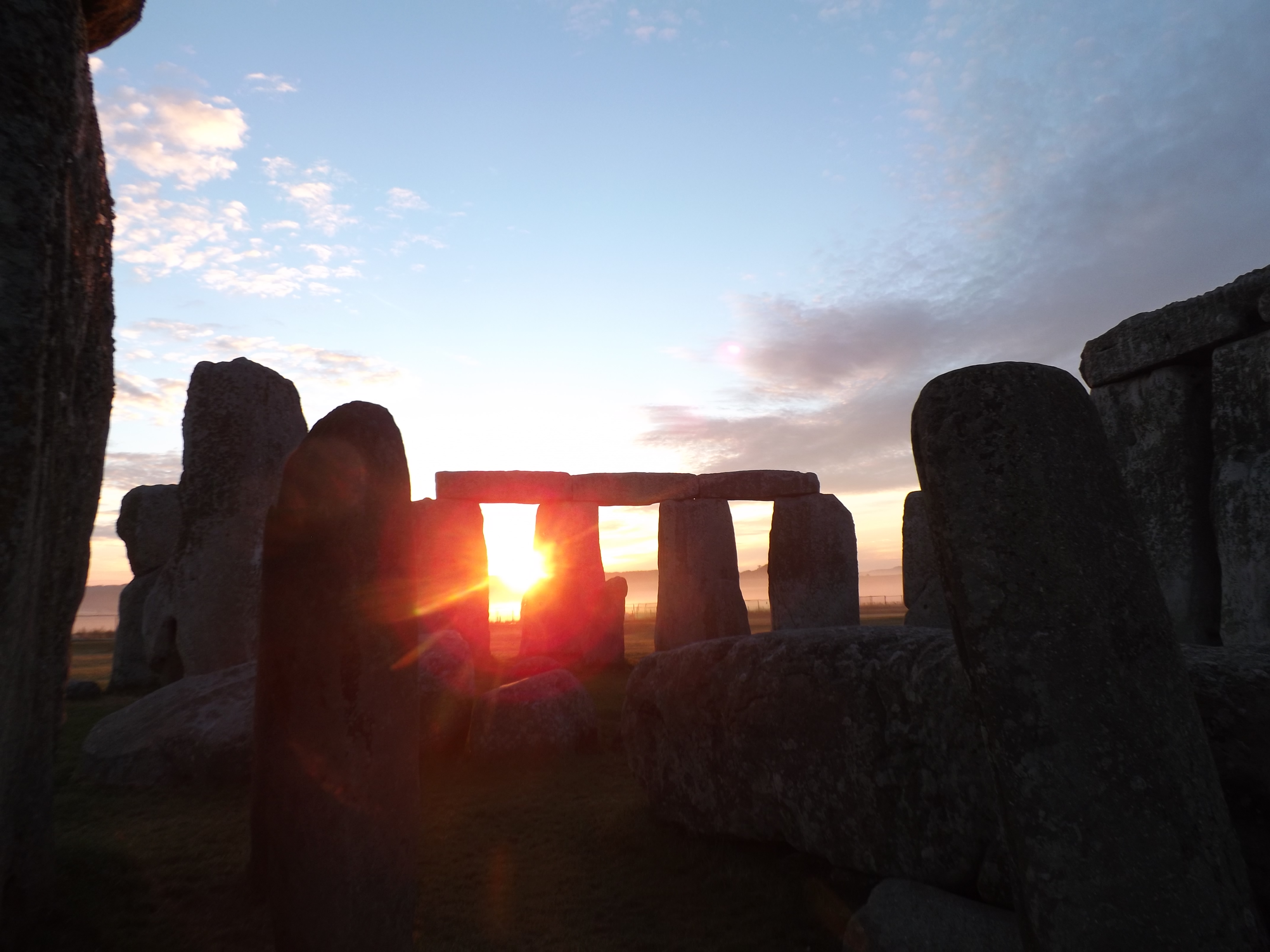 Sure, the setting is attractively pastoral, with gently rolling fields and dark patches of trees on distant hills. But the vista verges on the ordinary. I can even make out the line of a highway not far off, cutting across the meadows, commuters’ headlights poking through the mist. In the half-light, the surrounding stones seem almost familiar and scarcely mysterious.
Is this really the place that Thomas Hardy called “a very Temple of the Winds,” describing it “rising sheer from the grass,” its stones seeming to hum with sound? Did Christopher Wren, the great architect of St. Paul’s Cathedral in London, really think so much of Stonehenge that he left his signature chiseled in one of the stones? And why should this site now lure as many as 18,000 celebrants to a summer solstice festival on the day the sun rises through a gap between its central stones, bisecting the monument?
But after the rain, when the sun breaks through the clouds and the pillars of rock cast corridors of shadow, all misgivings are cast aside. In the privileged calm of early morning – an enviably timed visit that can be arranged with English Heritage, the government agency that manages the area – I begin to understand why more than 1 million visitors a year are drawn here. I see, too, why its nearly completed $44 million transformation has been so celebrated.
The renovation has eliminated a highway that nearly abutted the stones (leaving intact, at least for now, the heavily trafficked road some 500 feet away). And it demolished a similarly intrusive visitor center, replacing it with another a mile and a half away, invisible from the monument, designed by Denton Corker Marshall to appear delicately self-effacing even while enclosing an introductory exhibition, a cafe and an extensive gift shop. A shuttle transports visitors to the main attraction, which requires tickets, typically costing about $25, for entry at a specific time or about $35 for “out of hours” stone circle access.
This touristic enterprise also involves a kind of restoration. The goal is not to restore the stones themselves. That would have been impossible, even in the 12th century, when the earliest known history of Stonehenge appeared (in a volume now on display at the visitor center): Constructed by a race of giants, it was transported to its current site by the wizard Merlin.
And, anyway, what would Stonehenge be restored to? It began as a circular earthwork, created about 3000 B.C.; its major stone circle with enormous pillars topped by lintels dates to about 2500 B.C. The evolving ceremonial site included circles, ovals and horseshoe patterns and apparently remained in use for another thousand years. Extensive work in the 20th century lifted, straightened and set some stones in concrete to prevent tipping. (The largest weighs more than 35 tons.)
The goal now is to restore the landscape, which researchers have been examining recently because of its intimate connections to the site. This emphasis can be felt throughout the new visitor center. A 360-degree theater uses finely detailed laser scans of the stones to show the monument’s evolving shape, while a wall-size animated map shows Stonehenge within a puzzling network of mounds and ditches, barrows containing burial remnants, and vestiges of unexplained earthworks that extend for miles. Display cases show some 300 artifacts that outline the region’s varied modes of life and death during the site’s evolution.
A similar emphasis is evident in the elegant new $4 million Wessex Gallery, at the nearby Salisbury Museum, which gives a reverse archaeological history of the region, proceeding backward in time. Its 2,500 artifacts – including the Stonehenge Archer, a skeleton dating from as early as 2400 B.C., found in a ditch in 1978 – are accompanied by images of a pastoral landscape that still holds unexplored secrets.
I am also preoccupied with the surrounding landscape that morning, standing within the Stone Circle. It is an enclosure that leads us to look outward. During the hours of sunrise (and sunset), when shadows are long, the patterns change every moment. The shadows of the stones hug the ground, climb neighboring pillars, slide over nearby ditches.
The axis of Stonehenge was originally determined by the sun’s rising and setting during summer and winter solstices, when symmetrical movements of shadows must have been something to behold. But even visiting at another time of year, I feel as if I were in a languorously turning kaleidoscope. The stones provide a medium through which we perceive the landscape. We emerge, entranced by the expanse around us, attentive to its details. The site reveals the setting; the setting, the site.
At first, the landscape seems a nondescript series of meadows; now it becomes far more intricate. Look toward the northeast, and you clearly see faint traces of the Avenue, an ancient earthwork path that extends 1.5 miles, ending at the River Avon. One hypothesis is that the river was used to transport the stones of the inner ring (called “bluestones”) which came from Wales, some 150 miles to the west.
I walk across these fields and become aware of dips and banks, ridges and mounds: eroded remnants of ancient human activities, many seemingly related to the monument. Recently, the remains of a Neolithic human settlement were discovered at the Avenue’s other end, near a circular timber counterpart to Stonehenge. During the recent restoration, natural rock fissures were discovered beneath the Avenue that are aligned with Stonehenge’s solar axis and may even have determined the monument’s location. In an article in Smithsonian magazine this month, “What Lies Beneath Stonehenge,” Ed Caesar describes the latest explorations using three-dimensional GPS-guided measurements that have revealed new subterranean features.
The temptation is to think of Stonehenge as a “thing,” a monument erected at a particular time with a particular purpose. Yet displays here suggest that over the 1,500 years or so that the site was in use, cultures and rituals changed along with it.
One of the intriguing things about Stonehenge, as we are reminded again and again, is that it can’t really be pinned down; we will never know enough. Was it a burial site, a temple, an astronomical model, a healing center, a monument to the ancestral dead?
We are destined to feel unsettled, even after learning from the fine exhibitions nearby. In J.M.W. Turner’s 1827 watercolor of Stonehenge, on display in Salisbury’s Wessex Gallery, lightning strikes near the center of the Stone Circle. The flash is luminous, exhilarating. But dread mixes with illumination, mystery with enlightenment. Why is the outer ground littered with the carcasses of shepherd and sheep? A bolt from the heavens? We aren’t certain. It is a bit frightening, which makes the painting as uncanny as the place.
Article source link: http://www.adn.com/article/20140909/among-ancient-stones-magic-potent-ever
Stonehenge Guided Tours, Salisbury, Wilsthire
Mystical Landscape, Magical Tours….
English Heritage has opened five recreated Neolithic houses, in the shadow of Stonehenge.
The recently built Neolithic houses built by volunteers next to the new Stonehenge visitor centre have proved popular with tourists. Overseas visitors have found them fascinating. This recent international article in Newsweek gives an indepth insight:
Stonehenge Reconstructions Show Brits Have Always Been Houseproud
English Heritage has opened five recreated Neolithic houses, in the shadow of Stonehenge, revealing how the builders of the monument lived 4,500 years ago. At first glance, we could be forgiven for thinking they were built in the modern age. Certainly, their building techniques are very similar to those used on Victorian cottages in nearby Wiltshire villages. The walls were made from cob, a mixture of the local chalk and hay, slapped, when wet, onto seven-year-old hazel stakes. These walls were then topped with thatched roofs, made from knotted straw tied onto a woven hazel frame.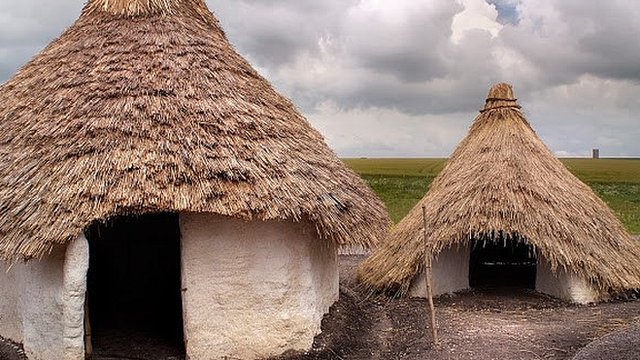
Far from being dark, little Hobbit spaces, the interiors are surprisingly bright, illuminated by the white chalk walls and floors, and open door. A tall man can easily stand up straight inside. In the middle of the room, the ash-log fire on the hearth sends up smoke, which seeps through the thatch. As the smoke slowly dissipates, it creates a thin carbon dioxide layer against the straw that stops any spark from the fire igniting the thatch. As if that weren’t ingenious enough, the thatch expands in the rain, providing an even more waterproof membrane.
The houses are pretty small – around 5m across – but they were certainly big enough to hold a family: English Heritage has managed to fit in 15 people easily into a single house, gathered around the fire.
It wasn’t just the architecture that was astonishingly avant-garde. Furniture in 2,500 BC, when Stonehenge and these cottages were thought to have been built, was pretty advanced too. Neolithic man slept on animal skins on wooden beds, with cupboards and shelves carefully inserted into the wall. In the house and outside the front door, there were handy pits, filled with handsome, striped pottery, known as “grooved ware”, the first pottery in Britain with a flat base. The pits also contained a selection of flints and animal bones, carved to create every conceivable mod con. Near Stonehenge, archaeologists have found chalk axes, bone tweezers, flint awls for piercing holes in bone and leather, flint saws and flint “fabricators” to create sparks for igniting fires.
The beauty of these objects – and the advanced engineering of the houses – seems particularly astonishing when we consider how early on in European, and global, civilisation they were made. In 2,500 BC, the Great Pyramid was being built at Giza, in Egypt. It was 500 years before the Minoan civilisation flourished at the Palace of Knossos; 900 years before the Mycenean civilisation in mainland Greece; and 2,000 years before the Parthenon was constructed. Jesus Christ is 500 years closer to us today than he was to the people who lived in these houses
Constructed over five months by 60 English Heritage volunteers, the buildings were closely based on the remains of Neolithic houses discovered in 2006 and 2007 at Durrington Walls, a ceremonial earthwork enclosure just north-east of Stonehenge. Radiocarbon dating has placed that settlement at about the same time that the mammoth sarsen stones from north Wiltshire, and the smaller bluestones from south Wales, were being raised at Stonehenge. So they’re among the earliest houses ever found in Britain.
Just like those nearby Wiltshire villages today, Durrington Walls consisted of a series of these cottages – and there may be 100s more, yet to be found – clustered closely together, but separated by woven wooden fences.
Again like lots of modern villages, Durrington Walls was built next to the River Avon – a crucial water source, home not just to trout and salmon, but to beavers and otters, much prized for their fur. Edible plants grew in the nearby damp soil, and red deer came to drink at the water’s edge. Deer antlers were used both as pickaxes and rakes to build the ditch and banks that circle Stonehenge. One red deer antler pick was found, laid carefully right on the floor of the ditch, perhaps to celebrate the end of the work.
The Flintstone diet wasn’t so different to ours, either: surviving cow and pig bones, some of them still with butchering marks on them, reveal a meat-rich diet, although there’s little trace of any cereal grain.
Already at this early stage, there are plenty of signs of human migration by water, too. The Amesbury Archer – whose burial was discovered in 2002, 5km east of Stonehenge – was born in the Alps, probably in what is now Switzerland. His origins were found thanks to chemical analysis of his teeth. The Amesbury Archer is thought to have been buried in 2,400 BC, a century after Stonehenge was built.
His body was surrounded by a glittering array of treasures: three copper knives, 16 flint arrowheads and a pair of gold hair ornaments, the earliest gold found in Britain. He was also buried with two archers’ stone wrist-protectors, which gave him his moniker. Alongside him, there were five delicately-carved and shaped Beaker pots, which gave their name to the neolithic Beaker culture, which spread right across western Europe, from present-day Holland to Spain, France and Germany.
The more archaeological research is made into Stonehenge man, the more evidence emerges that Britain wasn’t some remote backwater in the Neolithic Age, waiting for the Romans to provide it with the basics of civilised life. In the new Stonehenge visitors’ centre, hidden in a fold of Salisbury Plain close to the stones, there stands the skeleton of another early Neolithic Briton – whose recent bone analysis reveals quite how advanced this supposedly primitive civilisation was. The skeleton – excavated from a long barrow at Winterbourne Stoke, 3km west of Stonehenge – belonged to a man active in 3,000 BC, when the first earthwork enclosure at Stonehenge was built. Examining the enamel in his teeth – and the levels of strontium and oxygen, elements which vary in quantity from location to location – archaeologists have determined that he was probably born in Wales, moved to Wiltshire at two, went back to Wales at nine, and then shuttled between Stonehenge and Wales from 11 to 15. These regular journeys might explain the Welsh bluestones at Stonehenge – they were religious and sentimental reminders of the old country. This Neolithic man wasn’t so different from us. He was 1.72m, only 25mm shorter than the average British male today. He was 76kg, and lived off a classic West Country diet of dairy products and meat – mostly beef, mutton and venison.
Dr Simon Mays, the English Heritage scientist who carried out the bone analysis, determined that he’d led a peaceful life, with no injuries apart from a damaged knee ligament and a torn back thigh muscle. There was no sign of any illness, disease or nutritional stress in the body. He seems to have died in his late 20s or 30s. Life expectancy was a lot shorter, then, but what’s clear is that the great British obsession – class – was already alive and well 5,500 years ago. Our man was buried in one of the area’s grandest mausolea – and was initially the only body there, until he was joined around a thousand years later by other bodies in less prominent spots in the 82m-long grave.
There are around 350 of these long barrows in Britain. Half of them had no one buried in them at all; another quarter had five to 15 people in them; and only a quarter were allotted to a single person. So we are dealing with a major toff here, moving between his various smart residences in Wales and Wiltshire. A second home for the rich is nothing new.
The Durrington Walls houses may also help unlock one of the great secrets of mankind -–what was Stonehenge actually for? No one can be definitively sure but one of the most popular current theories is that it was a sort of holy cemetery. Its circles of cold stone, with cremated human bones all around, have been called “the land of the dead”. This is contrasted with “the land of the living” – with the timber houses of Durrington Walls, next door to another circular monument, Woodhenge, also built out of timber. Just walking around the Neolithic houses, we begin to see why this part of the West Country is so rich in Neolithic and Bronze Age finds. Not only is the open, rolling country so well-suited to farming – as it still is today – but also it’s purpose-built for house construction.
As visitors stroll around Stonehenge, they still kick up great lumps of chalk, studded with fragments of flint – the same chalk that built those ancient houses, the same flint that lit those long-extinguished ash fires. Suddenly, the Stone Age doesn’t seem so far away.
Stonehenge Reconstructions Show Brits Have Always Been Houseproud
http://www.newsweek.com/2014/06/20/meet-flintstones-265268.html
On Silbury Hill by Adam Thorpe

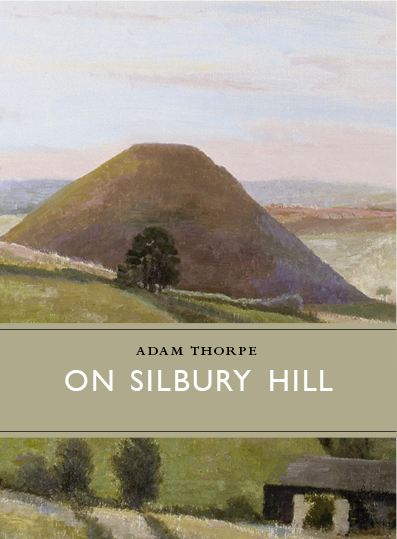
On Silbury Hill by Adam Thorpe
Book of the Week on BBC Radio 4 this week is Adam Thorpe’s On Silbury Hill (see our earlier feature here).
The novel pays personal tribute to the Neolithic monument. The base of Silbury Hill covers five acres of Wiltshire turf that has not seen the daylight for 4,300 years. Adam Thorpe has known the place since he was 13 years old. Abridged by Jill Waters. Read by Philip Franks. Broadcast daily from 9:45am – 10:00am.
Amesbury – including Stonehenge – is the UK’s longest continually-occupied settlement
We offer private guided tours from Salisbury that visit Amesbury and the Heritage Museum. Explore the area with a local expert!

A Wiltshire town has been confirmed as the longest continuous settlement in the United Kingdom.
 Amesbury – including Stonehenge – is the UK’s longest continually-occupied settlement
Amesbury, including Stonehenge, has been continually occupied since BC8820, experts have found.
The news was confirmed following an archaeological dig which also unearthed evidence of frogs’ legs being eaten in Britain 8,000 years before France.
Amesbury’s place in history has also now been recognised by the Guinness Book of Records.
David Jacques, from the University of Buckingham, said: “The site blows the lid off the Neolithic Revolution in a number of ways.
“It provides evidence for people staying put, clearing land, building, and presumably worshipping, monuments.
“The area was clearly a hub point for people to come to from many miles away, and in many ways was a forerunner for what later went on at Stonehenge…
View original post 418 more words
Downton Roman Mosaic to finally go on show
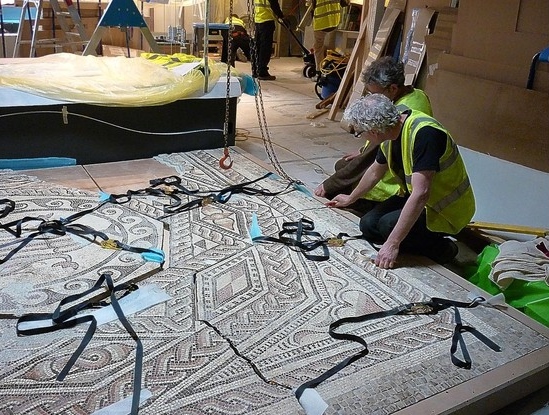
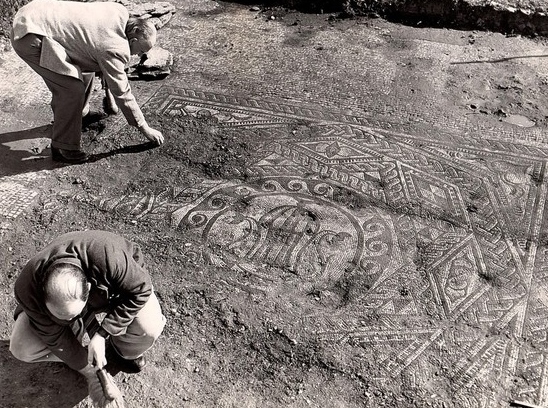
View original post 121 more words
Happy Ēostre to all our readers
Fall in love with Salisbury…
Visit Salisbury!

