Home » Uncategorized (Page 16)
Category Archives: Uncategorized
Stonework


Here’s a lovely thing. It’s a poem about an ancient place, by Mark Edmonds and Rose Ferraby – or as Mark describes it, “words by me, images by the two of us” – in the form of an illustrated book. It’s mostly the story of the making of a stone axe 6,000 years ago. A quarry high in the Lake District draws the maker up to find the right stone, where the axe is roughed out, then carried back down and finished; the description attempts to convey that this means more to the maker than the mere winning of a useful implement. Interleaved with this is the briefer story of (one assumes) a knowledgeable archaeologist who finds up there an abandoned, unfinished axe; he thinks he can beat the problem that defeated the neolithic knapper, and at the end succeeds. He descends with the axe, “Six thousand years in the…
View original post 633 more words
Stones of distinction


View original post 135 more words
The Interesting New Theory Behind Stonehenge
The question as to how Stonehenge’s bluestones travelled about 200 miles from Wales, where they’re thought to have originated, to Wiltshire, England, is only one part of the historic rock site’s mystery. Why these stones hundreds of miles away were chosen for the rock structure is another.
 A new study suggests the stones could have been chosen for their acoustic properties.
“What might Stone Age eyes and ears have perceived in this landscape, and what aspects made it become important to the builders of Stonehenge?”
That’s the question researchers at the Royal College of Art in London have been working toward answering, according to a recent study, part of the Landscape & Perception project, published in the the Journal of Time & Mind.
Researching the rock outcrops in areas where some Stonehenge rocks are thought to have originated, the team found a higher percentage of “sonic rocks,” also known as “lithophones” that produce metallic sounds when hit with a hammerstone. They can sound like a bell, gong or tin drum, according the RCA.
In July, the researchers also tested the rocks at Stonehenge. The RCA’s article about the study stated that the team didn’t expect too much of this test because lithophones require space for the sound waves to vibrate. The researchers also felt the stones being anchored to the ground would dampen any acoustic properties they might have.
The researchers were therefore surprised when they found the rocks still produced sound and had sufficient space to vibrate.
Here’s more about the findings from the Royal College of Art:
Magical stones. So were the bluestones, coming from a mysterious soundscape, invested with special magic, special sanctity, in the eyes of the megalith builders? The L&P project investigators believe so, and that this may have been the prime reason behind the otherwise inexplicable transport of these stones nearly 200 miles from Preseli to Salisbury Plain. There were plentiful local rocks from which Stonehenge could have been built, yet the bluestones were clearly considered special.
The old stones speak. Today, ringing rocks, lithophones, are considered as mere curiosities, but it’s a mistake to project our modern prejudices on to prehistory: we know from cross-cultural studies that in much of the ancient world, echoes from rocks, cliffs or inside caves, or rocks that made musical or unusual sounds when struck, were thought to contain spirits or magical forces. In particular, ringing rocks, ‘lithophones’, were held in high regard. The architects of Stonehenge may well have held similar beliefs.
Watch the video here: http://www.theblaze.com/stories/2013/12/02/stonehenge-may-have-been-built-for-ritualistic-concerts-study/ (article source)
Join us on a Stonehenge guided tour from Salisbury, Bath or London and hear all the latest new theories
The Stonehenge Travel Company, Salisbury, England
Mystical Landscape, Magical Tours………..
Avebury to Stonehenge. Walking Through History with Tony Robinson.
Join us on a guided tour from Salisbury and explore the Stonehenge and Avebury landscape with an expert guide. http://www.StonehengeTravel.co.uk

Tony Robinson embarks on spectacular walks through some of Britain’s most historic landscapes in search of the richest stories from our past
Tony heads off for a 45-mile walk across Wiltshire to tell the story of life and death in the last centuries of the Stone Age. His route over chalk downlands and Salisbury plain takes him through the greatest concentration of prehistoric sites in Europe.
 From Avebury to Stonehenge and from spirituality to engineering, this is a journey through our ancestors’ remarkable development in the latter days of the Neolithic Age.
Windmill Hill near Avebury is the start of his route; with earthworks dating to 4500BC, it’s one of the most ancient sites in Wiltshire. From here, Tony moves on through 2000 years of the ‘New Stone Age’, encountering increasingly complex burial sites and processional routes that have helped make this area both captivating and intriguing.
As he…
View original post 95 more words
Wiltshire Museum Models: Replicas for Learning (and for Tourists!)

One of the things that have become apparent in the last ALMOST FIVE YEARS that we have been posting on the Clonehenge blog is that there are many different categories of Stonehenge replicas—many reasons for making them, many sizes, many materials, many styles, many places where they are made and where they end up. Generally, each replica falls into several categories, for example: small, carrot, before-it-was-ruined, just-for-fun; large, metal, partial, sculpture/art, or full-sized, edible, citrus, trilithon, parade float (with druid).
There are several kinds of museums that may have Stonehenge replicas (large or small), as we have shown in posts over the years. A clock museum may depict Stonehenge as an early time piece. Astronomical museums often have replicas as examples of how even our distant ancestors were fascinated by the movement of the sun, stars. and planets. Archaeological and historical museums, of course, depict and talk about…
View original post 442 more words
Amesbury dig may unravel Stonehenge mysteries
Archaeologists have started a new excavation of Amesbury in an attempt to uncover some of the mysteries of Stonehenge. Amesbury is located in southern Wiltshire, England, and in recent years has revealed some incredible archaeological discoveries, including numerous monuments and artefacts dating back to the Mesolithic era. The major dig due to start soon could help to explain why Stonehenge was built where it was.
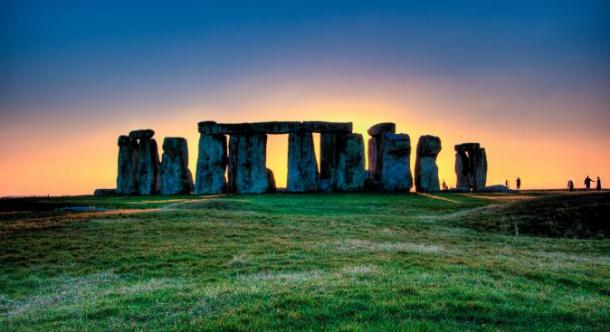 Excavations since 2005 have indicated that Amesbury and the surrounding area has been settled for around 10,000 years, much earlier than previous thought. Findings have included large scale prehistoric structures and settlements and numerous monuments around Stonehenge.
The last significant finding occurred at a site called Vespasian’s Camp, approximately 1 mile from Stonehenge, which showed traces of human settlement 3,000 years before nearby Stonehenge was apparently built. David Jacques, a researcher who has directed eleven small excavations between 2005 and 2012, has described the site as “potentially one of the pivotal places in the history of the Stonehenge landscape.”
New excavations will be seeking to establish Amesbury as the oldest continuous settlement in the UK. At the moment, neighbouring region, Thatcham, has evidence for the oldest settlement with well-preserved remains of a Mesolithic settlement dating back to 7,700 BC. In Amesbury, evidence of settlement has been found dating back to 7,596 BC, but archaeologists have not yet reached the bottom section of the trench where previous digs took place, indicating that much older evidence may be found beneath. The team is hoping to find evidence of settlement going back to 10,000 BC.
But the dig is about much more than establishing the oldest date of settlement. The team or archaeologists believe that findings may help to explain why Stonehenge is where it is.
“No-one would have built Stonehenge without there being something really special about the area, said Andy Rhind-Tutt from Amesbury Museum.” There must have been something there beforehand and Amesbury may well be it – [it could be] one of the greatest Mesolithic sites in the country.”
The dig will finish on 25th October and findings from the excavation will be reported then.
By April Holloway (http://beforeitsnews.com)
The Stonehenge Travel Company (www.StonehengeTravel.co.uk)
Stonehenge Guided Tours from Salisbury
Stonehenge Stone Circle Access Visits with Permission from English Heritage
Stone Circle Access visits take place outside the normal opening times at Stonehenge, and are very early in the morning or late in the evening, and are not offered during the normal opening times.
The visit must be pre-booked and paid for in advance of your visit by completing the Stone Circle Access application. Each visit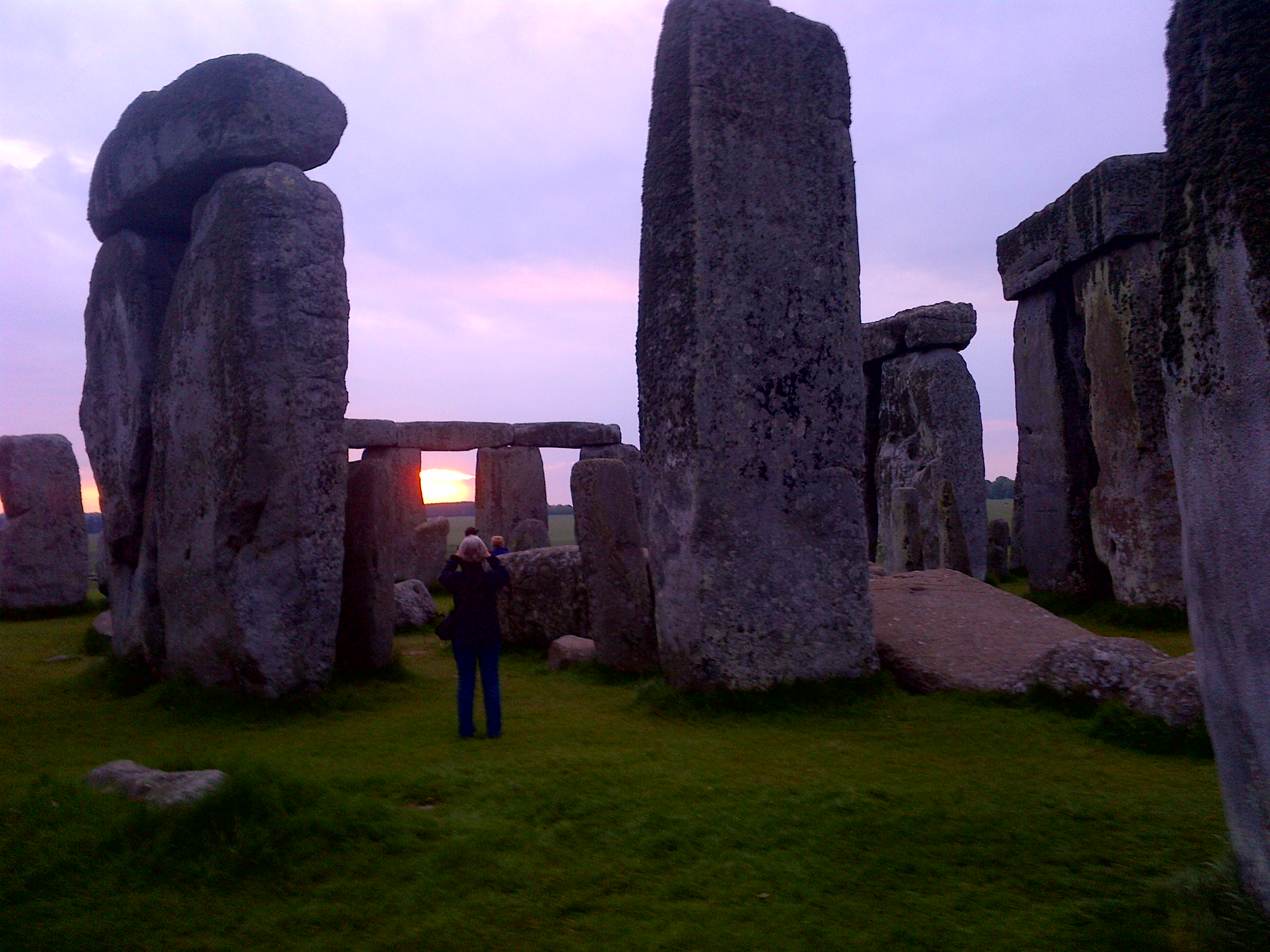 lasts for one hour, and we allow only a maximum of 26 people within the stones.
A Stone Circle Access visit is not a guided tour, and touching of the stones is not permitted. The visits provide the opportunity to go into the centre of the stone circle which is not possible during normal opening hours when visitors have to stay outside the stone circle.
As the visits are out of hours, there are no audio guides available and the gift shop and catering outlet are also closed. However, if you have a stone circle access reservation you can also visit Stonehenge during normal opening times on the same day for no additional cost.
To enhance your Stone Circle Access visit you can order a guidebook, which will be ready for your collection at the time of your visit.
Booking and Availability
As visits to the inner stones are high in demand, your booking request must be sent well in advance of your proposed time. (We cannot accept last minute bookings which are within 24 hours of your requested date.)
Stone Circle Access is not available throughout the year on Tuesday or Wednesday mornings as we have scheduled grounds maintenance at these times.
English Heritage are now taking bookings for January to September 2014. Please make sure you fill in the appropriate Application Form (see ‘Related Documents’). If you wish to make an enquiry about availability then please call +44 (0)870 333 0605, Monday to Friday 9am to 5pm. Please note that the booking office is closed at weekends and bank holidays.
You can also email them at stonecircleaccess@english-heritage.org.uk with a booking form.
Please note: English Heritage reserves the right to cancel any arranged visits at short notice and will not be held liable for any costs incurred.
Visit there Wesbsite for full details: http://www.english-heritage.org.uk/daysout/properties/stonehenge/stone-circle-access/
The Stonehenge Travel Company offer local expert guides and personal small group tours from Salisbury. Please take the time to visit our website: http://www.stonehengetravel.co.uk/stonehenge-access-day-tours.htm
 Stonehenge and Salisbury Guided Tours